




Why buyers hit roadblocks (quick, practical take)
Buyers usually run into the same handful of problems when choosing an intelligent conveyor: unclear throughput needs, mismatched controls, and surprise maintenance costs. If your plant touches car lines or you coordinate with suppliers on automotive automation, these issues become louder fast. This piece tackles problems directly — what goes wrong, why, and what to demand — so you can make decisions you won’t regret on the floor.

Problem: throughput promises that don’t match reality
Manufacturers quote peak speeds; your operation needs steady, predictable throughput. The gap shows up as bottlenecks and overtime. Fixes that actually work:- Define steady-state throughput first: use realistic cycle times, not peak specs.- Ask vendors for latency and variability numbers, not just max parts-per-minute.- Validate with a short factory acceptance test (FAT) that runs at your expected mix, not an empty-line demo.These steps cut guesswork and stop you buying a conveyor tuned for showroom numbers instead of your real shift.
Problem: controls and network mismatches
New conveyors often assume a control stack that your plant doesn’t use. That mismatch creates months of integration pain. What to do:- Share your PLC, MES, and preferred comms protocol up front.- Request compatibility test plans and sample code snippets during procurement.- Prioritize vendors that expose simple APIs and document error codes.If your new conveyor can’t pin cleanly into SCADA or the MES, it’ll stay an island that drags down the whole line.
Problem: hidden maintenance and spare-part traps
Low initial price can mean expensive downtime. Common traps include proprietary gear, long lead-time spares, and opaque service contracts. Avoid them by:- Getting a parts list with expected MTBF ranges and local availability.- Asking about on-site training for your maintenance crew and the vendor’s escalation matrix.- Negotiating a clear SLA for response times and a fixed-price option for emergency repairs.Long-term uptime beats short-term savings every time.
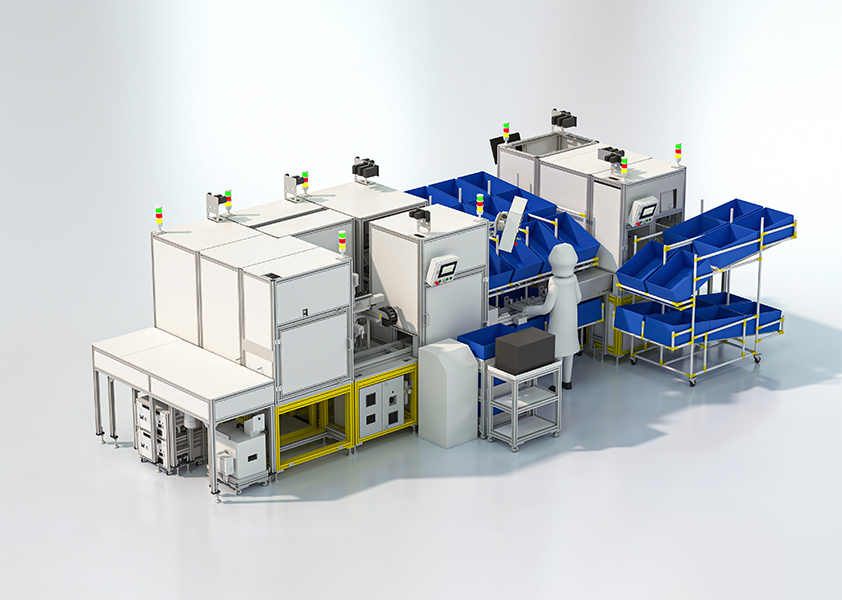
Integration with assembly lines: alignment, sensors, and timing
Conveyors must play well with stamping, welding, and paint stages. Match sensor placement and timing to downstream operations so parts arrive when the next station expects them. Test integration in a staging area where you simulate the line sequence — it reveals sync problems early. If your project ties into large-scale automated car production, plan for harmonized error handling and a single source of truth for part status.
Questions to ask every vendor (short checklist)
– What steady-state throughput have you proven for this exact configuration? – Can you provide a FAT with our cycle mix and a pass/fail script? – Which PLCs and protocols are supported out of the box? – What are typical spare-part lead times, and do you keep local stock? – What training and documentation are included for my maintenance team? Keep answers measurable; vague responses are a red flag.
Common mistakes buyers make
– Choosing the cheapest option without test data. – Accepting vendor demo speeds as representative. – Forgetting to include maintenance training in the contract. – Not validating controls compatibility before installation. These missteps create slow, expensive projects — they’re avoidable when you focus on measurable requirements.
Real-world perspective and credibility
Over several factory engagements I’ve seen the same fixes work: upfront FATs, clear interface contracts, and local spares planning. A quick example you’ll recognize: teams in Detroit’s assembly plants reduced line stoppages by forcing vendor FATs that mirrored daily mix instead of demo speeds. Experience like that shows the fixes aren’t theory — they’re field-proven.
Final synthesis — buy with clarity, not hope
Buyers win when they treat conveyors as systems, not hardware aisles. Define the real throughput, lock down control interfaces, demand measurable FATs, and negotiate maintenance terms that keep your line moving. Do that and you get predictable performance from day one — the practical value that teams on the floor rely on, and the kind of steady result FHS is structured to support.