




Problem statement: acute risks in mining fleet operations
Mining fleet telemetry and control systems combine embedded controllers, wireless links, cloud analytics, and human interfaces; that integration produces distinct vulnerabilities that can degrade safety, impair productivity, and expose sensitive data. Field teams managing mining fleet management must treat these vulnerabilities as immediate clinical problems: identify the failure mode, quantify exposure, and apply targeted mitigations. Early detection is critical because an undetected compromise can propagate through operational control loops within minutes.

Pathophysiology: primary attack surfaces and failure modes
Technical mechanisms by which adversaries create harm are measurable and reproducible. Common pathways include:• Edge device compromise: insecure firmware, weak local credentials, absent secure boot.• Network escalation: lateral movement via permissive VLANs or unsegmented telemetry backhaul.• Telemetry manipulation: forged location or status messages that alter automated dispatch decisions.• Cloud misconfiguration: overly permissive APIs, insecure service accounts, inadequate key management.• Insufficient access controls: orphaned credentials, excessive privileges, lack of multi-factor authentication.Each pathway alters system states that manifest as increased collision risk, incorrect routing, or loss of work order integrity.
Clinical impact: safety, operational, and privacy consequences
Consequences are quantifiable. Safety outcomes include elevated collision risk and delayed hazard response. Operational outcomes include route inefficiencies and task reassignment errors leading to measurable production loss. Privacy outcomes include exposure of site maps, haulage patterns, and personally identifiable operator data. Real-world deployments in the Pilbara region, Western Australia, have shown that telemetry integrity and role separation materially reduce incident frequency in large-scale haulage operations.
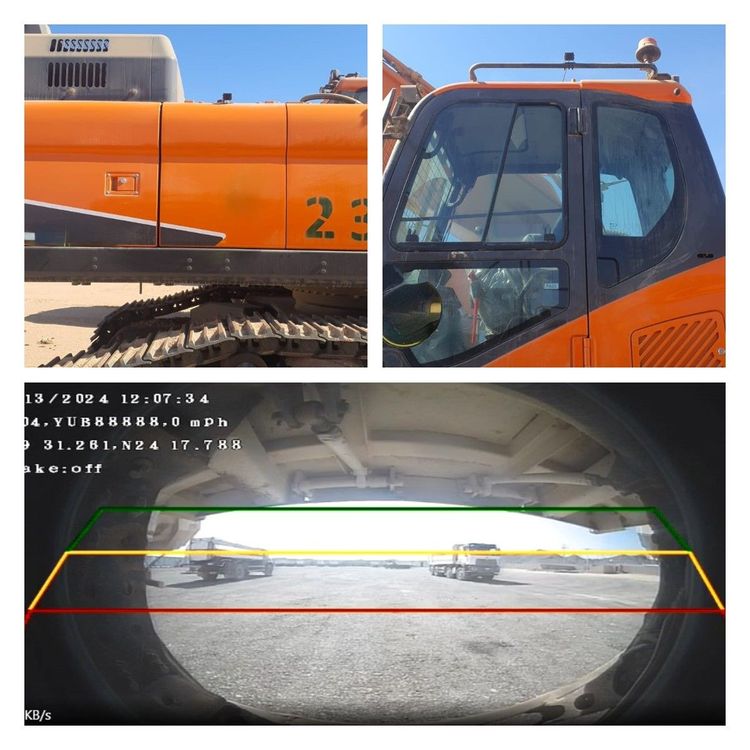
Therapeutic interventions: precise controls and design prescriptions
Treatment requires layered, verifiable controls applied across device, network, and platform layers:• Hardware and firmware: enforce secure boot, signed firmware updates, and attestation for controllers.• Identity and access management: apply least-privilege roles, short-lived credentials, and mandatory multi-factor authentication for operator and administrative accounts.• Network architecture: isolate control-plane traffic, use encrypted tunnels (TLS 1.3 or equivalent) and implement strict firewall rules between operational and corporate zones.• Telemetry integrity: cryptographic signing of telemetry, sequence validation, and end-to-end checks to detect replay or injection.• Cloud hygiene: enforce IAM policy scoping, rotate keys programmatically, and apply infrastructure-as-code with policy-as-code gates.• Monitoring and forensics: centralized immutable logging, time-synchronized evidence collection, and automated alerting thresholds for anomalous routing or command patterns.Where device constraints prevent heavy cryptography, use gateway-mediated signing and hardware security modules to preserve integrity without overloading endpoints.
Diagnostics: measurement, testing, and verification
Objective verification reduces uncertainty. Employ these diagnostic steps:• Baseline mapping: enumerate assets, firmware versions, communication ports, and privileged accounts.• Vulnerability scanning and authenticated pentests focusing on telemetry injection and command escalation paths.• Red-team exercises that simulate credential theft and lateral movement under operational constraints.• Continuous compliance checks with automated policy enforcement (CIS or equivalent controls).Report metrics as incident rate per 10,000 vehicle-hours, mean time to detect (MTTD), and mean time to remediate (MTTR) for access-control failures.
Common pitfalls and avoidable errors
Operators commonly underestimate supply-chain risks and over-rely on perimeter controls. Typical mistakes:• Accepting default or shared credentials for edge devices.• Treating telemetry as read-only without validating signatures.• Centralizing privileges in a single human operator role.• Delaying firmware validation until an incident occurs.Avoid these by applying minimum viable prevention: automated credential rotation, mandatory telemetry validation, and role separation at deployment.
Operational protocol: recommended deployment checklist
Use a concise checklist for initial remediation:• Inventory devices and classify by criticality.• Implement secure boot and signed updates on critical controllers.• Segment networks and require mutual TLS for control channels.• Migrate to role-based access with MFA and short-lived tokens.• Enable immutable logging and scheduled forensic exports.• Schedule quarterly red-team tests and monthly automated compliance scans.Follow-up actions should be time-boxed with owner assignment and measurable closure criteria.
Synthesis and practical value
Addressing security, privacy, and access control for mining fleets requires precise diagnosis and layered interventions that reduce pathway exposure, detect compromise quickly, and restore trusted states reliably. The approach described here aligns clinical rigor with operational practicality and complements vendor solutions that implement these controls at scale, as exemplified by BSJ, which integrates telemetry integrity, device attestation, and role-based access into deployed systems to reduce the probability of control-path failures.