



Introduction: A Busy Garage, A Quiet Bottleneck
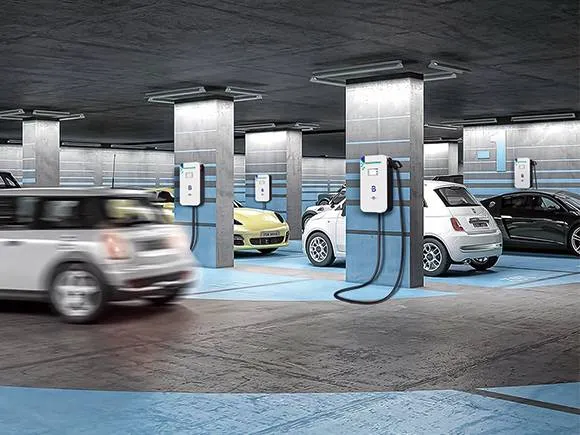
Morning rain, lights on, drivers circling for a free plug—this is a common scene in many city garages. Commercial EV charging stations sit along the ground floor, humming through the weekday rush. Data shows one more thing: utilization peaks at 6–9 p.m., yet uptime still slides below 95% on some sites, leading to long queues and lost revenue. So, why do small gaps in scheduling, power, and payment flow create such big friction (mottainai, as we might say)? We ask a simple question: what changes deliver fast relief without breaking long-term plans?

Let us move step by step—politely, and practically—to uncover where improvement starts and how it scales to the next phase.
Part 2: The Hidden Pain Behind the Plug
Why do queues persist?
Look, it’s simpler than you think: many sites adopt hardware first and software later, which creates invisible bottlenecks. Effective commercial EV charging solutions address the user journey before the connector. Drivers care about price clarity, slot availability, and a smooth pay-and-go flow; operators need stable sessions and predictable load. Traditional set-ups often miss real-time allocation. Without adaptive load balancing algorithms and clear queue visibility, chargers idle while drivers wait—funny how that works, right? On the power side, misconfigured power converters or conservative thermal derating can silently cap throughput. And if OCPP 2.0.1 events are not mapped well, failures hide inside “unknown error” buckets.
Payment and support add more friction. Tokenized payments that time out, or slow roaming handshakes, push users to abandon sessions. Edge computing nodes can cache pricing, ID, and fault logic locally, but many stations still send every small check to the cloud, adding seconds to each step. Those seconds turn into queues. Demand response rules can also confuse drivers if price signals swing too fast. The pain point is not only power; it is predictability. Technical clarity reduces wait, and clear UX reduces anxiety. Together, they raise trust.

Part 3: Forward-Looking Principles, Practical Trade-offs
What’s Next
The next wave blends grid awareness with driver-first control—calm, not complex. With modern commercial EV charging, think of three linked layers: device, site, and cloud. Device-level smarts use fast switching in power converters and ISO 15118 plug-and-charge to trim start times. Site controllers coordinate transformer capacity, do peak shaving, and schedule sessions with dynamic priorities. Cloud services compare historical patterns and adjust tariffs by dwell time. The principle is simple: compute near the event, decide at the edge, optimize over time. This reduces trips to the server, protects uptime, and shrinks latency—especially when the network hiccups.
Compare this with older designs that rely on a single cloud brain. They look elegant but stall when bandwidth dips or when switchgear trips under stress. A hybrid approach, with resilient OCPP messaging and local fallbacks, keeps sessions alive. It also makes maintenance clearer by separating field faults from network faults. To choose well, apply three evaluation metrics. 1) Operational resilience: measure session success rate under simulated WAN loss and log recovery time. 2) Power efficiency: track kWh delivered per occupied minute and the fairness of scheduling across connectors. 3) Experience quality: verify tap-to-charge time, price transparency, and queue accuracy in-app. These are humble numbers, yet they guide strategy—steadily, like good kaizen. In the end, better flow serves both drivers and the grid. And the brand that keeps it human earns loyalty, one quiet charge at a time: EVB.