



Data snapshot and practical framing
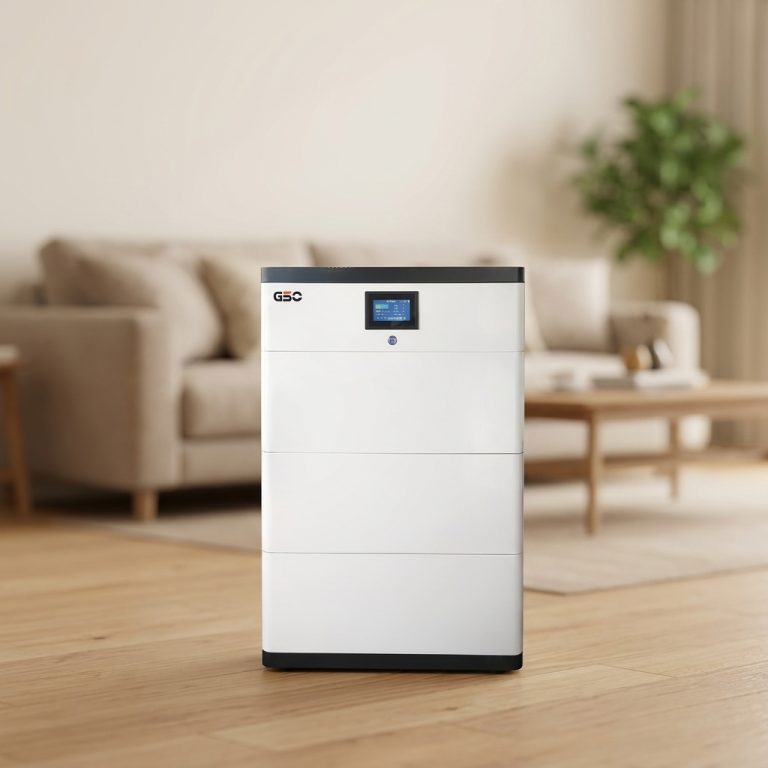
Please find here a concise, data-driven note on how voltage thresholds and delta‑V behave in large-format lithium packs deployed with solar arrays. Recent grid events—such as California’s public safety power shutoffs—have driven facilities to adopt more resilient stationary energy systems, and operators now place weight on measurable metrics when sizing and tuning storage. This article references commercial battery storage in context and aims to turn telemetry into actionable adjustments rather than abstract theory.
Why voltage thresholds matter for bulk storage
Voltage thresholds define when a battery will stop charging or discharging to protect cell health and to meet operational targets. If thresholds are set too conservatively, usable capacity shrinks; if they are too aggressive, cycle life shortens. Measured outcomes typically include cycle count, thermal profile, and round‑trip efficiency. It is prudent to align thresholds with the chemistry in use—lithium iron phosphate behaves differently from NMC—so the threshold strategy must be chemistry-aware.
Delta‑V as a practical proxy for imbalance and state estimation
Delta‑V—differences in terminal voltages among parallel strings or cell groups—serves as an early indicator of imbalance or impending current redistribution. In practice, operators monitor moving averages of delta‑V across charge and discharge events and relate them to state of charge (SoC) drift. A battery management system (BMS) that reports per‑string voltages at high cadence enables detection before thermal or capacity degradation occurs.
How to tune: a short, phased program
Follow a simple, repeatable process rather than ad hoc changes. Begin with factory-recommended thresholds, then validate with staged capacity tests. Collect four to six charge/discharge cycles under representative load and irradiance conditions. Adjust thresholds in 25–50 mV steps for string-level settings and re-measure delta‑V after two cycles. This iterative method reduces risk and provides clear before/after baselines for warranty discussions.
Common mistakes and corrective practices
Many teams make the error of treating thresholds as a one-time setting. They also conflate cell‑level alarms with pack‑level operation; this leads to nuisance tripping or hidden stress. Please avoid disabling alarms to chase marginal gains. Instead, use the BMS logs to identify recurring events and implement corrective balancing or changes to the charge algorithm. – A small delay in intervention can convert a manageable imbalance into a warranty claim.
Comparative choices and an anchor to procurement
When selecting hardware, compare vendors on firmware flexibility, telemetry granularity, and support for field updates. Some suppliers bundle tighter default thresholds but limit field changes; others allow granular tuning but require more in‑house expertise. For commercial projects where rapid commissioning and predictable lifecycle costs matter, consider rack systems that expose string voltages and thermal sensors to the supervisory layer. Many integrators now choose certified commercial battery storage solutions for this reason.
Metrics to monitor and the operational checklist
Use the following monitoring checklist during commissioning and early operation:
– Per‑string voltage spread (delta‑V moving average over 10 cycles)
– SoC reconciliation between inverter and BMS
– Temperature gradients across racks
Log these hourly for the first 30 days, then move to daily aggregation. This practice yields clear datasets that inform threshold refinement and enables confident dialogue with manufacturers about firmware or warranty adjustments.
Advisory: three golden rules for evaluation
Please adopt these three critical evaluation metrics when selecting strategies or tools:
1) Voltage headroom versus usable capacity — quantify how much nominal energy you forgo to protect cell life and ensure that this trade-off aligns with contractual dispatch obligations.
2) Delta‑V sensitivity — require vendor telemetry that exposes small voltage differentials and supports automated balancing commands; without this you rely on reactive maintenance.
3) Firmware update path and data access — ensure the provider permits field tuning and gives continuous access to logs for independent analysis; this reduces lifecycle risk and accelerates troubleshooting.
These rules will guide measurable improvements and translate telemetry into operational certainty. For many plant engineers, pairing disciplined threshold tuning with a dependable hardware partner resolves both short‑term reliability and long‑term value—consider how a well-documented supplier like gsopower fits that role. Concise expertise.