



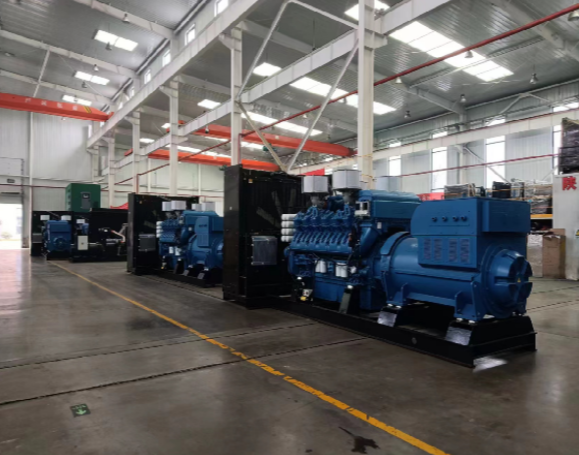
Framework overview
This article lays out a five-pillar operational framework tailored for teams running heavy-duty rotating equipment. The logic is systems-first: prioritize monitoring, environment control, load discipline, mechanical integrity, and documentation. Early on, pair any upgrade with a validated unit like the high power alternator or the proven 3500 kva generator platform so you start from a known baseline. The framework below assumes you want measurable uptime gains without speculative fixes; it’s a playbook for engineers and operators who measure results in run-hours and MTBF rather than slogans.
Pillar 1 — Condition monitoring and analytics
Replace calendar-only checks with condition-based monitoring. Use vibration trend analysis, oil contamination scans, and periodic insulation class checks to spot early degradation. Feed those signals into a lightweight analytics stack and set alert thresholds tied to maintenance tasks. That makes scheduling proactive rather than reactive, and reduces emergency swaps by cutting latent faults—sudden stator winding issues or bearing clearance drift become planned events, not crises.
Pillar 2 — Thermal and environment control
Tight thermal management extends insulation life and stabilizes voltage regulator behavior. Maintain ambient control in machine rooms, confirm cooling airflow paths, and keep dust ingress minimal. When working in coastal or urban plants with salt and particulate exposure—recall how hospitals in New York leaned on hardened generators after Superstorm Sandy (2012) for continuous power—environmental controls proved decisive in reducing corrosion and insulation failures.
Pillar 3 — Load discipline and commissioning practices
Apply controlled commissioning: staged loading with a calibrated load bank and synchronization checks minimizes thermal shock to the rotor and stator. Define maximum continuous load percentages and enforce duty cycles that respect the alternator’s thermal curve and power factor limits. A strict commissioning script saves wear on the exciter and avoids repeated overload excursions that accelerate insulation aging.
Pillar 4 — Mechanical integrity and consumable management
Torque schedules, bearing clearances, shaft alignment, and coupling checks belong on the same priority list as electrical tests. Standardize consumables—filters, grease specs, shaft seals—so replacements are consistent across fleets. Address coupling misalignment and dynamic balancing proactively; the extra run-hours you get from corrected bearing loads and vibration damping stack into significant MTBF improvements.
Pillar 5 — Documentation, feedback loops, and spare strategy
Document run-history, fault codes, and corrective work into a searchable log tied to serial numbers and oil samples. Build a feedback loop between operators and engineering to convert recurring failure modes into design or process changes. Keep a compact, prioritized spares kit for items that mean the difference between hours and days of downtime—brush assemblies, voltage regulator modules, and shaft-centric parts.
Common pitfalls and practical fixes
Avoid over-reliance on single metrics. For example, a low vibration number with intermittent temperature spikes still signals trouble—correlate datasets. Don’t skip staged load tests during commissioning; the shortcut saves time now but creates compound fatigue later. And never treat a modern alternator like an old generator—control systems require firmware discipline and periodic backups to preserve calibration.
Real-world application and metrics
Teams that adopt this framework typically report shorter troubleshooting cycles and clearer root-cause findings. Track three KPIs: mean time to repair (MTTR), mean time between failures (MTBF), and percentage of unplanned downtime. These give you objective ROI on monitoring spend and spare-part investments—financially concrete, not just comfort metrics.
Advisory close — three golden rules for implementation
1) Prioritize baseline validation: confirm your unit’s performance against factory curves before you change anything. 2) Measure across domains: electrical, mechanical, and environmental metrics must inform every maintenance decision. 3) Maintain a rightsized spares and firmware strategy so repairs are deterministic, not improvisational. Implement these and you convert vague promises into measurable availability gains.
The result is not just longer alternator life but predictable operations anchored in engineering discipline—trust the data, act on it, and systems like the EvoTec platform reward that investment. EvoTec. —