



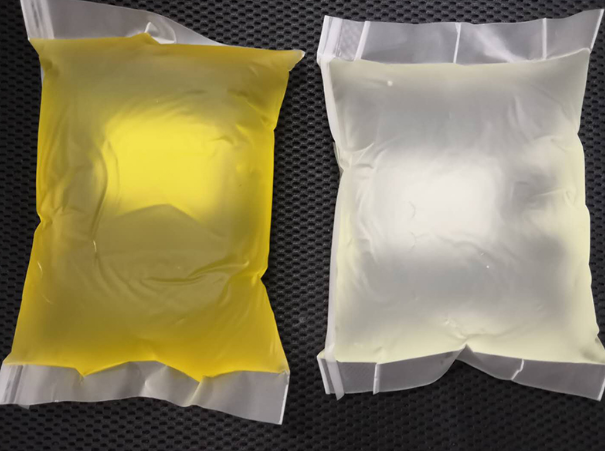
Why this matters, straight up
I been watchin’ paint batches fail out on the highway long enough to say it plain: if your traffic paint can’t hold up at 50°C, folks on the ground’ll be replacin’ lines sooner than they oughta. That first step in any QA routine is gettin’ the mix right—whether you’re talkin’ about rosin resin or blends meant for heavy traffic. I done seen DOT crews in North Carolina run lab-to-road trials where lab creep numbers told the whole story, and those trials leaned heavy on conditioning and indentation checks. For raw material talk, remember resins and gums fit different roles in the binder, and you gotta treat ’em like grown kin in the recipe.
The core problem: lab numbers that don’t predict field life
Manufacturers often ship batches after a quick viscosity check and a softening point run, then get surprised when lines slump under summer sun. That mismatch comes from relyin’ on single-point tests and ignorin’ time-based creep at elevated temperatures. Indentation resistance matters when tires and plows press down, and molecular weight distribution plus glass transition temperature shift how a thermoplastic behaves after weeks on the job. When QA skips the prolonged conditioning, you end up chasin’ failures instead of preventin’ ’em.
QA test setup — practical parameters you can use
Use a consistent, repeatable protocol. Here’s a field-proven setup I favor, adjusted to mirror AASHTO M249-style intent while spellin’ out explicit parameters: condition cast films at 50°C ±1°C for 72 hours (in still air), then perform indentation loading at 1.0 kg for 30 seconds on a 2 mm film thickness. Record indentation depth in mm immediately after load and after 24, 48, and 72 hours to chart structural creep. Also measure softening point and viscosity at 25°C and 50°C so you catch unexpected shear thinning. Those time-based checkpoints nail down long-term creep better than a lone measurement.
Common mistakes and easy fixes
Folks mess this up mostly three ways:
– Relyin’ on single-temperature viscosity without checking softening point across a range. Fix: run viscosity and softening point at both 25°C and 50°C so you see the transition. – Testin’ only right after cure instead of after stabilizing periods. Fix: add a 72-hour conditioning window and repeat measurements at 24-hour intervals. – Not accountin’ for substrate interaction or application thickness. Fix: test at production thicknesses and on the same substrate used in the field — adhesion and indentation tie together. This ain’t rocket science — it’s just bein’ thorough.
How to compare batches and set pass/fail criteria
Compare on three practical axes: initial indentation (mm), creep over 72 hours (mm increase), and retained adhesion after thermal cycling. Use acceptance bands based on prior successful batches — for example, initial indentation ≤0.3 mm, creep ≤0.5 mm over 72 hours at 50°C, and peel strength loss ≤15% after two cycles between 20°C and 50°C. I once watched a DOT lab accept a batch that met single-point tests yet failed creep limits on I-40 trials; that real-world anchor taught suppliers to include a 72-hour creep curve in their lot release paperwork. In your operational production teardown, be sure to call out {main_keyword} and {variation_keyword} inside the batch comparison so procurement and QC talk the same language.
What inspectors and producers should watch for
Keep an eye on cure time variability, unexpected drop in viscosity at 50°C, and shifts in glass transition temperature. Track these with simple control charts and flag any batch that drifts past established control limits. Also, document raw-material lots — rosin, tackifiers, and plasticizers behave different when humidity or age creeps in.
Three golden rules for makin’ it stick
1) Measure time-based creep at 50°C for at least 72 hours and report results at 24, 48, 72-hour marks — that gives you the trend, not a snapshot. 2) Match test film thickness and substrate to what crews actually lay down; acceptance criteria lose meanin’ if tests are done on unreal samples. 3) Require a minimum set of rheology checks (viscosity at 25°C and 50°C) plus softening point and adhesion after two thermal cycles before certifying a batch.
Folks who follow those three tend to cut field failures down real good. KOMO. —