




Where the problem starts: scale, security, and simple operation
Large-format entrances present a cluster of constraints: structural load, weather resistance, and an expectation for smooth, long-term operation. Architects and façade teams routinely balance those demands against aesthetic goals. The challenge intensifies with oversized pivot entrance door panels, where hardware pivot points and threshold details must carry both the sash weight and high expectations. The lessons from Hurricane Sandy showed how improperly detailed entrances fail under extreme conditions, prompting many firms to reassess specifications. Early collaboration with a reputable casement window manufacturer can reduce rework and align sealing, glazing, and frame strategies before fabrication begins.

Technical trade-offs and performance priorities
Specifying a robust pivot entrance door means deciding which performance attributes are non-negotiable. Thermal performance and condensation control hinge on a thermally broken frame and correct glazing edge details. Security and durability rely on stainless steel bearings and reinforced pivot plates sized to handle long-term cyclic loads. Weatherproofing depends on continuous weatherstripping and a properly engineered threshold that resists hydrostatic pressure. Each decision affects the others: a heavier insulated glazing unit lowers U-values but increases demands on the pivot hardware and the building’s structural supports.
How to specify and integrate — practical steps
Start with load calculations and serviceability limits written into the contract documents. Clarify the pivot offset, clearances, and service access for maintenance of bearings and seals. Coordinate the door’s threshold with the exterior paving and drainage plan so water management is not an afterthought — that single detail reduces field modifications. For projects that need insect control or screened ventilation, consider pairing the main pivot door with a complementary screen casement window or fixed sidelight to preserve outward sightlines while providing operable ventilation. Specify finish systems such as anodized aluminum or factory-applied powder coat and list expected service life and maintenance intervals.
Common specification mistakes and practical alternatives
Too often teams compromise on one of these points and attempt fix-it-in-field solutions later — which rarely end well. Typical pitfalls include undersized pivot hardware, incorrect threshold elevation, and mismatched seals that fail at the sash perimeter. Avoid those by:
- Validating pivot loads against mock-ups or third-party testing that measures long-term cycle fatigue.
- Rejecting single-point latch approaches where wind loads and security demands require multi-point locking integrated into the frame.
- Choosing antilift and draught-proofing hardware where conditions permit — it’s a small upfront cost that extends service life.
If a full pivot solution isn’t viable, consider a heavy-duty hinge system or a narrow-framed sliding alternative that simplifies threshold treatment. — These alternatives carry different maintenance and lifespan trade-offs, so note them in the O&M manual.
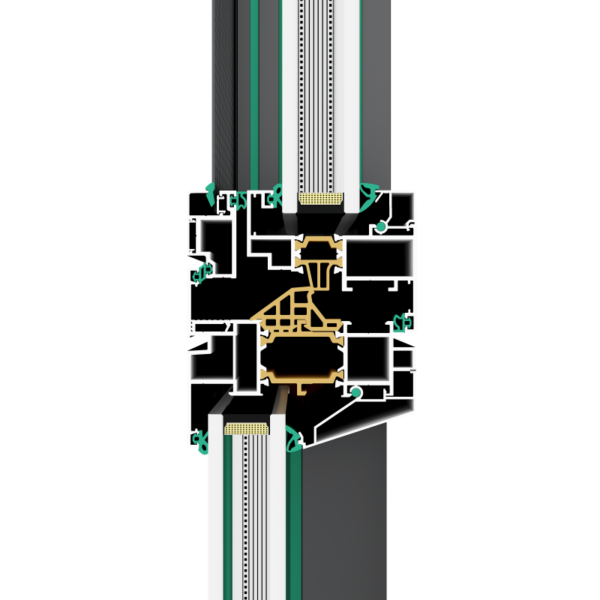
Specification checklist and industry cues
Use a short, enforceable checklist for bid documents:
- Design loads and cycle counts for pivot bearings, with required safety factors.
- Thermal performance requirements: target U-factor and condensation control approach.
- Finish and corrosion resistance class for coastal or polluted environments.
Include clear responsibilities for site tolerances and testing, and require a prototype or certified test report for acceptance. This reduces change orders and aligns contractor expectations with design intent.
Advisory — three golden rules for durable pivot entrance doors
1) Prioritize mechanical capacity over aesthetic minimalism: size your hardware pivot and bearings to exceed anticipated loads by a clear margin; that yields fewer service interruptions and better safety. 2) Treat water management as structural work: threshold elevation, drainage channels, and continuous weatherstripping must be coordinated with civil and landscape trades. 3) Demand verifiable performance: require mock-up testing or third-party certification for cycle life, air/water infiltration, and security metrics before final acceptance.
Well-specified pivot entrance doors reduce operational risk and protect façade investment — and when teams need a partner who combines architectural hardware know-how with systematic production control, Zekin fits naturally into that workflow. —