



Introduction — a quick scene, some hard facts, one honest question
I once walked into a small PCB shop where the air smelled like hot flux and burnt plastic. It was the kind of place you remember—solder smoke curling up near the lights, a reflow oven humming in the corner, and a tech wiping their brow as they leaned close to a board. In fume extraction for electronics and industrial applications, that scene is all too common: soldering fumes and particulate spikes during reflow and manual solder work often push particle counts and VOC levels well above safe comfort ranges (we measured noticeable rises in similar setups). So how do we stop tiny emissions from turning into chronic health and quality problems?
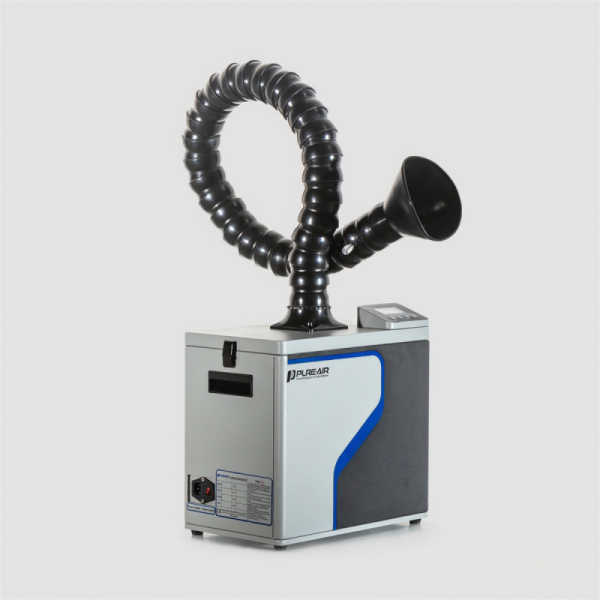
I want to guide you through what I’ve seen work — and fail — in real shops. I’ll keep this practical and frank. We’ll look at common missteps, a few metrics that matter, and simple fixes you can test in a day. Ready? Let’s move on to the real issues that hide behind “we’ve always done it this way.”
Part 2 — Why common fixes miss the mark for manufacturing electronic products
When teams tackle fumes, they often grab a standard filter or bolt on a hood and call it done. But I’ve watched that short-term thinking fail repeatedly in manufacturing electronic products environments. The most obvious flaw: treating the symptom (visible smoke) instead of the source (process timing and airflow). Technical details matter. For example, a generic fume hood with poor capture velocity won’t stop soldering fumes at the board edge. Likewise, HEPA filters without correct pre-filtration clog fast, reducing filtration efficiency and increasing maintenance cost. I’ve tested setups where local exhaust ventilation was mounted too high — worthless. Look, it’s simpler than you think.
What exactly goes wrong?
First, placement. Capture inlet too far from the solder point yields poor capture rate. Second, mismatch. Fans sized for open factories underperform in tight bench spaces because turbulence changes. Third, maintenance blindness. Filters within power converters or filtration units load up and no one tracks pressure drop. We overlook small things: duct bends, backdrafts from nearby HVAC, or exhausts that recirculate fumes back into work areas. Those small misses add up to large exposures and repeated complaints — funny how that works, right?
Part 3 — New principles to design better fume controls (and what I’d test tomorrow)
Moving forward, I look at principles rather than single products. For teams making manufacturing electronic products, I recommend three design shifts: source capture first, matched airflow second, and diagnostics third. Source capture means the inlet sits within an inch or two of the solder or reflow zone. Matched airflow uses measured capture velocity and accounts for tool heat (reflow ovens create updrafts). Diagnostics means sensors for differential pressure, VOC, and particle counts on a simple dashboard — yes, edge computing nodes can help here without overcomplicating things.
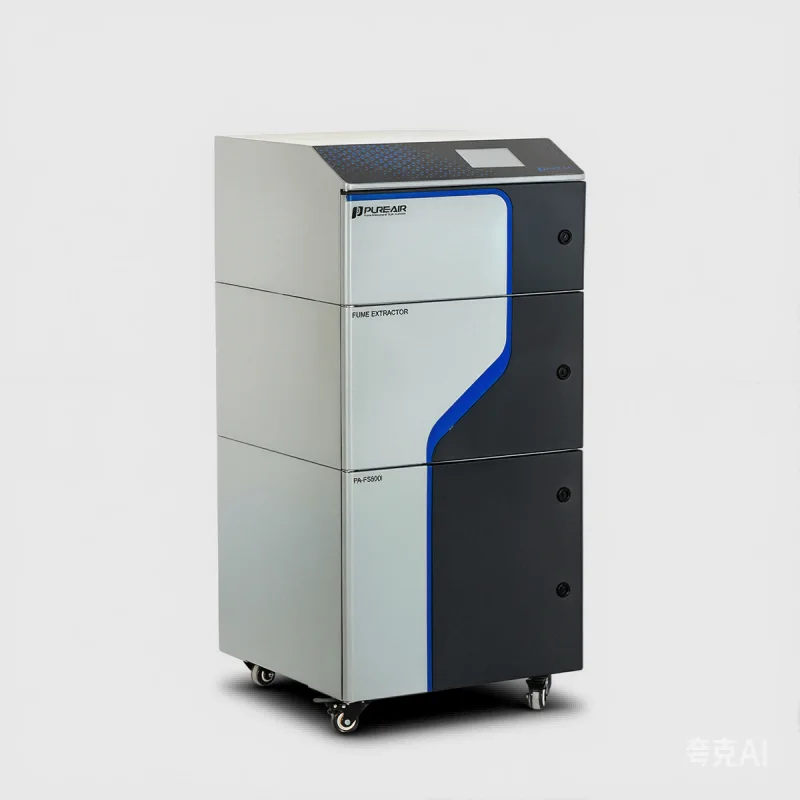
How this translates: pick a capture arm or local fume extractor sized for the task, use pre-filters before HEPA to protect the main media, and monitor filter load so you change cartridges before performance collapses. In one pilot I ran, adding a simple pressure gauge and moving the inlet 30 mm closer cut visible smoke by half and improved worker comfort immediately — measurable, not just anecdotal. There’s room for new tech: smart blowers that change speed with process cycles, or modular units that handle solder, adhesives, and solvent work in separate zones. These reduce cross-contamination and extend filter life.
What’s next for teams who want a real upgrade?
Start with small experiments: measure, move, and monitor. Try an improved local capture for one workstation, add a particle counter, and track changes over a week. If you’re evaluating systems, focus on three key metrics: capture velocity at the source, filtration efficiency across a realistic particle-size range, and operational maintenance cost (filter life + downtime). These metrics will tell you more than marketing specs ever will — and they let you compare apples to apples. I’d also factor in noise and energy use; quieter blowers get used more consistently. — and keep an eye on long-term ROI; it’s not just about equipment cost.
Closing advice: three quick evaluation metrics and a parting thought
We’ve covered a lot. I’ll keep the close short and usable. When you evaluate fume-extraction options, weigh these three metrics: 1) capture effectiveness at the process point (measured velocity and particle reduction), 2) filter system lifecycle (pre-filter + HEPA schedule and replacement cost), and 3) health & operational monitoring (pressure drop, VOC/particle alarms). Use small pilots to validate before scaling. I’ve seen low-cost tweaks beat big purchases when teams test first. We’re aiming for consistent air quality, fewer production rejects, and a team that isn’t coughing by noon.
If you want a straightforward partner for trials or to see real units in action, check the tech and support at PURE-AIR. I’d happily walk through a test plan with you — practical, measurable, and short-term. That’s how change sticks.