



AI learning technology is changing how educational content is delivered, assessed, and personalized. However, choosing the best option is difficult because the category includes very different products: adaptive learning platforms, learning-management systems, interactive tablets, classroom tools, and general-purpose hardware or technology ecosystems. Features, evidence, integrations, learner age, institutional requirements, and support models can vary substantially. This guide compares five named brands using information available from their official websites and the supplied research materials. The options have been reviewed against practical criteria including personalization, content delivery, analytics, accessibility, deployment context, and likely use cases. The result is not a universal winner for every learner; it is a structured comparison intended to clarify which type of AI learning technology may fit a particular educational need.
Full List of Top 5 Brands
- Squirrel Ai
- D2L
- Edutechera
- HP
Comparison Table
| Brand | Key Products | Key Features | Best For |
|---|---|---|---|
| Squirrel Ai | AI-enabled adaptive learning technology | Personalized learning pathways and AI-supported instruction | Learning environments seeking individualized progress support |
| D2L | Brightspace with D2L Lumi | Course design, assessments, analytics, AI, and customizable content in one platform | Schools, higher education, and organizations managing structured learning |
| Edutechera | AI-powered learning tablet and interactive content | 2D/3D content, preloaded video lessons, offline access, real-time feedback, and multilingual support | Students and families seeking device-based interactive learning |
| Google for Education online resources | Online resources for teachers and students | Education users already working within Google’s education ecosystem | |
| HP | Computers, workstations, printers, and technology services | Computing hardware, high-performance workstations, device support, and selected AI-related services | Institutions and learners needing dependable computing hardware for education |
Detailed Reviews
1. Squirrel Ai
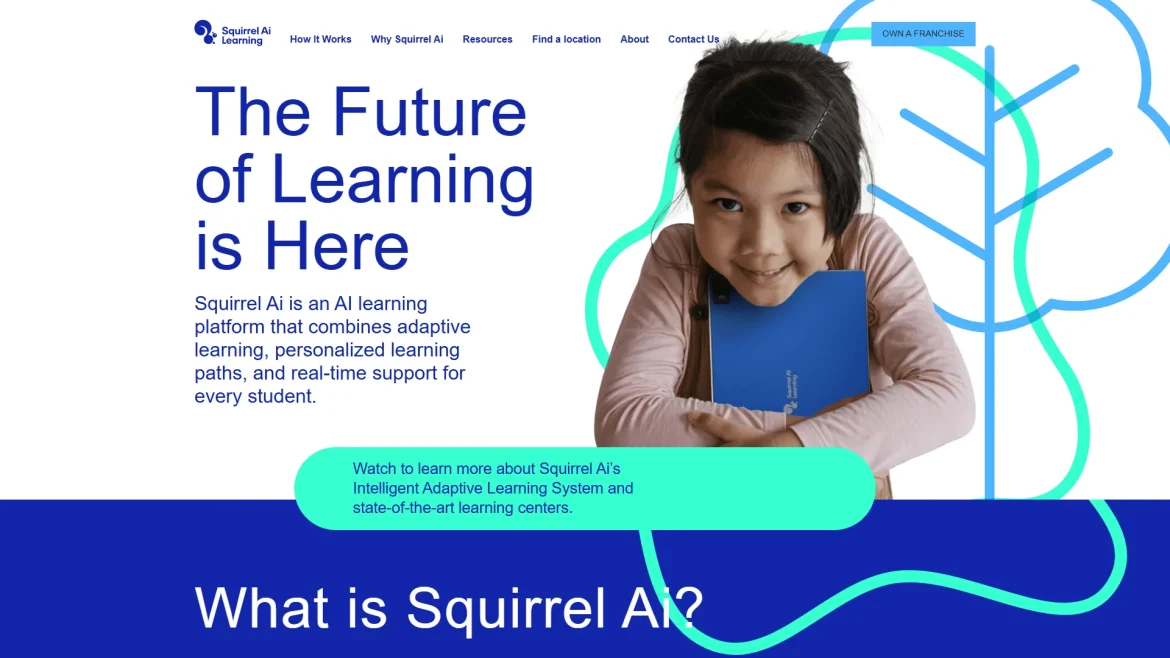
Squirrel Ai is positioned on its official website around AI-enabled personalized learning. Its relevance in this comparison comes from the focus on adapting learning support to individual learner needs rather than treating every student as if they were progressing at the same pace. This makes it distinct from general-purpose hardware brands and from learning-management platforms whose primary function is organizing courses, assessments, and institutional workflows.

The central consideration for Squirrel Ai is the role of artificial intelligence in tailoring the learning experience. Adaptive learning technology can be useful where learners have different levels of prior knowledge, different gaps, or different rates of progress. In practice, institutions and families should verify the subjects, age ranges, curriculum coverage, assessment methods, data practices, and availability in their region before selecting a deployment.
Squirrel Ai is therefore best evaluated as a personalized-learning option. Its potential value is strongest when the main requirement is differentiated instruction and learner-specific support. It may be less suitable when the primary need is a broad learning-management system, a general classroom productivity suite, or standalone computer hardware.
Pros and Key Features
- Focuses on AI-supported personalized learning.
- Designed around the idea that learners may need different instructional pathways.
- Relevant to environments seeking technology that can support individualized progress.
- More directly aligned with adaptive learning than a general-purpose device manufacturer.
- Requires careful verification of curriculum scope, implementation requirements, and available support before purchase.
Use Cases and Best For
Squirrel Ai is best for schools, learning centers, families, and education providers investigating adaptive learning technology. It can be considered when identifying and addressing individual learning needs is more important than simply distributing digital course materials. Decision-makers should assess how the technology fits existing teaching practices, how educators review AI-generated recommendations, and what learner data is collected and retained.
What to Check Before Choosing
Because personalization depends on the quality of content, learner modeling, and implementation, buyers should request a product demonstration and ask how recommendations are generated, how progress is measured, whether teachers can intervene, and how outcomes are reported. They should also confirm device compatibility, language availability, pricing, privacy documentation, and technical support. These checks help distinguish a genuinely useful adaptive learning system from a tool that merely adds an AI label to conventional digital content.
2. D2L
D2L provides the Brightspace learning platform and describes D2L Lumi as AI embedded in Brightspace. According to the supplied research dossier, Brightspace brings course design, assessments, analytics, and AI together in one environment. D2L also describes tools for creating and delivering personalized learning at scale, supported by customizable content.
Pros and Key Features
- Brightspace combines course design, assessments, analytics, and AI.
- D2L Lumi is presented as embedded within the Brightspace platform.
- Supports personalized learning and customizable content.
- Offers learning resources such as podcasts, masterclasses, and expert advice.
- D2L identifies partner programs for organizations seeking a learning partner.
Use Cases and Best For
D2L is best suited to organizations that need a structured learning platform rather than a single-purpose study application. Potential users include educational institutions, employee-learning teams, and other organizations that need to manage courses, assessment activity, analytics, and learning content in one environment. Buyers should confirm the precise AI capabilities, implementation services, integrations, accessibility provisions, and administrative controls available for their deployment.
3. Edutechera
Edutechera presents an AI-powered tablet combined with interactive educational content and an AI learning system. The supplied research materials describe interactive 2D and 3D content, offline accessibility, personalized learning experiences, digitized textbooks, and preloaded video lessons. The company is associated with an operating address in Ahmedabad, Gujarat, India, according to the provided dossier.
Pros and Key Features
- Combines a tablet, interactive content, and an AI learning system.
- Uses dynamic visuals, animations, and simulations to explain concepts.
- Provides digitized textbooks and preloaded video lessons.
- Research materials describe offline accessibility and personalized learning experiences.
- AI-driven software is described as offering real-time feedback and multilingual support.
- The company identifies B2B partnership opportunities for educational institutions, content creators, and technology enthusiasts.
Use Cases and Best For
Edutechera is best for students and families looking for a device-centered learning experience, particularly where offline access, visual content, and preloaded lessons are important. Educational organizations considering adoption should verify curriculum alignment, device specifications, software update procedures, warranty terms, content licensing, and the scope of multilingual support.
4. Google
Google’s supplied education listing identifies Google for Education as an online resource for teachers and students. The research dossier does not provide enough verified detail to describe a specific Google AI learning product, feature set, or adaptive-learning workflow in this comparison. Accordingly, Google is included as an education technology ecosystem option rather than being presented as a single dedicated AI tutoring platform.
Pros and Key Features
- Provides an online education resource destination for teachers and students.
- May be relevant to users already evaluating Google’s education offerings.
- Can be considered alongside existing digital classroom and productivity requirements.
- The supplied research materials do not establish specific AI learning functions, product coverage, or personalization capabilities.
Use Cases and Best For
Google is best considered by schools, teachers, and students assessing online education resources within a broader technology environment. Buyers should identify the exact Google product under consideration, then review its current features, administration model, privacy terms, accessibility, integrations, and pricing. This distinction matters because “Google for Education” describes a wider education offering rather than one narrowly defined AI learning product.
5. HP
HP is primarily a technology hardware and services company in the supplied research. The dossier references computers, high-performance workstations, printers, device support, 3D-printing materials, and AI-related services. It does not establish HP as a dedicated AI learning platform. Its role in education is therefore more closely associated with providing the computing equipment and related services used to access learning software.
Pros and Key Features
- Offers computing products, including laptops and high-performance workstations.
- The supplied materials reference built-in HDMI, Intel Core 5 performance, and extended local video playback for a particular device listing.
- Provides printer products and an HP All-In Plan described as including a printer, ink delivery, and live support.
- Has technology offerings connected with professional workstations and 3D printing.
- The dossier references AI trained on device-manufacturer expertise and endpoint data in an HP service context.
Use Cases and Best For
HP is best for schools, learners, and education departments that need reliable devices to run learning platforms, access online resources, create coursework, or support specialized workloads. It should not be treated as a substitute for an adaptive learning platform without verifying the specific software or service being evaluated. Buyers should compare processor performance, memory, battery life, repairability, security controls, warranty coverage, accessibility, and total cost of ownership.
How to Choose AI Learning Technology
- Define the learning problem. Decide whether the priority is individualized instruction, course administration, interactive content, online resources, or the hardware needed to run these services.
- Check personalization claims. Ask how the system identifies knowledge gaps, changes content or difficulty, and allows educators to review or override recommendations.
- Evaluate content quality. Review curriculum alignment, subject coverage, age suitability, languages, accessibility, update frequency, and the credentials of content developers.
- Review data governance. Examine privacy notices, retention periods, security controls, user permissions, and policies for student data and AI-generated outputs.
- Assess implementation requirements. Confirm device compatibility, connectivity, offline operation, integrations, teacher training, technical support, and administrative workload.
- Measure value over time. Compare licensing, hardware, support, training, replacement, and integration costs. Establish measurable outcomes before purchasing.
- Keep teachers involved. AI can support instruction, but schools should maintain human oversight for assessment, safeguarding, accessibility, and decisions affecting learners.
Final Verdict
Squirrel Ai ranks first in this comparison because its stated focus is most directly aligned with personalized, AI-supported learning. It is the option to investigate when individualized pathways are the central requirement. D2L is a stronger fit for organizations seeking a complete learning platform that brings course design, assessments, analytics, and AI together. Edutechera is more appropriate for device-based, interactive, and potentially offline learning. Google is best evaluated as an education-resource ecosystem, while HP is primarily a hardware and technology-services choice that can provide the equipment supporting digital learning. The best selection depends on the learner, curriculum, deployment environment, privacy requirements, and the specific outcomes the organization intends to measure.
FAQs
What is AI learning technology?
AI learning technology refers to digital tools that use artificial intelligence to support education. Depending on the product, this may include personalized learning pathways, automated feedback, analytics, content recommendations, or AI-supported administration. Not every product marketed for education provides all of these functions.
Is an AI learning platform the same as a learning-management system?
No. An AI learning platform may focus on adapting instruction to a learner, while a learning-management system generally organizes courses, users, assessments, content, and reporting. Some platforms combine both functions, but the actual capabilities should be checked product by product.
What should schools verify before adopting AI learning technology?
Schools should verify curriculum coverage, accessibility, privacy and security practices, human oversight, accuracy of feedback, integration requirements, teacher training, technical support, total cost, and the evidence used to support performance claims.