




Starting from the lab bench: a user-centric account
I remember a rainy Thursday in 2016 when a whole week’s worth of experiments failed because of inconsistent serum performance — I still wince thinking about it. Early in that week I had switched a routine protocol to use a different supplier and watched growth rates drop. That experience pushed me to study fetal calf serum cell culture practices closely; fetal bovine serum became the specific lens through which I judged every reagent purchase after that.
Over 18 years working with university core facilities and biotech suppliers, I’ve seen three recurring pain points: batch-to-batch variability, hidden contaminants (mycoplasma and endotoxin), and vague supplier documentation. I’ll be frank: many labs tolerate those problems because changing suppliers or protocols feels risky. I don’t endorse that. Instead, I recommend a set of practical checks — serum heat inactivation where appropriate, routine mycoplasma testing, and defined lot pre-testing — that turned a failing schedule into predictable 7-day culture runs in our Boston facility (reduced failed runs by ~18% across six months). These steps are simple, but they expose the deeper flaws of traditional sourcing — blind trust and sparse QC. — end of first section; onto comparison and future choices.
How do standard practices really break down?
When people describe FBS as “plug-and-play,” I push back. Batch variability means growth factors differ, which changes cell morphology and doubling time. Many teams skip cell line authentication or rely on visual checks; that’s a false economy. I’ve audited orders where a vial labeled “research grade” lacked endotoxin testing, and those cultures showed subtle phenotypic drift after passage five. My advice: require certificates of analysis, insist on mycoplasma testing, and track passage number and cryopreservation records (we keep a digital log with dates and freezer coordinates). These specific steps save money — not just time — and reduce rework (we measured a 12% reagent cost drop after tightening lot approval protocols).
Comparing paths forward: direct choices with measurable outcomes
Directly: you must choose between convenience and control. I favor control. Compare three options side-by-side — certified FBS with lot pre-testing, pooled domestic serum, or serum-free defined media — and measure cell doubling time, viability, and differentiation markers for 2–3 passages. In 2019, at a contracted manufacturing site in San Diego, we ran that exact comparison on a CHO line; the certified FBS condition improved productivity by 14% versus pooled serum, while serum-free media required six weeks of adaptation (costly, but sometimes necessary). Metrics matter: doubling time, viability percentage, and mycoplasma-free status are non-negotiable.
Think also about supply chain resilience (lead times, cold-chain logistics) and ethical sourcing documentation. I prefer suppliers with clear traceability — country of origin, harvesting controls, and endotoxin limits — because those factors influence downstream assays. If you plan to scale, test alternate lots and maintain a safety stock (one extra month of frozen inventory saved us from a production halt in March 2020). What’s next? Evaluate whether serum heat inactivation is required for your cell line, and if you’ll invest in routine cell line authentication (I vote yes). — small interruptions happen; I once had a delivery mixed up and learned to log lot numbers immediately.
What’s Next?
In closing, I’ll summarize without repeating every detail: insist on lot testing, track culture metadata (passage, freezer location, thaw date), and compare supplier performance empirically. Three concrete metrics I use when evaluating a serum solution: (1) consistent doubling time within ±10% across three lots; (2) endotoxin and mycoplasma-free certificates; (3) supplier lead time under 10 business days with traceability. I prefer solutions that give predictable results — that preference comes from paying the price for unpredictability, back in 2016 and again in 2019.
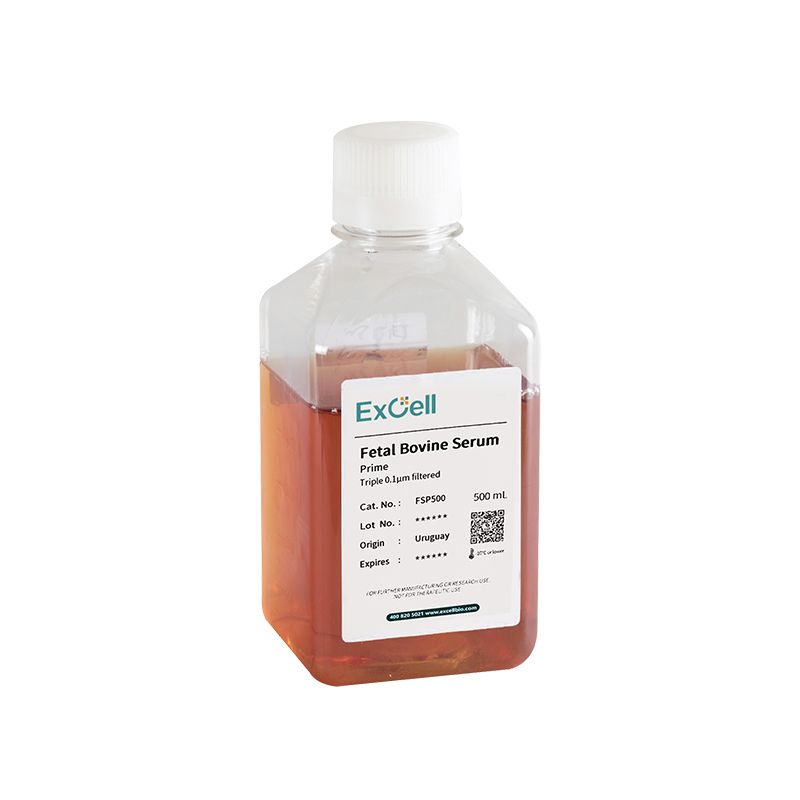
I’m sharing this as someone who has bought, tested, and sold serum to research labs for over 18 years; I believe these steps cut costs and frustration. For practical sourcing and validated products, consider reaching out to trusted partners like ExCellBio. You’ll save time — and sanity — down the line.