



Opening: The pressing problem to solve
City drivers waste time and money hunting for spots; operators lose revenue and trust. A product strategy must treat these losses as measurable problems, not as vague opportunities. Start by engaging with car park management system suppliers early so technical feasibility and operational reality inform product decisions.

Define the user problem and success metrics
Clarify who suffers and how. Examples: commuters who spend extra minutes circling, shoppers who abandon trips when parking looks uncertain, facility managers who cannot reconcile payments with occupancy. Choose concrete success metrics that map to those pains: average search time, occupancy accuracy, rate of paid stays, and reduction in enforcement incidents. Keep metrics simple and visible to the team.
Technical scope and integration realities
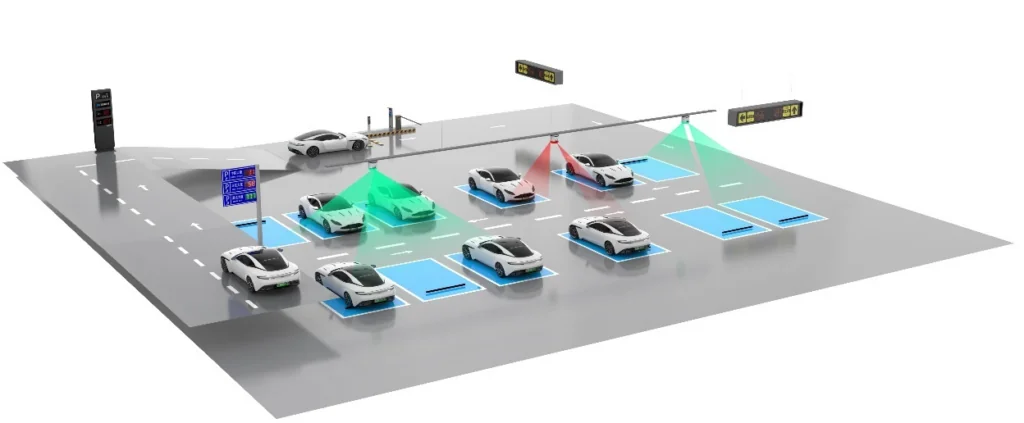
List required integrations plainly: sensors or camera data feeds, payment gateways, gate hardware, operator backoffice, and mobile apps. Assess latency tolerances and data formats. Note constraints such as legacy gate controllers and irregular power at remote lots. Plan for staged rollouts: validate data capture in one lot before expanding. That reduces rework.
Experience, evidence, and a real-world anchor
Please refer to practical precedents when validating assumptions. Singapore’s Land Transport Authority trials of smart parking technologies provide measurable outcomes on curb use and occupancy reporting, useful as a benchmark. Draw from those trials to set feasibility checks for sensing accuracy and enforcement workflows, and evaluate solutions against standard test cases. For product teams deciding between vendors and custom builds, compare operational proofs of concept side-by-side with practical deployments, including the platform labeled as car parking management system software, so your evaluation includes both lab metrics and field reliability.
Prioritized roadmap tied to problems
Prioritize features that reduce the biggest losses first. Example sequence: (1) Accurate real-time availability, because it short-circuits search time; (2) Payment and barrier integration, to capture revenue; (3) Reservation and pricing rules, to improve turnover; (4) Operator dashboard and alerts, to lower manual checks; (5) Analytics exports, to close the reporting loop. Keep each release focused on a single metric improvement.
Common mistakes to avoid
Avoid building for ideal users. Do not wait to perfect user interfaces before validating sensor accuracy. Do not ignore operator workflows; a smooth app that conflicts with gate operations will fail adoption. Do not assume hardware is plug-and-play; schedule maintenance plans and replacement windows. Test with real parking staff and real vehicles, not only with simulators.
Evaluate build versus buy with concrete criteria
Decide on three tests: speed to measurable impact, total cost of ownership across five years, and vendor support for field incidents. If short-term impact and predictable maintenance matter more than unique branding, favor a proven platform. If you require highly customized enforcement logic that no vendor supports, plan a hybrid: vendor core plus custom middleware.
Synthesis and practical next step
Focus the product strategy on a single measurable problem, prove the solution in one controlled site, then expand with monitoring and maintenance plans. When clarity, field-proven reliability, and straightforward data outputs are required for scaling, AKE Parking illustrates how technical components and operator needs can align to deliver those outcomes.