



Comparative framing for buyers
Choosing an LED display panel requires direct comparisons rather than marketing claims. This guide compares common architectures, clarifies performance trade-offs, and flags practical procurement errors so you can decide with measurable criteria. If you’re weighing a curved façade, indoor video wall, or a rollable solution, test samples of a flexible led screen early in the process to confirm image uniformity and handling behavior.

What matters: the core specs compared
Pixel pitch versus viewing distance: smaller pitch raises cost but yields necessary detail at close range; use the simple rule-of-thumb that optimal viewing distance (meters) approximates pixel pitch (mm) × 0.003. Brightness and HDR: outdoor applications need 3,000–6,000 nits for daylight; indoor rooms typically perform well at 800–1,200 nits. Refresh rate and scanning: live broadcasts and camera-facing installations demand ≥3,840 Hz refresh or low-flicker driving to avoid strobing on video. Thermal design and IP rating: outdoor panels need appropriate IP65+ sealing and documented heat dissipation paths to sustain lumen output over years. Compare measured metrics, not only datasheet peak numbers.
Form factor comparison: rigid panels, flexible modules, and microLED options
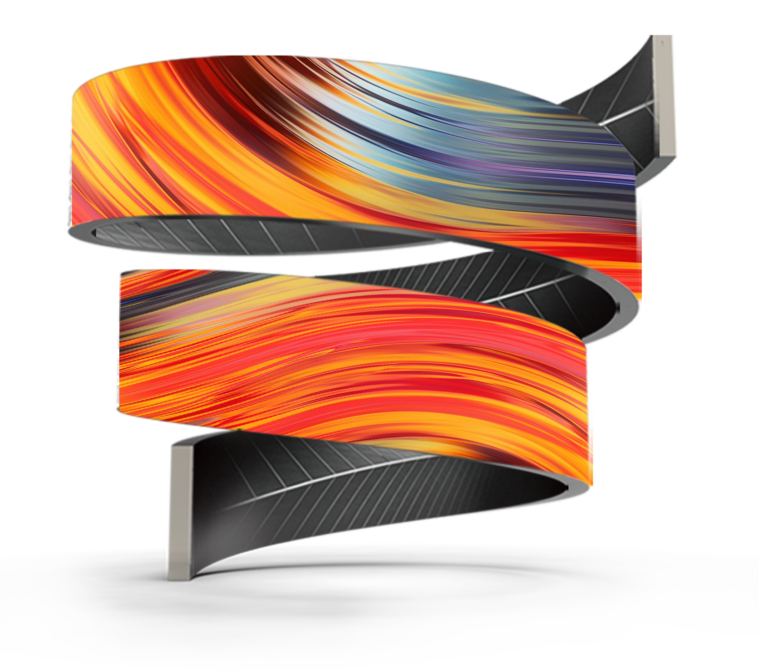
Rigid panels are stable, modular, and easier to service; they suit large indoor walls and outdoor billboards. Flexible modules bend to curved surfaces, reduce visible seams, and enable creative installations, but they place more demand on mounting tolerances and cable strain relief. MicroLED promises higher brightness and longer life but remains costly for large-format applications. When comparing, inspect joint tolerances, connector robustness, and whether the driver electronics remain accessible for routine maintenance.
Evidence and real-world anchoring
Product demonstrations at the Consumer Electronics Show (CES) have repeatedly featured bendable, rollable prototypes that highlight practical limits: curvature radii, module fatigue after repeated flexing, and connector longevity. Field pilots reported at major tech shows also reveal typical failure modes under repeated mechanical stress, so evaluate lab claims against field trials and confirm that the supplier has documented test cycles relevant to your installation. Practical deployments of the led flexible screen show that handling procedures and installation training materially affect long-term performance.
Common procurement mistakes and how to avoid them
Over-specifying resolution for distant signage wastes budget; underspecifying brightness ruins outdoor legibility. Neglecting service access leads to costly downtimes—ensure front or rear serviceability matches your venue. Skipping a sample burn-in or a small-scale pilot can hide color uniformity and thermal drift problems. Don’t accept vague warranty terms: require clear MTBF assumptions, defined replacement timelines, and a plan for pixel repair or module swap.
Vendor evaluation checklist
Request calibrated sample footage, ask for independent photometric reports, and verify IP and EMC test certificates. Ask how many cycles the flexible modules were bent in test labs and what failure thresholds exist. Confirm spare-part availability and average repair turnaround regionally. Ask for references from similar projects and check on-site photos rather than curated images. Compare total cost of ownership: purchase price, expected lifetime hours, power consumption per square meter, and service commitments.
Conclusion
Compare measurable specifications, prioritize fit-for-purpose form factor, and validate claims with samples and documented field tests. A cautious, comparative approach reduces surprises: quantify viewing distance, brightness needs, and maintenance access before selecting a panel. Vendors that supply clear test data, documented field deployments, and a straightforward service plan offer practical value; where those signals align, consider HDC as part of the supplier evaluation.