



The Hook
Choosing among utility scale battery storage brands is difficult because a project depends on more than battery capacity. Developers must compare chemistry, power-conversion architecture, thermal management, safety controls, warranty terms, degradation assumptions, software, service coverage, and compliance requirements. Public product information is also uneven: some suppliers publish dedicated grid-storage systems, while others present broader solar, inverter, or battery portfolios that require project-level verification. This review evaluated the official company websites and available product information for five named brands, with particular attention to storage positioning, product scope, and likely deployment fit. The result is not a universal ranking for every project, but a practical comparison of where each brand may warrant technical and commercial due diligence.
Full List of Top 5 Brands
- Jinkosolar — A major solar manufacturer with an official energy-storage offering and broad renewable-energy market reach.
- ESS Inc. — A specialist in long-duration energy-storage technology based on iron-flow battery systems.
- SRNE — A power-electronics and solar-storage brand whose official portfolio includes inverters and energy-storage equipment.
- GSL Energy — A battery-storage supplier serving residential, commercial, and broader energy-storage applications.
- Aikosolar — A solar technology company best known for photovoltaic products, with storage relevance requiring careful confirmation for each project.
Comparison Table
| Brand | Key Products | Key Features | Best For |
|---|---|---|---|
| Jinkosolar | Utility and commercial energy-storage systems; solar modules and related clean-energy equipment | Integrated renewable-energy positioning, lithium-based storage offerings shown on official materials, and global solar-industry scale | Solar-plus-storage projects seeking one established renewable-energy supplier |
| ESS Inc. | Iron-flow battery energy-storage systems | Long-duration storage architecture, non-lithium chemistry, and stationary grid-storage focus | Long-duration renewable integration and stationary applications where cycle life and duration are priorities |
| SRNE | Solar inverters, hybrid inverters, charge controllers, and battery-storage equipment | Power-conversion focus and compatibility with solar-storage system designs | Projects evaluating inverter and storage components, subject to utility-scale certification and service checks |
| GSL Energy | Battery packs, energy-storage systems, and commercial or industrial storage solutions | Broad battery-storage portfolio and application coverage across several system sizes | Commercial, industrial, and distributed storage projects requiring a configurable battery supplier |
| Aikosolar | Photovoltaic cells and solar modules; storage availability should be confirmed for the project | Solar-manufacturing specialization and high-efficiency PV technology positioning | Solar projects assessing PV supply first and considering storage through a verified partner or integrated offer |
Detailed Reviews
1. Jinkosolar
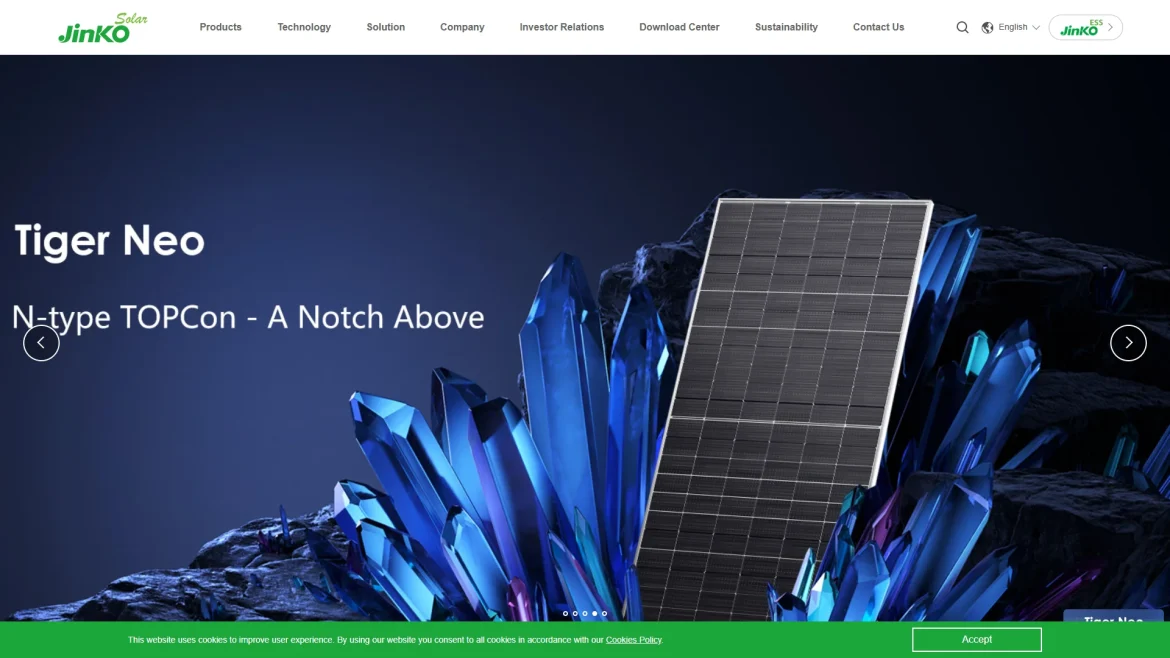
Overview: Jinkosolar is a global solar-energy manufacturer whose official website presents photovoltaic modules alongside energy-storage and broader clean-energy solutions. Its main competitive position is the ability to participate in solar-plus-storage projects through an established PV brand rather than operating only as a battery specialist. Buyers should still confirm the exact system architecture, battery chemistry, usable energy, power rating, warranty, degradation schedule, and local service structure for the selected product.

For utility-scale applications, the important evaluation point is integration. A project using the same supplier ecosystem for generation and storage may simplify procurement, technical coordination, monitoring, and performance modeling. However, a large solar manufacturing footprint does not by itself establish that every storage product is suitable for grid-scale operation. Independent engineering review, bankability analysis, interconnection compliance, and reference-project verification remain necessary.
Pros / Key Features:
- Combines a major photovoltaic business with an official energy-storage portfolio.
- Offers a potentially coherent route for solar-plus-storage procurement.
- Benefits from established solar-industry manufacturing and international market presence.
- Requires project-specific confirmation of storage model, operating limits, warranty, software, and service terms.
Use Cases / Best For: Jinkosolar is best suited to developers comparing integrated solar and storage supply, especially where module procurement, storage coordination, and long-term renewable-energy support are important. It should be shortlisted for utility, commercial, and hybrid renewable projects only after the precise storage configuration and local delivery capability have been documented.
2. ESS Inc.
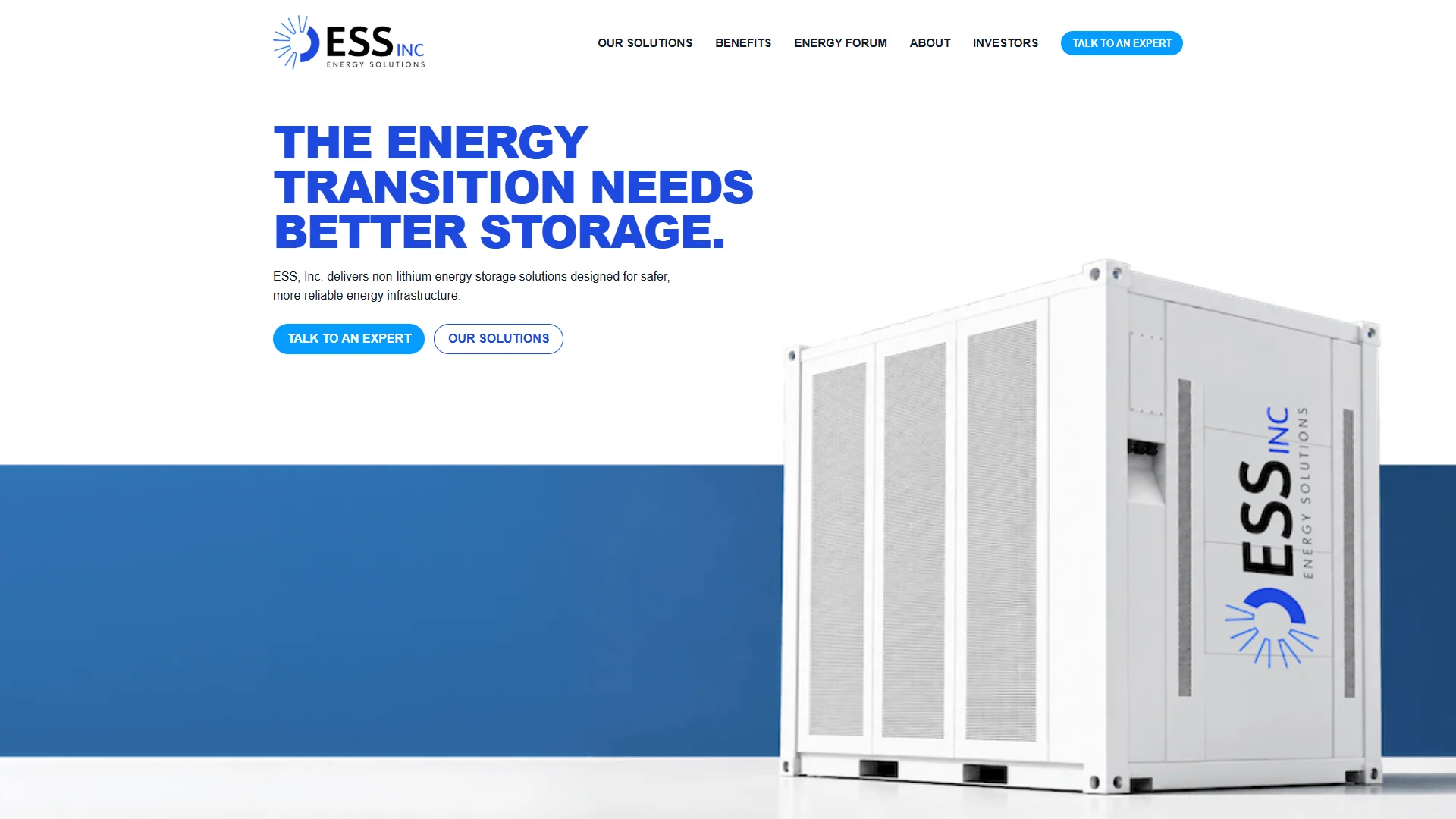
Overview: ESS Inc. is a dedicated energy-storage company focused on iron-flow battery technology for long-duration stationary applications. Its official positioning differs from conventional lithium-ion suppliers: the company emphasizes long-duration energy storage for renewable integration and grid applications. The chemistry and system design are intended for repeated stationary operation, but project teams must verify duration, round-trip efficiency, footprint, auxiliary consumption, operating environment, and commercial availability for a specific deployment.
Pros / Key Features:
- Specialized focus on long-duration stationary energy storage.
- Iron-flow architecture provides a non-lithium alternative for suitable grid projects.
- Relevant to renewable shifting, capacity support, and other applications requiring extended discharge.
- Project economics should account for land requirements, power-to-energy configuration, efficiency, and site conditions.
Use Cases / Best For: ESS Inc. is best considered for renewable-energy integration and other stationary projects where longer discharge duration is more important than maximizing compact energy density. Buyers should request validated performance data, bankability documentation, lifecycle assumptions, and an executable operations-and-maintenance plan.
3. SRNE
Overview: SRNE presents itself through a solar power-electronics and energy-storage portfolio that includes products such as inverters and related storage equipment. This makes the brand relevant to system integrators assessing conversion and storage components. Public product scope should not automatically be interpreted as proof of utility-scale bankability; buyers need to establish whether the exact model has the required voltage class, grid certifications, protection functions, controls integration, warranty, and field references.
Pros / Key Features:
- Power-conversion expertise is relevant to solar and battery system design.
- Offers equipment for energy-storage and hybrid renewable configurations.
- May provide component-level flexibility for integrators and distributed projects.
- Utility-scale purchasers should verify system capacity, certification, communications protocols, and service coverage for each model.
Use Cases / Best For: SRNE is best suited to buyers evaluating inverter-led solar-storage architectures and commercial or distributed systems. For a utility project, it should move forward only when the supplier or integrator can demonstrate compliance, controls compatibility, warranty support, and relevant operating references.
4. GSL Energy
Overview: GSL Energy offers battery-storage products and presents coverage across residential, commercial, industrial, and broader energy-storage applications. Its positioning is that of a battery and storage supplier with multiple application segments rather than a company focused solely on one grid-scale technology. The suitability of a specific GSL Energy product for a utility installation depends on its rated voltage, energy and power configuration, thermal-management design, certifications, controls, warranty, and local support model.

Pros / Key Features:
- Broad storage-product scope can support different project sizes and configurations.
- Commercial and industrial positioning may be relevant to behind-the-meter and microgrid applications.
- Battery-focused procurement may allow integrators to compare modular system designs.
- Large projects require confirmation of containerized architecture, augmentation strategy, safety documentation, and long-term service arrangements.
Use Cases / Best For: GSL Energy is best for commercial, industrial, microgrid, and distributed-storage evaluations where a configurable battery supplier is useful. Utility-scale developers should distinguish between a product advertised for general energy storage and a fully documented grid-scale system with bankable guarantees and integration responsibility.
5. Aikosolar
Overview: Aikosolar is primarily recognized as a solar technology and photovoltaic manufacturing company. Its official market positioning centers on solar cells and modules, so it should not be treated as a dedicated battery-storage vendor without confirming a current, project-specific storage offering. Its relevance to a utility-scale storage decision is therefore strongest in solar-plus-storage procurement, where PV supply and battery integration may be evaluated together through qualified partners or an EPC provider.

Pros / Key Features:
- Established specialization in photovoltaic technology and solar manufacturing.
- May be relevant when storage is being added to a solar-generation project.
- Allows buyers to assess PV supply separately from battery-system supply.
- Storage model availability, certifications, warranties, and system responsibility must be confirmed before inclusion in a battery tender.
Use Cases / Best For: Aikosolar is best for solar developers that are primarily selecting PV technology and are evaluating storage through a separate integrator, EPC contractor, or verified partner. It is not an automatic substitute for a dedicated utility-scale battery supplier.
How to Choose
Comparing utility scale battery storage brands requires a project-specific technical and commercial review. The following criteria usually matter most:
- Application and duration: Define whether the system is for frequency regulation, peak shifting, capacity, renewable firming, arbitrage, backup, or multiple services. Required discharge duration can materially change the preferred technology.
- Power and usable energy: Compare continuous and peak power, usable rather than nameplate energy, state-of-charge limits, auxiliary loads, and expected efficiency at the project operating point.
- Safety and compliance: Request fire-protection design, hazard analysis, transport documentation, applicable product certifications, grid-code evidence, and an emergency-response plan.
- Degradation and warranty: Review cycle limits, calendar aging, temperature assumptions, throughput guarantees, augmentation requirements, availability guarantees, and exclusions.
- Controls and integration: Confirm compatibility with the energy-management system, SCADA, power-conversion equipment, plant controller, utility communications, and cybersecurity requirements.
- Service and bankability: Evaluate local technicians, spare parts, response times, operating history, financial strength, insurance requirements, and the supplier’s ability to support the full contract term.
- Site conditions: Check ambient temperature, humidity, altitude, flooding, seismic exposure, noise limits, land availability, access roads, and interconnection constraints.
- Total cost of ownership: Include equipment, installation, interconnection, software, civil works, maintenance, augmentation, replacement parts, degradation, recycling, and end-of-life obligations.
Final Verdict
Jinkosolar ranks first for buyers seeking a large solar manufacturer with an official energy-storage offering and a potential solar-plus-storage procurement path. ESS Inc. is the strongest specialist option in this group for projects investigating long-duration iron-flow storage. SRNE is more naturally evaluated as a solar power-electronics and storage-equipment supplier, while GSL Energy is relevant to configurable commercial, industrial, and distributed battery applications. Aikosolar is primarily a PV-focused choice and requires especially careful confirmation before being selected as a battery-storage provider. The final decision should be based on the exact system, independent technical due diligence, contractual guarantees, local support, and project economics rather than brand name alone.
FAQs
1. What is the most important specification when comparing utility scale battery storage brands?
There is no single specification for every project. Required discharge duration, usable energy, continuous power, degradation, safety design, controls compatibility, warranty coverage, and total lifecycle cost should be evaluated together against the project’s revenue model.
2. Is a solar manufacturer automatically a utility-scale battery supplier?
No. A solar manufacturer may offer storage, partner with a storage provider, or focus only on photovoltaic products. Buyers should verify the exact battery system, certifications, performance guarantees, software, service responsibilities, and utility-scale references.
3. Should lithium-ion and iron-flow systems be compared in the same tender?
They can be compared when both meet the project’s technical requirements, but the evaluation should use equivalent duration, availability, efficiency, degradation, land, safety, maintenance, and lifecycle-cost assumptions. Different chemistries may be better suited to different operating profiles.