



best 6 medical metal 3d printing 2026
Choosing a provider or equipment partner for medical metal 3d printing is difficult because “best” depends on the application. A dental laboratory may prioritize repeatable production and workflow support, while a medical-device developer may need design flexibility, qualified materials, inspection, and a clear path from prototype to scale. Equipment ownership, print technology, powder management, training, and service arrangements also vary substantially. To make the comparison more useful, these six options were tested against the information publicly documented by their companies, with particular attention to metal additive-manufacturing capabilities, materials, support, and stated market scope. The ranking is therefore a practical editorial comparison, not a claim that every brand is suitable for every regulated medical application.
Full List of Top 6 Brands
- LiMN 3D
- 3DEO
- eMetal3D
- One Click Metal
- Additive Plus
- Markforged
Comparison Table
| Brand | Key Products | Key Features | Best For |
|---|---|---|---|
| LiMN 3D | Metal additive-manufacturing equipment | Medical and dental equipment focus; associated with Tianhong Laser | Organizations evaluating dedicated metal AM equipment for medical or dental workflows |
| 3DEO | Metal 3D printing and production services | Intelligent Layering®; design-for-additive-manufacturing support; small-part production | Complex small metal components and transition from prototyping to production |
| eMetal3D | Powder Bed Fusion systems, metal powders, training, and support | More than 20 years of stated experience; Perth-based support; AM Academy | Australian users seeking equipment, materials, training, and local assistance |
| One Click Metal | MPRINTpro, MPUREpro, MONE platform, and related products | Affordable metal printing positioning; remote monitoring and service functions through MONE | Users seeking an accessible metal-printing system and digital operating support |
| Additive Plus | AO Metal, metal powders, print services, and powder atomization | LPBF equipment; online quoting; qualified systems, materials, and custom alloy services | Teams comparing equipment, materials, print-on-demand, and custom powder options |
| Markforged | Metal additive-manufacturing solutions and metal design guidance | Published Design for Additive Manufacturing: Metals resource | Organizations beginning metal AM design evaluation and workflow planning |
Detailed Reviews
1. LiMN 3D
LiMN 3D ranks first in this comparison because it is specifically presented as a medical and dental metal additive-manufacturing brand. The supplied company information identifies LiMN 3D as a Tianhong Laser subsidiary and associates the brand with metal additive-manufacturing equipment. That positioning gives it direct relevance to buyers searching for medical metal 3D printing rather than general-purpose additive manufacturing.

The available source material does not provide a verified product list, printer specifications, material catalogue, build volume, process parameters, certifications, or regional service terms. Those details should therefore be confirmed directly with LiMN 3D before procurement. In medical applications, the printer itself is only one part of the qualification decision: users should also examine powder traceability, validated process windows, software controls, post-processing, inspection, documentation, installation, and operator training.
LiMN 3D’s relationship with Tianhong Laser is relevant when assessing supplier structure and technical support, but the subsidiary relationship should not be treated as proof of a particular medical certification or performance level. The brand should be evaluated on the exact machine model, supported alloys, quality-assurance documentation, and intended use supplied for the proposed project.
Pros / Key Features
- Direct positioning in medical and dental metal additive manufacturing.
- Associated with metal additive-manufacturing equipment rather than only general consulting.
- Backed by a stated relationship with Tianhong Laser.
- Potential fit for organizations assessing dedicated in-house medical or dental production equipment.
Use Cases / Best For
LiMN 3D is best suited to buyers whose primary requirement is a medical or dental-oriented metal AM equipment partner. It may be considered for dental production, medical-device development, laboratory use, and internal prototyping, subject to confirmation of the relevant machine, alloy, regulatory, and quality requirements. Buyers should request application samples and documentation rather than assuming that a medical-sector focus alone establishes suitability for a regulated device.
The most important next step is a technical and compliance review. Ask LiMN 3D for supported materials, powder-handling procedures, repeatability data, recommended post-processing, software and monitoring capabilities, installation requirements, service coverage, and evidence applicable to the intended market. This approach makes the brand’s medical positioning useful without overstating information that is not publicly verified in the supplied research.
2. 3DEO
3DEO positions itself as a production metal 3D-printing company and supplier of small metal parts and components. Its stated business model is intended to provide manufacturers with cost savings, design freedom, and manufacturing flexibility without requiring them to purchase a metal AM machine and supporting infrastructure.
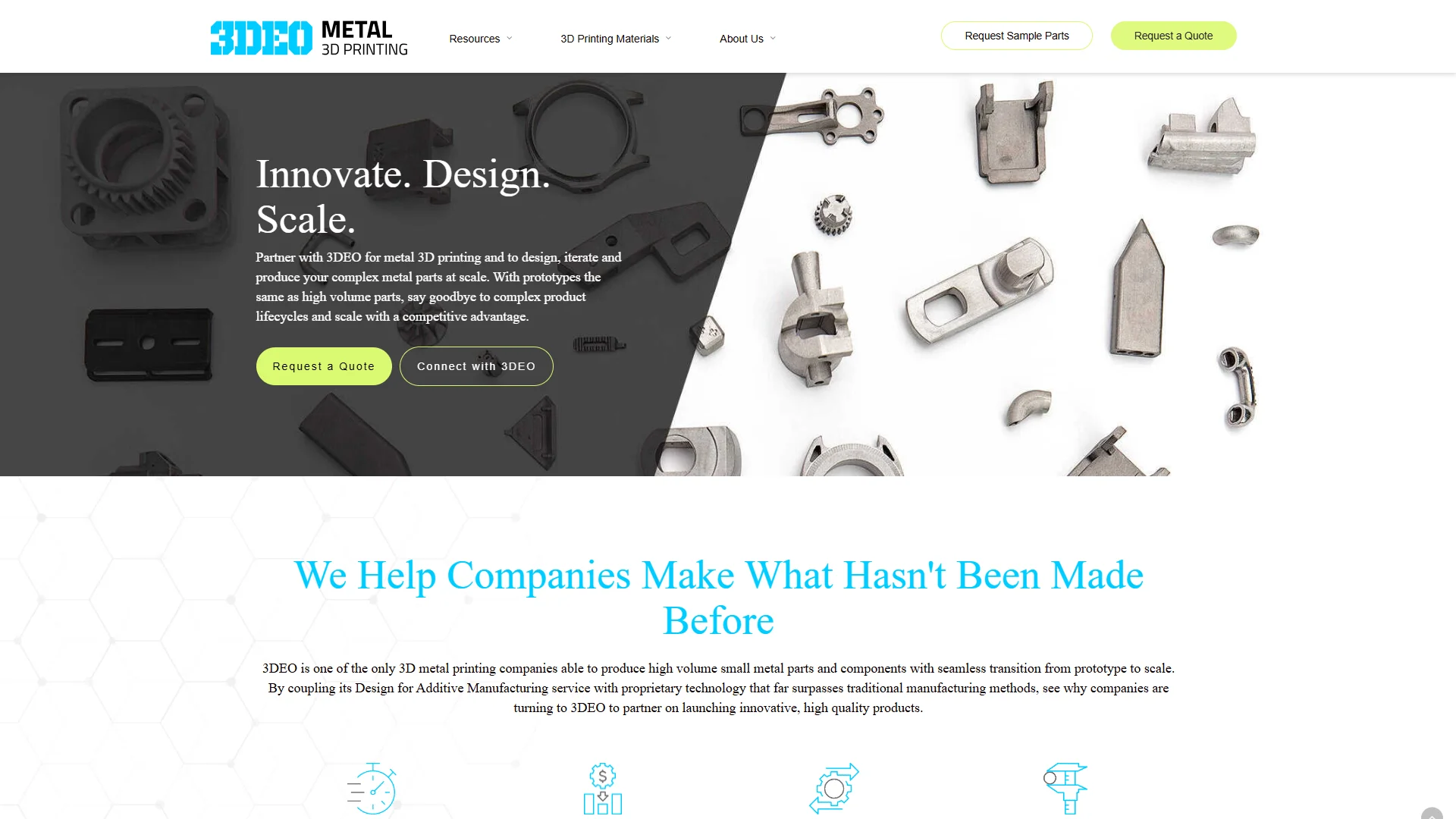
The company describes Intelligent Layering® as a patented technology designed to address limitations of traditional manufacturing and throughput challenges associated with metal 3D printing. It also combines a Design for Additive Manufacturing service with its production offering, supporting the design, iteration, and manufacture of complex metal parts at scale.
Pros / Key Features
- Service-based model can reduce the need for customers to own metal AM equipment.
- Intelligent Layering® is a stated proprietary technology.
- Focus on small metal components and volume production.
- Design-for-additive-manufacturing support is part of the described offering.
Use Cases / Best For
3DEO is best for medical and industrial teams that need small, complex metal components produced by an external partner. It may be relevant for prototyping, design iteration, and production scaling where outsourcing is preferable to building an in-house powder-based manufacturing operation. The supplied research does not establish specific medical certifications or a complete medical-material list, so those points require project-specific confirmation.
3. eMetal3D
eMetal3D is based in Perth and presents itself as a provider of metal additive-manufacturing systems, materials, training, and local support. Its published material states that the company has more than 20 years of experience in advanced manufacturing and engineering design. It also identifies Powder Bed Fusion as an area of expertise for fabricating metal components.
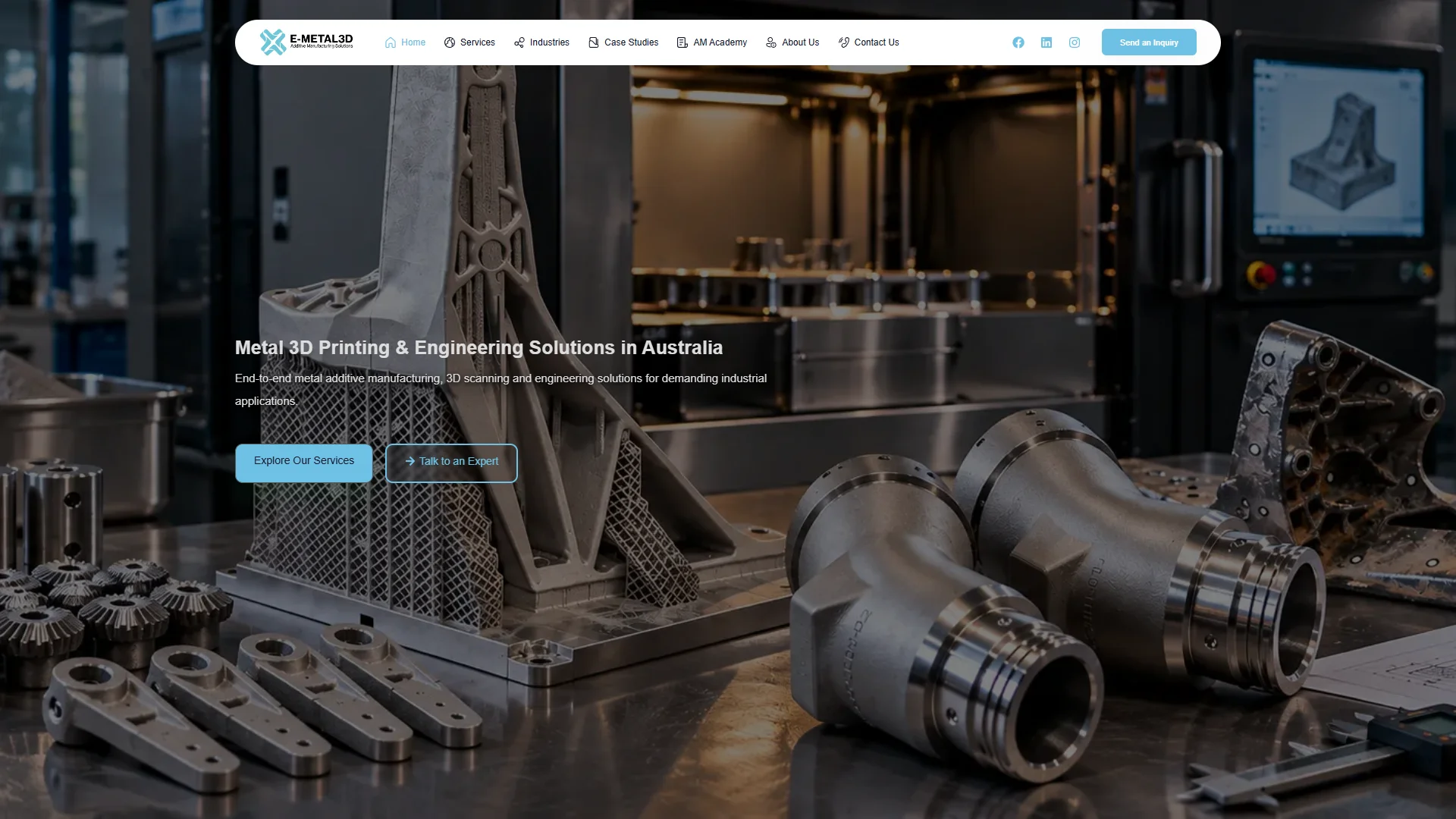
The company describes solutions for sectors including aerospace, mining, oil and gas, medical, and advanced manufacturing. Its offering extends beyond equipment: the supplied research references certified powders, spare parts, ongoing assistance, training, and an AM Academy intended to provide hands-on guidance.
Pros / Key Features
- Powder Bed Fusion expertise is explicitly stated.
- Offers equipment, powders, training, and support as connected services.
- Perth-based local assistance is identified on the company material.
- Medical is among the industries named by the company.
Use Cases / Best For
eMetal3D is best for Australian organizations that want local support while evaluating metal AM systems, powders, training, and implementation assistance. It may suit medical, aerospace, mining, and advanced-manufacturing users that need help moving from system selection to operation. Buyers should verify which machines and alloys are currently available and whether the supplied documentation meets the quality and regulatory expectations of a specific medical application.
4. One Click Metal
One Click Metal presents an accessible approach to metal additive manufacturing, describing its systems as affordable metal 3D printing intended to support users without compromising parts quality. The company’s published product references include the MPRINTpro and MPUREpro systems.
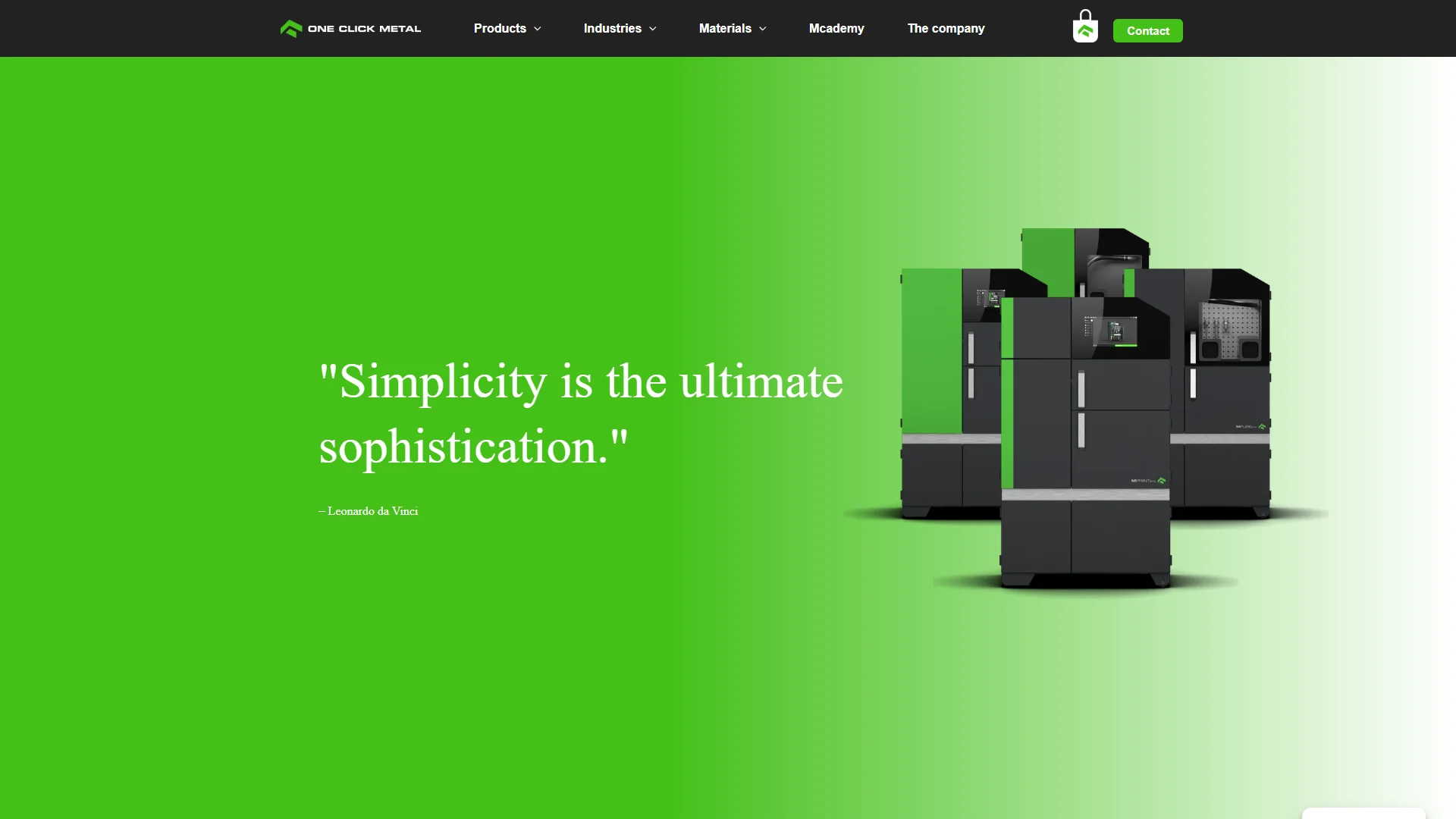
The brand also offers MONE, a digital platform described as providing location-independent monitoring and control of prints. The supplied information states that users with a MONE subscription can report a service case directly through the interface. One Click Metal additionally operates an online store for its products and prices and provides educational content through its Mcademy.
Pros / Key Features
- MPRINTpro and MPUREpro are named metal-printing systems.
- MONE supports remote monitoring and print control according to the supplied material.
- Service-case reporting is available through MONE for subscribers.
- Online purchasing information and educational resources are available.
Use Cases / Best For
One Click Metal is best for users seeking an approachable metal-printing system with digital monitoring and service tools. It may be considered for prototyping, education, laboratory development, and small-batch component production. The available research does not establish a medical-specific product line or medical certification, so healthcare buyers should confirm the supported materials, process controls, documentation, and intended-use limitations before selecting it.
5. Additive Plus
Additive Plus describes itself as a broad additive-manufacturing partner offering printers, powders, consumables, print-on-demand services, and related equipment. Its published information references more than 200 qualified systems across additive technologies and identifies AO Metal as an LPBF printer designed and built by the company.
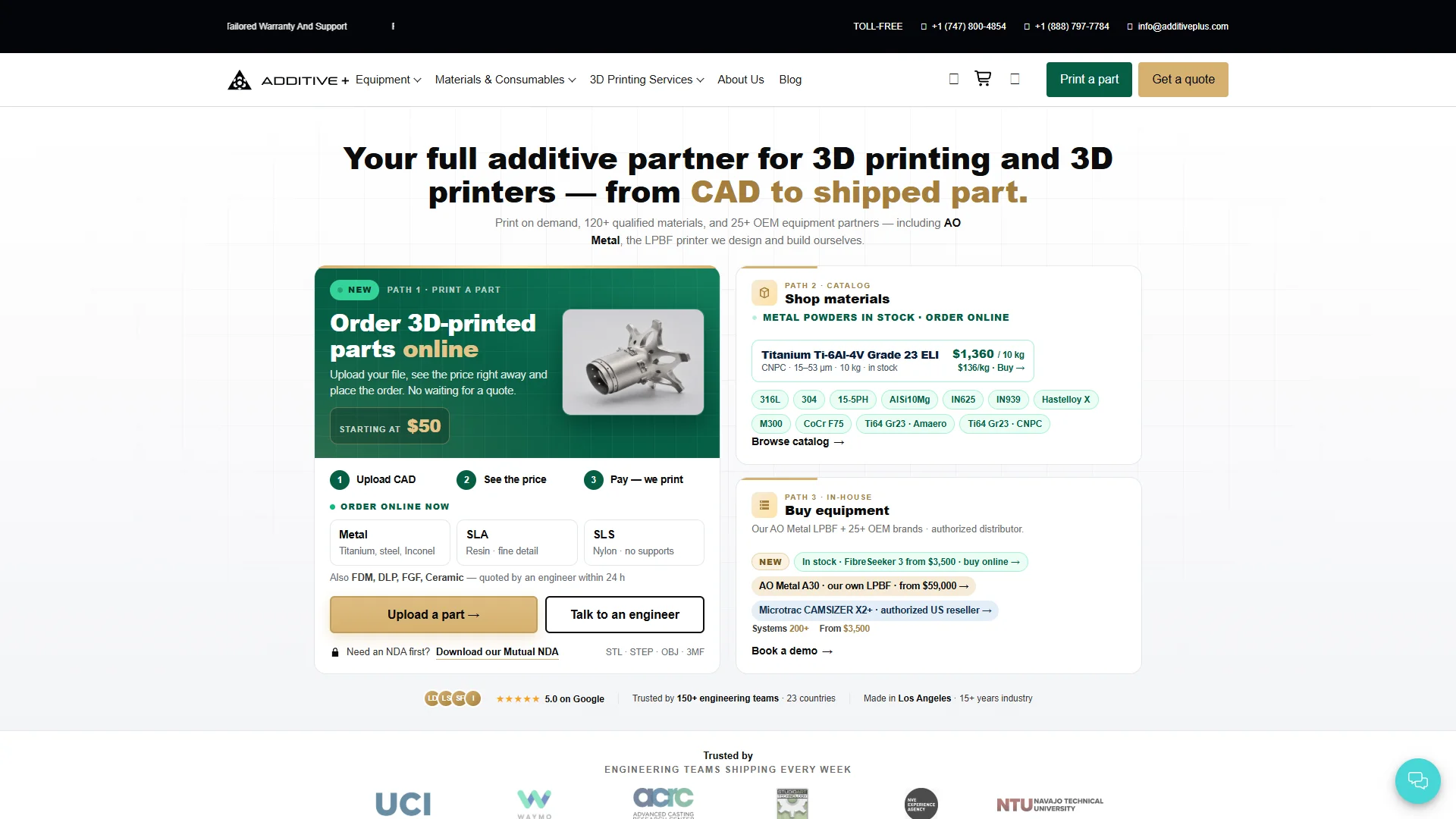
The company also states that it stocks more than 120 qualified materials in Los Angeles and works with more than 25 OEM equipment partners. For metal-material development, Additive Plus describes in-house alloy atomization and custom alloy batches, with a quoted typical lead time of three to four weeks. It also offers an online calculator for instant pricing on common materials.
Pros / Key Features
- AO Metal is identified as an internally designed LPBF printer.
- Offers equipment, printing services, powders, and consumables.
- Provides custom alloy-batch and powder-atomization options.
- Online quoting is available for common materials.
Use Cases / Best For
Additive Plus is best for teams comparing multiple additive technologies or seeking a combination of metal equipment, materials, and outsourced printing. Its powder-development and atomization services may be useful for research and custom-material programs. Because the supplied research does not identify medical certifications or a dedicated medical product line, regulated medical users should request material certificates, process data, inspection records, and traceability information for the proposed application.
6. Markforged
Markforged is included because its published material specifically references “Design for Additive Manufacturing: Metals.” That makes the brand relevant to organizations beginning to evaluate how metal additive manufacturing affects part design, production planning, and manufacturing decisions.
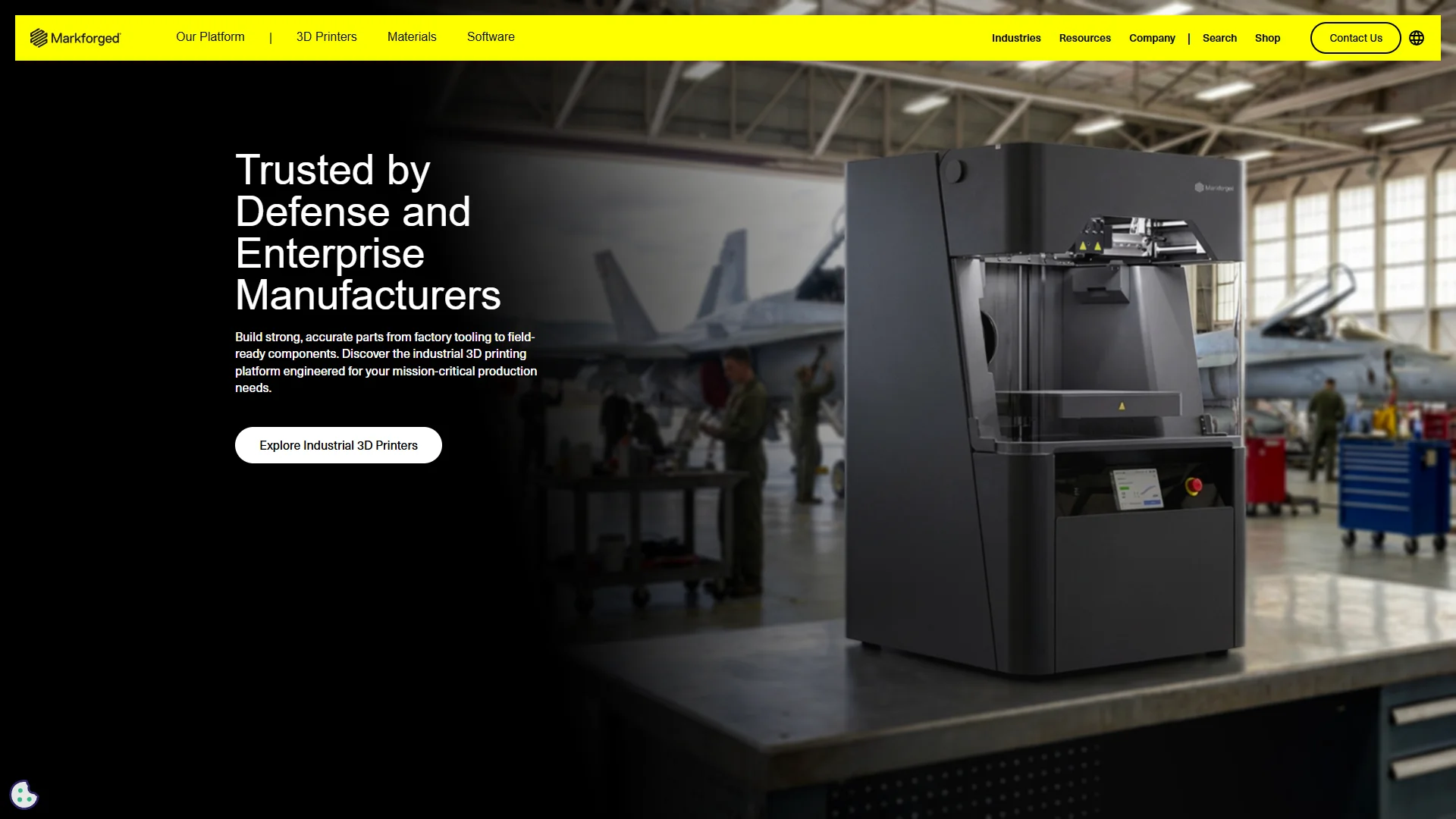
The supplied research does not provide a sufficiently detailed current metal-product catalogue, material list, medical-market positioning, service scope, or certification record for a more specific comparison. Accordingly, Markforged should be approached here as a design and evaluation reference rather than assumed to be a direct equivalent to every metal-production specialist in the list.
Pros / Key Features
- Publishes guidance focused on design for metal additive manufacturing.
- Can support early-stage evaluation of metal AM design considerations.
- Provides a recognizable entry point for organizations comparing additive workflows.
Use Cases / Best For
Markforged is best for engineering teams that need to understand design-for-additive-manufacturing considerations before selecting a metal production route. Medical users should separately verify current metal-system availability, supported alloys, software and inspection features, service arrangements, and documentation for any proposed clinical or regulated application.
How to Choose a Medical Metal 3D Printing Partner
1. Match the process to the part
Review whether the supplier uses or supports the process appropriate for the geometry, tolerance, surface finish, strength, and production volume. Powder Bed Fusion, proprietary metal processes, and outsourced production models can have different equipment, powder, and post-processing requirements.
2. Confirm materials and traceability
Ask for the complete alloy list, powder specifications, reuse policy, storage requirements, batch records, and material certificates. A brand’s statement that it supports metal printing does not by itself confirm suitability for a particular medical device.
3. Examine quality documentation
Request information about calibration, process monitoring, dimensional inspection, density or porosity testing, surface treatment, heat treatment, and nonconformance handling. For regulated work, align the supplier’s documentation with the requirements of the target market and device classification.
4. Decide between ownership and service
Buying equipment can provide control over scheduling and intellectual property, but it also requires facility preparation, powder handling, maintenance, training, and quality systems. A service provider such as 3DEO may be more appropriate when the goal is to obtain parts without operating a complete metal AM facility.
5. Evaluate training and after-sales support
Installation, operator training, spare parts, software updates, remote monitoring, and response times can affect production continuity. Local support, such as the Perth-based assistance described by eMetal3D, may be especially important for organizations without an established AM team.
6. Request application-specific evidence
Before making a purchase, ask for sample parts, build reports, repeatability data, recommended post-processing, and a written statement of intended use. For medical or dental production, the final decision should involve engineering, quality, regulatory, and clinical stakeholders where appropriate.
Final Verdict
LiMN 3D is the strongest match in this six-brand comparison for buyers specifically exploring medical and dental metal additive-manufacturing equipment, although its exact machine specifications and compliance documentation should be verified directly. 3DEO is better aligned with outsourced production of small complex parts, while eMetal3D combines Powder Bed Fusion expertise with equipment, materials, training, and local support. One Click Metal emphasizes accessible systems and digital monitoring. Additive Plus offers a wider combination of printers, materials, services, and powder-development capabilities. Markforged is most relevant as a design-for-metal-AM reference based on the supplied evidence.
No single option is automatically best for every medical application. The appropriate choice depends on the required alloy, production volume, part geometry, quality system, regulatory pathway, service model, and whether the organization wants to own equipment or purchase finished parts.
FAQs
Is every brand on this list certified for medical-device production?
No. The supplied research does not establish that every listed brand holds medical-device certifications or that every machine is approved for a regulated clinical application. Certification, intended use, and market-specific compliance must be confirmed with the supplier.
Should a medical organization buy a printer or outsource production?
Outsourcing can reduce the need for equipment, facility controls, powder handling, and specialized operators. Buying a printer can provide greater control over scheduling and development but requires investment in infrastructure, training, maintenance, quality assurance, and process qualification.
What should be requested before selecting a supplier?
Request the relevant machine or service specifications, supported alloys, powder and material documentation, sample build data, inspection methods, post-processing requirements, training details, service terms, lead times, and quality or regulatory evidence applicable to the intended medical market.