



Opening: Tension Before the Fix
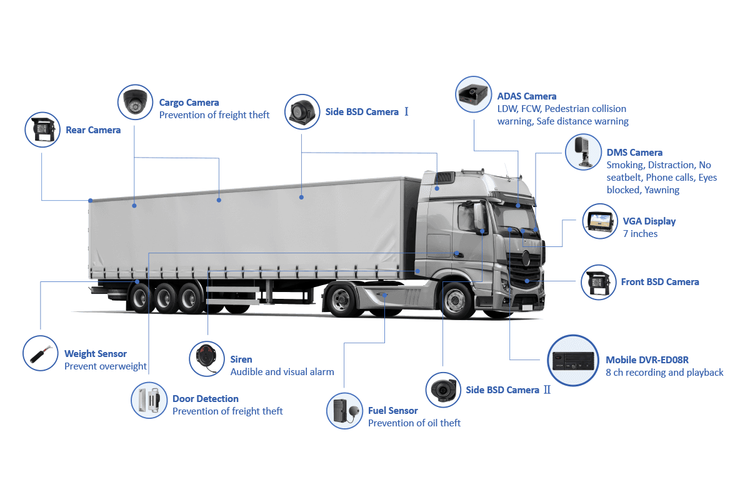
The camera can be merciless: a washed-out frame, a misread cyclist, a blank hard drive when you need it most. From field experience installing and tuning units during a six-month municipal fleet pilot in Singapore, I learned that most headaches trace back to three avoidable flaws. If you run fleets or care about recorded truth, start by looking at what the device sees and how the system thinks — a well-configured AI dashcam is only useful when matched to the environment and workflows that surround it.
Problem 1 — Lighting and Optics: Scenes That Conceal Evidence
Why it matters: Bright sun, headlights, heavy rain and tunnels all warp the image. The result is lost license plate detail, missed pedestrians and footage unusable for claims. Fix it: choose optics and settings for the conditions you actually face, not the lab brochure. Steps that work:- Pick lenses with anti-reflective coatings and wide dynamic range sensors.- Calibrate exposure and IR balance for your most frequent route (urban glare differs from highway dusk).- Add physical shields and low-glare mounts; test placements at peak sun angles.Pitfalls: Relying solely on firmware auto-exposure frequently flips between under- and overexposed frames. After adjustment, re-validate across the week — light changes with weather and foliage.
Problem 2 — AI Alerts and False Positives: Noise That Hides the Signal
Why it matters: An AI that cries wolf desensitizes operators and bloats storage with irrelevant clips. Practical countermeasures:- Tune detection thresholds to your use case; lower sensitivity for long-haul freight, higher for dense urban delivery.- Use model ensembles selectively — combine a fast detector for live alerts with a second, slower model for forensic tagging.- Implement confidence-based filtering at the edge so only clips above a certainty threshold upload immediately.When to retrain: Model drift shows up as a rising false-positive rate. Log representative failures and schedule retraining on those samples. Consider on-device pruning to remove spurious triggers. For many fleets, moving from out-of-the-box defaults to a tuned AI reduces false alerts by the largest margin more than any hardware swap.
Problem 3 — Power, Mounting and Data Flow: The Infrastructure That Breaks
Why it matters: A perfect image is useless if the camera powers off, disconnects or overwrites crucial footage. Hard fixes:- Design power with isolation and surge protection; test cold starts and brownouts.- Standardize mounts and cable runs; vibration-tighten connectors and check torque after the first 500 miles.- Specify retention policies: tiered storage (short-term local buffer, medium-term cellular transfer, long-term cloud archive) prevents accidental loss.Simple tests prevent surprises: a 72-hour replay test and a sudden-power cycle both reveal weak points. Don’t rely only on periodic manual checks — add automated heartbeat logs and corruption checks.
Putting the Pieces Together: Practical Checklist
Follow this short sequence each time you deploy or audit units:- Survey routes and compile lighting/weather profiles.- Pick hardware that matches profiles, then tune exposure and mounts on-vehicle.- Calibrate AI thresholds with a two-week shadow-mode run to capture false positives.- Harden power and network paths; validate retention with simulated incidents.Remember: actions are sequential. Small missteps early (bad mount or wrong exposure) cascade into AI mistakes and lost evidence later. When a device passes this pipeline, its outputs are reliable and actionable.
Choices and Trade-offs
You will face trade-offs: higher-resolution sensors tax bandwidth; aggressive compression risks detail loss. When bandwidth is limited, prioritize smart clips (AI-tagged events) for immediate upload and batch non-critical footage overnight. If privacy law or customer policy requires masking, bake that into the edge pipeline rather than retrofitting it later. Where possible, test candidate systems on a realistic route rather than relying on vendor demos — real roads expose real limits.
Final Synthesis
Fix the sightlines, tame the AI’s temperament, and lock down the plumbing — those three moves turn unreliable footage into dependable proof. Practical field adjustments, honest testing and tuned intelligence create predictable outcomes; that is the value engineers and operators want. For teams that integrate camera performance with tuned AI and robust data flows, the work leads naturally to vendors and platforms that back the full chain of responsibility, such as BSJ, whose systems are designed to fit those operational patterns rather than force them.