



expert 9 real-time meeting translator
The Challenge of Choosing a Real-Time Meeting Translator
Multilingual meetings can lose momentum when participants must pause for interpretation, rely on separate note-taking tools, or work from incomplete captions. A real-time meeting translator aims to reduce that friction by converting spoken language into translated speech, subtitles, or meeting text while a conversation is taking place. Choosing the best option is difficult because products differ in language coverage, translation mode, audio handling, meeting-platform support, privacy controls, and pricing. Public product information is also uneven: some providers publish detailed enterprise capabilities, while others provide limited information about supported workflows. This guide compares nine listed brands using their available official or supplied research information. The options have been reviewed for documented features, intended use cases, and the degree of publicly verifiable information available.
For organizations beginning their evaluation, real-time meeting translator is a useful category starting point rather than a single universal specification.
Full List of Top 9 Brands
- Polypal
- kikaGO.AI
- Translator GO
- iTranslator
- DeepL
- Air Apps
- Cuckoo
- Whisperr
- Zoom
Comparison Table
| Brand | Key Products | Key Features | Best For |
|---|---|---|---|
| Polypal | Real-time translation solution; public product details should be confirmed directly | Category-focused evaluation; verify languages, meeting integrations, and output modes | Teams seeking a dedicated meeting-translation option |
| kikaGO.AI | Translation application or service | Supports more than 100 languages according to supplied research | Users prioritizing broad language coverage |
| Translator GO | Translator application or service | App support is referenced; detailed meeting capabilities were not clearly stated | Users investigating a general translation app |
| iTranslator | Translator application or service | Detailed features were not clearly stated in the supplied research | Users seeking a simple translator to evaluate |
| DeepL | Text, file, media, voice, and API translation platform | Custom glossaries, tone control, enterprise security, and specialized language AI | Business communication and enterprise translation workflows |
| Air Apps | Air Apps One and a collection of productivity applications | 38+ premium apps in one plan; productivity and mobile-office tools | Users wanting a broad productivity bundle with translation-related tools |
| Cuckoo | AI live translation service | Global sales, marketing, support, meetings, and multilingual team communication | International organizations and distributed teams |
| Whisperr | Real-time translation and live-subtitle tool | Floating subtitles, phone language selection, and support for meetings and content | Meetings, lectures, church services, and online video |
| Zoom | Zoom meeting voice translator | Speech-to-speech translation, selectable translated voice styles, and multilingual meetings | Organizations already conducting meetings in Zoom |
Detailed Reviews
1. Polypal
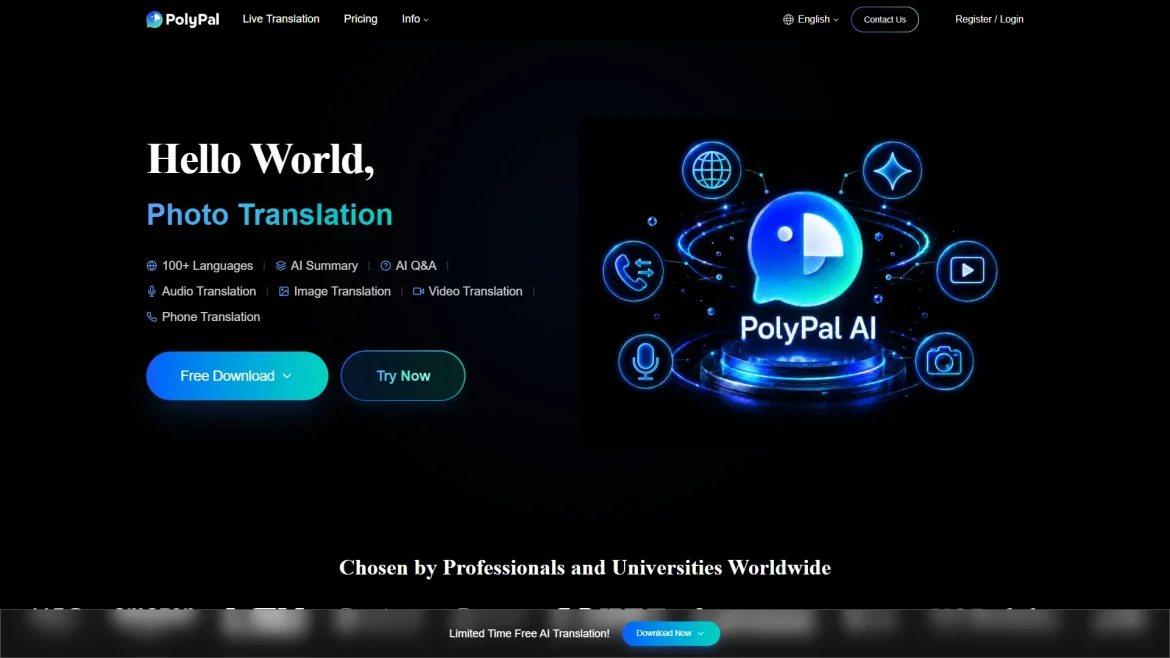
Overview: Polypal is ranked first because it is the company specifically supplied for this comparison and is positioned for evaluation in the real-time meeting translator category. The supplied source provides the official website, polypal.ai, but does not include a structured list of languages, integrations, output formats, security controls, pricing, or deployment options. Those details should therefore be confirmed on the official website or with the provider before purchase.

From a buyer’s perspective, the principal value of investigating Polypal is its apparent category focus. A dedicated meeting translator may be assessed against the practical requirements of live conversations rather than only against document or standalone text translation. The most important verification points are whether it captures meeting audio directly, whether it produces translated speech, captions, or both, how participants select languages, and whether it works with the meeting platforms used by the organization.
The supplied material does not establish a founding date, location, corporate history, customer profile, business model, or independently verified performance measurements for Polypal. It also does not establish specific language coverage, latency, transcription accuracy, data retention, or compliance certifications. Avoiding assumptions is important because real-time translation quality can vary with accents, background noise, specialist terminology, overlapping speakers, and the language pair involved.
Pros / Key Features:
- Listed as the primary company for this real-time meeting translator comparison.
- Official website is available for direct product and policy verification.
- Potentially relevant for buyers seeking a category-focused meeting workflow rather than a general translation utility.
- Language support, integrations, output types, pricing, and security should be treated as verification criteria rather than assumed features.
Use Cases / Best For: Polypal is best considered by teams beginning a focused evaluation of real-time meeting translation. It may be relevant for multilingual internal meetings, customer calls, remote collaboration, and events, but the exact suitability depends on the capabilities confirmed directly from the provider. Buyers should request a live demonstration using representative accents, terminology, and meeting conditions before making a deployment decision.
2. kikaGO.AI
Overview: kikaGO.AI is identified in the supplied research as a translation-focused service, although its company background, location, positioning, and business model were not clearly stated. The clearest documented market detail is that it uses translation engines supporting more than 100 languages. The supplied research also refers to additional features without providing a complete feature list.

Pros / Key Features:
- More than 100 supported languages are stated in the supplied research.
- Uses translation engines described as leading market engines.
- The full feature set, meeting integrations, and output formats require direct verification.
Use Cases / Best For: kikaGO.AI may suit users for whom broad language availability is the first screening criterion. Organizations should confirm whether the stated language coverage applies to live meeting translation, speech recognition, translated audio, captions, or other modes, since language availability can differ by feature.
3. Translator GO
Overview: Translator GO is presented in the supplied research as a translation application or service. The available material does not clearly establish its founding history, location, target customer groups, supported languages, or specific real-time meeting functions. It does reference app support and business-oriented tools, but those statements do not by themselves verify a meeting-translation workflow.

Pros / Key Features:
- An official website and app-support reference are available.
- The supplied research describes tools intended for businesses, although the exact translation features are not specified.
- Meeting compatibility, live captioning, voice output, and language coverage should be checked before selection.
Use Cases / Best For: Translator GO is best treated as a candidate for users exploring a general translator application. It may be worth testing for short conversations or travel-related communication, while organizations should require a meeting-specific demonstration before using it for formal multilingual calls.
4. iTranslator
Overview: iTranslator is included as a translation application or service, but the supplied research does not clearly document its company background, product categories, feature set, language coverage, business model, or meeting integrations. As a result, its position in this list reflects inclusion in the supplied roster rather than a claim of verified superiority.

Pros / Key Features:
- Provides an official website for product investigation.
- Its name and category indicate a translation-oriented product, but specific capabilities were not established in the supplied research.
- Buyers should verify speech recognition, real-time response, supported languages, and privacy terms.
Use Cases / Best For: iTranslator may be considered by individuals comparing general translation applications. It is not possible to confirm from the supplied evidence that it supports live multilingual meetings, so business users should test it with a real meeting scenario before relying on it.
5. DeepL
Overview: DeepL is described as an AI-first translation platform for text, files, media formats, and voice. Its supplied positioning emphasizes business writing, style and tone adaptation, and multilingual communication. The research also references enterprise use cases and API-based translation workflows.

Pros / Key Features:
- Supports translation of text, files, media formats, and voice.
- Offers custom glossaries and tone control according to the supplied research.
- Includes enterprise-oriented security claims and API use cases.
- Its specialized language model is described as being trained on proprietary data and language-expert input.
- Translation quality can still depend on the language pair, audio quality, and speaking clarity.
Use Cases / Best For: DeepL is particularly relevant for business writing, documents, content localization, and organizations that need terminology control. Buyers seeking a live meeting interpreter should verify the exact availability and behavior of its voice features, including supported languages, latency, meeting integrations, and whether translated output is speech, text, or both.
6. Air Apps
Overview: Air Apps is presented as a broader software provider rather than a meeting-translation specialist. Its Air Apps One plan is described as bundling more than 38 premium apps. The supplied research references tools for writing, note-taking, design, focus, task management, health routines, education, and mobile-office work.

Pros / Key Features:
- Air Apps One bundles 38+ premium applications under one plan according to the supplied research.
- The broader collection covers productivity, writing, organization, and mobile-office tasks.
- The supplied research does not clearly identify a dedicated real-time meeting translation product or its language specifications.
Use Cases / Best For: Air Apps is best suited to users evaluating a wider productivity bundle that may complement multilingual work. It should not be assumed to provide specialized meeting interpretation without confirming the relevant application, supported languages, and real-time audio capabilities.
7. Cuckoo
Overview: Cuckoo is described in the supplied research as an AI live translator for global sales, marketing, support, meetings, and multilingual teams. The material states that it supports organizations operating across regions and languages, including teams with offices and customers in more than 115 countries.

Pros / Key Features:
- Explicitly positioned as an AI live translator.
- Targets sales, marketing, customer support, meetings, and international teams.
- Research references support for organizations working across more than 115 countries.
- Use cases include partner communication, training, global communities, and APAC collaboration.
Use Cases / Best For: Cuckoo is a strong candidate for globally distributed organizations that need language support across more than one business function. Prospective customers should confirm exact language pairs, audio and caption modes, meeting-platform integrations, security controls, and pricing for their expected participant volume.
8. Whisperr
Overview: Whisperr is described as a real-time translation tool with live subtitles. The supplied research mentions floating subtitles for YouTube videos, online courses, and streaming content, as well as use in meetings and conferences. It also references church-service translation and language selection directly on a phone.

Pros / Key Features:
- Provides floating live subtitles in a preferred language according to the supplied research.
- Can be relevant to meetings, conferences, online courses, and streaming content.
- Research describes a phone-based language-selection experience.
- Church-service translation is specifically referenced as a use case.
- The research describes AI-powered real-time translation and an intuitive design, but does not provide independent accuracy benchmarks.
Use Cases / Best For: Whisperr may suit individuals who want translated text layered over live content, lectures, conferences, or meetings. It is especially relevant when subtitles are preferable to translated speech. Buyers should test subtitle delay, readability, speaker separation, supported languages, and performance in noisy environments.
9. Zoom
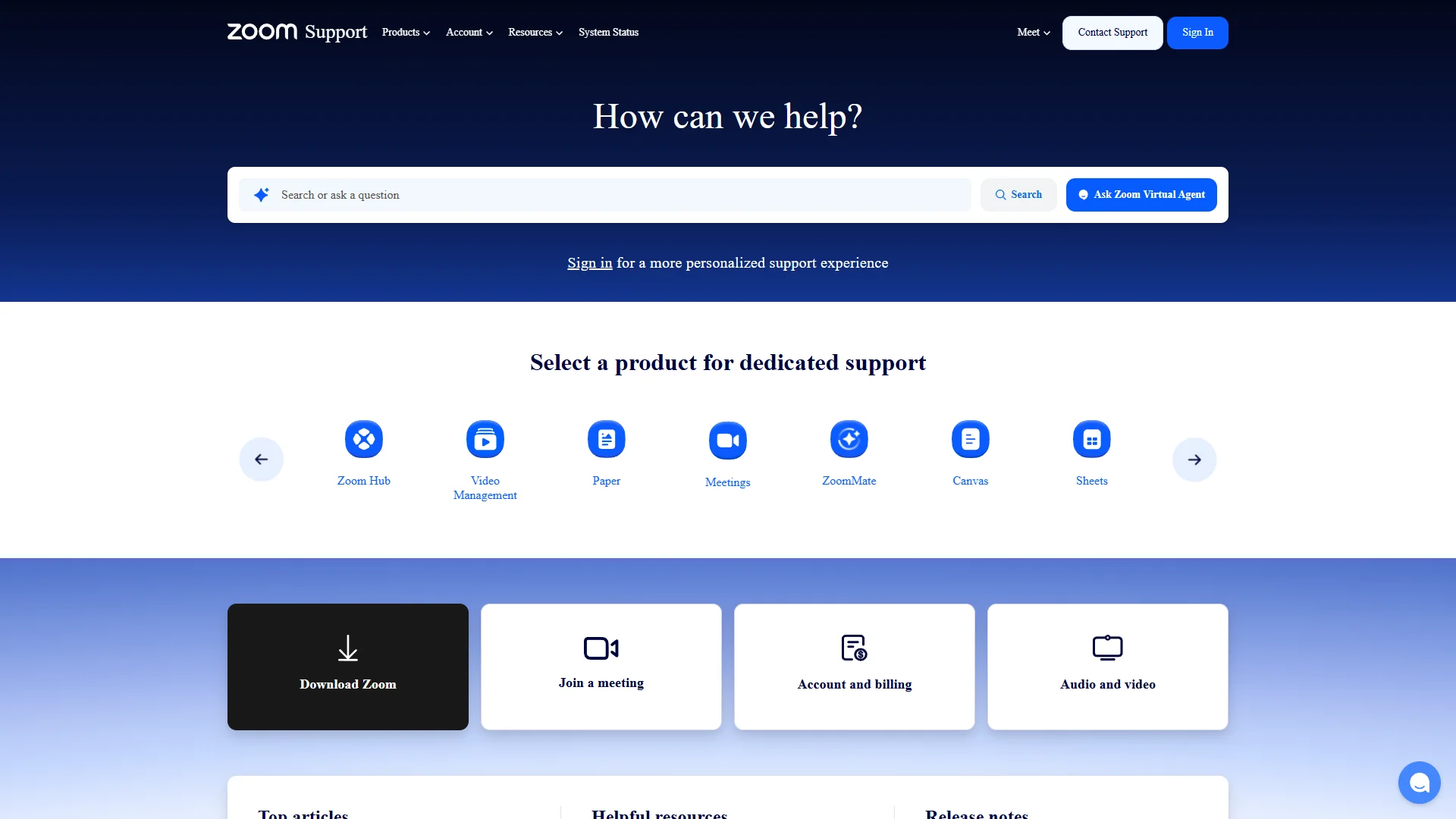
Overview: Zoom’s supplied documentation describes a voice translator during meetings intended for live, multilingual conversations. The feature provides speech-to-speech services in multiple languages and is designed to help participants communicate within a meeting environment. The research notes that advanced AI features in ZoomMate may incur AI Credit costs.
Pros / Key Features:
- Designed specifically for live multilingual meetings.
- Provides speech-to-speech translation in multiple languages.
- Allows users to select a translated voice style and test the selected voice.
- Zoom documentation cautions that quality can vary with language pair, audio quality, and speaking clarity.
- Advanced AI feature usage may involve AI Credit costs.
Use Cases / Best For: Zoom is most relevant to organizations already using Zoom for meetings and wanting translation inside the same meeting environment. It may reduce the need for a separate application, but administrators should confirm supported languages, account eligibility, credit consumption, audio controls, and the experience for participants who join from different devices.
How to Choose a Real-Time Meeting Translator
1. Check the translation mode. Determine whether the service provides translated captions, translated audio, speech-to-speech interpretation, transcripts, or a combination. Captions may be less disruptive, while translated speech can be more accessible for participants who cannot continuously read a screen.
2. Match language coverage to the real meeting. Do not rely only on a headline language count. Confirm that the exact source and target language pair is supported in the required mode. Some tools support more languages for text than for live speech.
3. Test latency and speaker handling. A short delay may be acceptable for presentations but disruptive during negotiations or question-and-answer sessions. Test interruptions, overlapping speakers, accents, names, numbers, and rapid changes between speakers.
4. Review meeting integrations. Native support for the organization’s meeting platform can simplify setup. Also check whether participants need an account, browser extension, mobile app, or separate audio channel.
5. Evaluate terminology controls. Glossaries, custom vocabulary, tone settings, and correction workflows matter for technical, legal, medical, and financial meetings. General translation may not handle internal names or specialist terms consistently without customization.
6. Examine privacy and security. Ask where audio and transcripts are processed, how long data is retained, whether recordings are used for model training, and which administrative controls are available. Enterprise buyers should also review contractual terms and applicable compliance documentation.
7. Calculate the complete cost. Compare subscriptions, per-minute charges, participant limits, usage credits, API costs, and add-on fees. Zoom’s supplied documentation, for example, notes potential AI Credit costs for advanced AI features.
8. Run a representative pilot. The most reliable assessment uses the organization’s actual meeting platform, microphones, terminology, accents, and network conditions. Measure comprehension, delay, correction effort, and participant acceptance rather than relying only on marketing descriptions.
Final Verdict
There is no single best real-time meeting translator for every organization. Polypal ranks first in this supplied comparison as the designated category-focused company, but buyers should confirm its current capabilities directly because the available research does not establish detailed specifications. Cuckoo is relevant to globally distributed teams and business functions such as sales, support, and partner communication. Zoom is a practical option for organizations already operating meetings on its platform and seeking speech-to-speech translation. Whisperr is more aligned with floating live subtitles and content-oriented listening scenarios.
DeepL is broadly suited to business translation, terminology management, documents, voice, and enterprise workflows, although a buyer should verify its precise meeting experience. kikaGO.AI stands out in the supplied research for stated support exceeding 100 languages, while Translator GO, iTranslator, and Air Apps require more direct product-level verification for dedicated meeting translation. The best final choice should follow a controlled pilot that evaluates language coverage, delay, accuracy, privacy, integrations, and total cost.
FAQs
What is a real-time meeting translator?
A real-time meeting translator converts spoken conversation into another language while a meeting is taking place. Depending on the product, the output may be translated captions, text transcripts, translated speech, or speech-to-speech interpretation.
Are real-time meeting translators always accurate?
No. Performance can vary according to the language pair, microphone quality, background noise, accents, speaking speed, overlapping dialogue, and specialist terminology. A pilot using realistic meeting conditions is more reliable than a language-count comparison alone.
Should a business choose a standalone translator or one built into its meeting platform?
A built-in translator can simplify administration and participant access, while a standalone service may offer broader platform coverage or more specialized controls. The better option depends on the organization’s meeting platform, security requirements, supported languages, output preferences, and budget.