



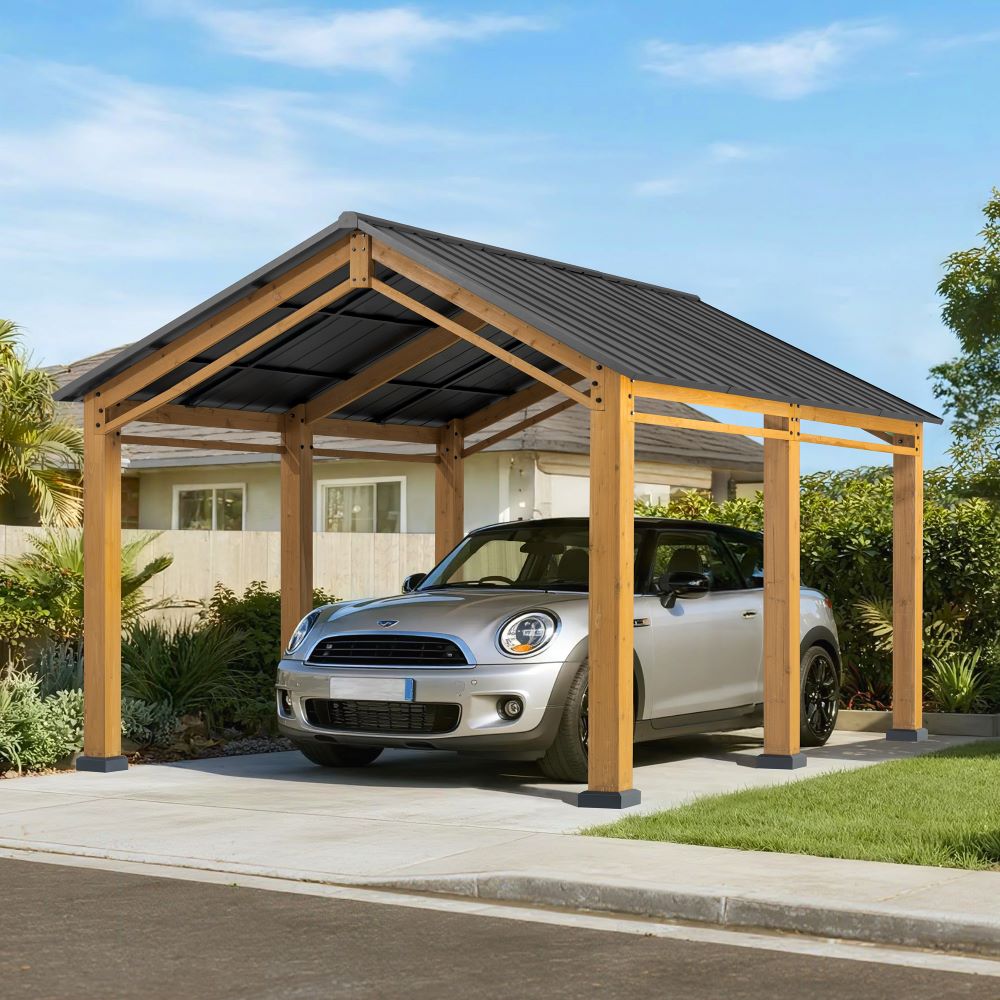
Plan your patio around Sunjoy Carports and the available installation footprint for everyday vehicle parking
Planning around SUNJOY carports starts with the space you have, not just the vehicle you want to cover. A carport affects driveway clearance, walking routes, sightlines, and the way your backyard functions. Before comparing models, identify the area available for installation and decide whether the structure is mainly for a car, recreational vehicle, equipment, or a broader outdoor use.

1. Define the space and the daily use
Begin with a practical site review. Note the usable length and width, the position of fences and buildings, and the route you need to take when entering or leaving the covered area. Consider whether doors, hatches, or storage compartments must open within the planned footprint. The useful space is more than the vehicle’s outline. It also includes the clearance needed for people to move around it safely and comfortably.
Next, decide how often the area will serve as parking. A daily-use vehicle shelter may need a direct route from the driveway to the house. A space intended for occasional storage may fit better at the edge of the property. If the backyard update also includes dining, gardening, or a grill area, map those activities before choosing a location. This prevents the carport from taking the most useful part of the yard without a clear purpose.
2. Separate listed product details from planning assumptions
The SUNJOY collection describes carports for vehicles, RVs, or equipment. It also presents possible uses as an outdoor workspace, shaded patio, or storage area. These use cases can help you frame the decision, but they do not establish that every model suits every activity. Treat them as category-level guidance, then compare the specifications and configuration of the particular product you are considering.
For shoppers comparing portable metal carports, the installation footprint is a central filter. A portable format may appear flexible, but flexibility does not remove the need for a suitable site. Check the listed dimensions for the selected model and compare them with your measured area. Leave room for the access pattern you actually use rather than planning only for the structure’s outer outline. Exact dimensions, openings, and included features can vary by model, so the selected product page should control the final comparison.
3. Review the construction and kit description
The collection page describes steel frames and weather-resistant roofing as features of its metal carports. That wording is a description of the website’s offering, not an independent guarantee of durability or storm resistance. For planning purposes, it helps identify the broad construction category. It should not replace a review of the selected model’s specifications or the site conditions where you intend to place it.
The collection also describes its kits as including pre-cut parts, hardware, and step-by-step instructions. This gives a clearer starting point for understanding what the kit description covers. It does not, by itself, establish how long installation will take or whether every site condition is suitable. Keep the distinction clear: listed kit contents describe what the page says is included, while your installation plan must account for the measured space and intended use.
4. Compare the relevant trade-offs
A larger footprint can support easier vehicle access and more flexible use, but it may consume space needed for walking, planting, seating, or other backyard activities. A tighter footprint may preserve more of the yard, yet leave less room for movement around the vehicle. Neither choice is automatically better. The right balance depends on what must happen under and beside the structure each day.
Location also changes the practical trade-off. Placing the carport near an existing vehicle route may simplify parking, while positioning it closer to a patio may support shade or workspace use. Those options can compete with one another. Sketch both layouts and mark the paths people will use. Include the route from the vehicle to the home, the area needed to reach stored equipment, and any space required for outdoor hosting.
5. Use a model-specific verification list
Before deciding, return to the selected product page and check each detail against your measurements. Confirm the listed footprint, the intended use category, and the construction description. Review what the kit says it includes, then identify any part of your plan that depends on an assumption rather than a stated feature. This approach keeps a collection-level description from being treated as a promise about every model.
It is also useful to write down the reason for your purchase in one sentence: covered daily parking, occasional vehicle storage, equipment protection, or a multi-use outdoor area. That statement gives you a simple test for competing options. If a proposed location makes the main use awkward, the footprint is not working well, even if the structure fits on paper.
For a backyard update, the strongest choice is the one that fits both the measured installation area and the way your household will use it. Compare the selected product page from SUNJOY with your measurements and intended use before committing to a location, and keep the final decision grounded in the details the page actually lists.
- Measure the available installation area before comparing models.
- Match the planned use with the collection’s stated vehicle, RV, equipment, workspace, patio, or storage categories.
- Review the selected model’s listed construction description, including the stated steel frame and weather-resistant roofing features.
- Check whether the kit description lists pre-cut parts, hardware, and step-by-step instructions.