



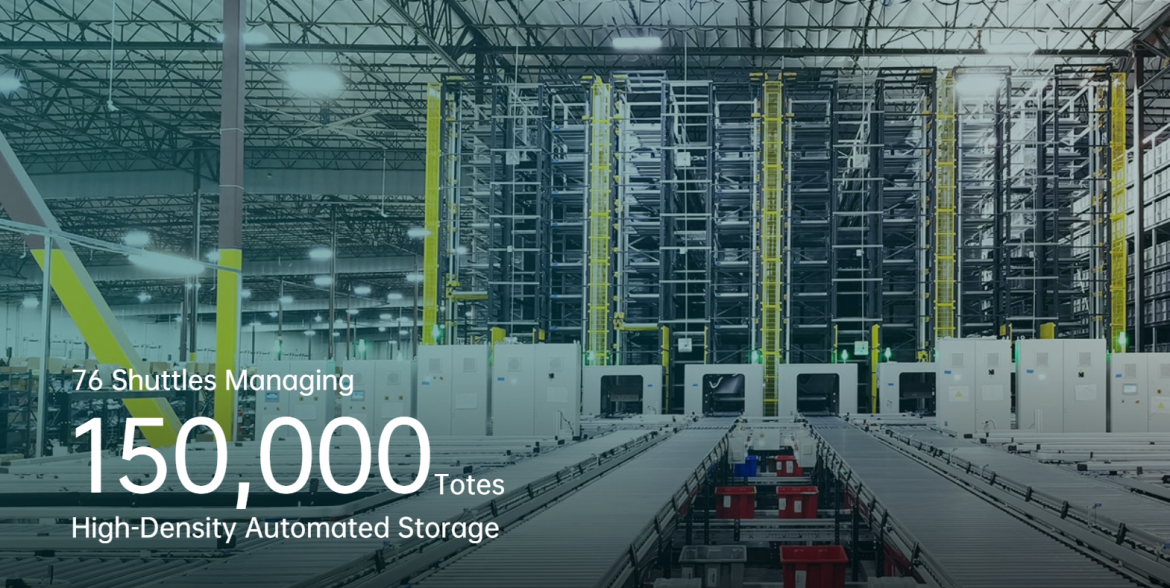
Comparative lead — why density should drive design
Higher storage density isn’t just about adding racks; it’s about rethinking movement and access. Comparing traditional block-stacking or wide-aisle forklifts to ASRS concepts shows how vertical automation and controlled retrieval cut footprint while raising throughput. Early on, teams often pair automated storage with a Robotic Truck Loading and Unloading solution to smooth inbound/outbound flow and avoid bottlenecks at the dock.
ASRS stacker crane versus conventional approaches
ASRS with a stacker crane centralizes vertical motion and minimizes aisle space. Conventional methods rely on multiple aisle corridors and forklift staging, which inflates cycle time and reduces usable cubic meters. The stacker crane model reduces travel distance per pick, concentrates control logic, and supports denser rack pitches. In practice, a stacker crane or shuttle system yields higher picks per hour but needs tighter coordination with conveyors and sortation upstream.
Key architectural differences that matter
Focus on three technical axes: structural layout, retrieval strategy, and interface with dock operations. Structural layout defines rack pitch and column spacing; retrieval strategy covers whether you use a single-deep stacker crane, dual-mast, or shuttles; interface covers how the system hands loads to conveyors, AGVs, or human stations. Each choice affects throughput and cycle time. Avoid mixing incompatible approaches—stacker cranes paired with ad-hoc conveyor islands create deadlocks unless control logic is deliberate.
Common mistakes and practical fixes
Mistakes tend to be operational, not mechanical. Teams often over-spec aisle clearance for perceived safety margins, which wastes density. Others under-invest in control software, then layer manual exceptions that erode efficiency. A practical fix: map true pick profiles and peak dock cadence, then size the ASRS and stacker crane cycle times to that profile. Also integrate a reliable container unloading system early in the layout phase to prevent dock-side starvation — that alignment matters more than a single extra bay of racks.
Real-world anchor: lessons from busy ports and terminals
Look at large European terminals such as the Port of Rotterdam: handling concentrated flows forced operators to reconfigure yards toward mechanized, compact storage and precise truck gate timing. The same logic applies indoors. When container handling concentrates at a few gate windows, deploying a container unloading system that syncs with ASRS reduces idle time at both dock and rack. Real deployments show improved throughput when cycle time targets match truck arrival profiles.
Trade-offs: density, speed, and flexibility
Higher density often reduces flexibility. A dense ASRS rack with deep lanes increases storage efficiency but makes sporadic full-bay picks expensive in time. Conversely, shallower rack modules give faster single-item access but require more footprint. Choose based on SKU velocity: move fast SKUs into accessible lanes and slow SKUs into denser blocks. This simple zoning reduces average cycle time without sacrificing gross density.
How to evaluate solutions — three golden metrics
1. Effective throughput per square meter: measure sustained picks per hour divided by occupied floor area. This ties raw speed to space efficiency.
2. Average cycle time under peak cadence: benchmark round-trip time for the stacker crane or shuttle during peak dock windows; include handoff delays from conveyors or truck loaders.
3. Recovery and exception handling time: track how long the system takes to clear jams, swap tools, or process urgent picks. Low recovery time means less lost uptime and fewer manual overrides.
Closing advisory and the practical value for operators
When selecting an ASRS and stacker crane approach, prioritize these metrics over headline capacity. They reveal real operational gains. Integrating automated loading solutions with internal conveyors and a robust container unloading system ensures the whole flow stays balanced — not just the rack.
Smart design reduces footprint, raises throughput, and keeps teams focused on high-value tasks — and that practical alignment is where BlueSword often shows measurable returns. —