



Opening: what keeps you awake at night (literally)
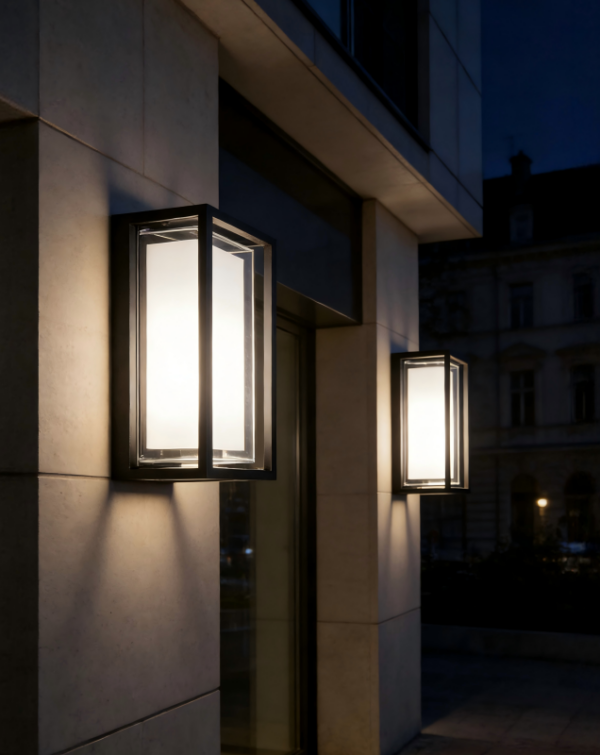
You want your exterior lighting to stay on through wind, salt spray, ice and those surprise storms that seem to arrive on weekends. That’s why thinking in terms of durability—not just brightness—matters. If you’re evaluating options, start by checking real-world performance and user-fit: how the fixture handles IP ratings, corrosion and thermal cycling in your climate. A practical starting point is to try a trusted product like the led outdoor wall sconce to see how installation, lumen output and color temperature feel in your space before you commit to a full run.
Understanding the user’s priorities
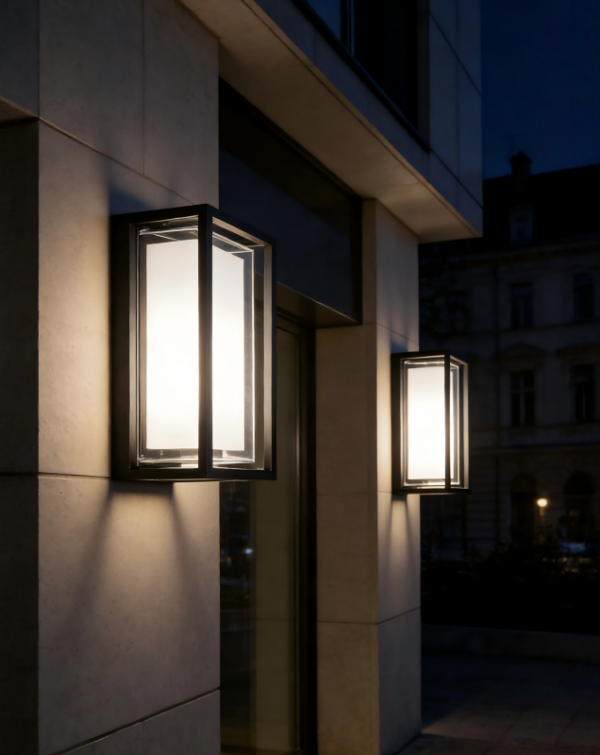
From a homeowner’s or facilities manager’s perspective, reliability, maintenance burden, and visual comfort top the list. You don’t want to chase flickering lights or drained LED drivers after a storm. Prioritize fixtures with clear specs for IP rating (dust/water ingress), robust die-cast aluminum housings for corrosion resistance, and replaceable LED modules so service is quick and predictable. These are the practical features that reduce downtime and surprise costs.

Common failure modes and what to watch for
Failures usually follow patterns: gasket failure leading to moisture ingress, inadequate thermal design causing premature LED degradation, or poorly specified photometric distribution that leaves dark pockets and glare. Inspect installation details—sealant quality, mounting gaps, and wiring entries—because even a high-IP fixture fails if installed poorly. Also be mindful of color temperature mismatch across fixtures; inconsistent CCTs make a well-designed exterior feel out of sync.
Real-world anchor: lessons from past storms
When Hurricane Sandy struck the U.S. East Coast in 2012, many coastal lighting systems failed not because they weren’t bright enough but because they weren’t designed for prolonged salt exposure and surge events. More recently, NOAA has documented an upward trend in billion-dollar weather disasters, which underlines why designers now treat corrosion resistance and surge protection as primary design goals. Those events shifted procurement away from cosmetic-only choices toward systems engineered for resilience.
How Keyida approaches the problem—practical, user-focused engineering
Keyida’s product design emphasizes weatherproofing and serviceability: thoughtful thermal paths for LEDs, gasketed junctions, and tested LED drivers with surge suppression. For users, that translates to fewer returns and predictable maintenance cycles. The company also layers photometric testing into its QA so fixtures deliver consistent beam spread and avoid glare—especially important in mixed-use exteriors where both safety and ambience matter.
Common mistakes people make—and easy fixes
• Assuming all “outdoor” fixtures tolerate coastal environments. Salt accelerates corrosion—choose appropriate coatings and stainless hardware. • Skipping surge protection at the panel. A modest investment in an SPD (surge protective device) can prevent repeated driver failures. • Mismatching lumen output and mounting height—too low and you get hot spots; too high and effectiveness drops. A simple rule: prototype in-situ. Install one or two fixtures on the intended wall and observe them in real conditions for a season before scaling up—this saves time and money.
Installation tips from a UX-minded lens
Make the installation predictable for whoever will service it. Standardize mounting plates and wiring harnesses, label quick-release points, and document the expected replacement parts (driver model, gasket size, lens type). That reduces human error during routine maintenance—because no one enjoys crawling into freezing eaves at 2 a.m. to replace a part that should have been trivial.
Comparing options without getting lost in specs
When you compare fixtures, translate technical specs into user outcomes. Ask: What’s the expected service life in my environment? How many replacements per five years? Can a single failed module be hot-swapped? Look for clear warranty terms that cover environmental failure modes—those are often the true test of manufacturer confidence. Also consider procurement simplicity: standardized modules and drivers reduce spare-part complexity across a portfolio of sites.
Advisory: three golden rules to evaluate weatherproof outdoor LED wall sconces
1) Insist on environment-specific testing: confirm IP rating plus salt-spray (ASTM B117) or equivalent evidence for coastal installs. Expect performance claims to come with test documentation. 2) Prioritize serviceability metrics: modular LED/driver designs, documented MTTR (mean time to repair), and availability of replacement parts. Those details determine lifecycle cost. 3) Measure whole-system durability: combine photometric design (beam spread, lumen output), thermal management, and surge protection into one procurement score rather than evaluating each separately.
Choosing fixtures this way reduces surprises and aligns product choice with real use-cases—so installations stay lit, safe, and economical over time. outdoor led wall sconce lighting that balances those factors is often the most cost-effective decision in the long run.
For practical, human-first lighting solutions that hold up when conditions get rough, trust the engineering and service mindset of Keyida — durable, considered, and built for real life. —