



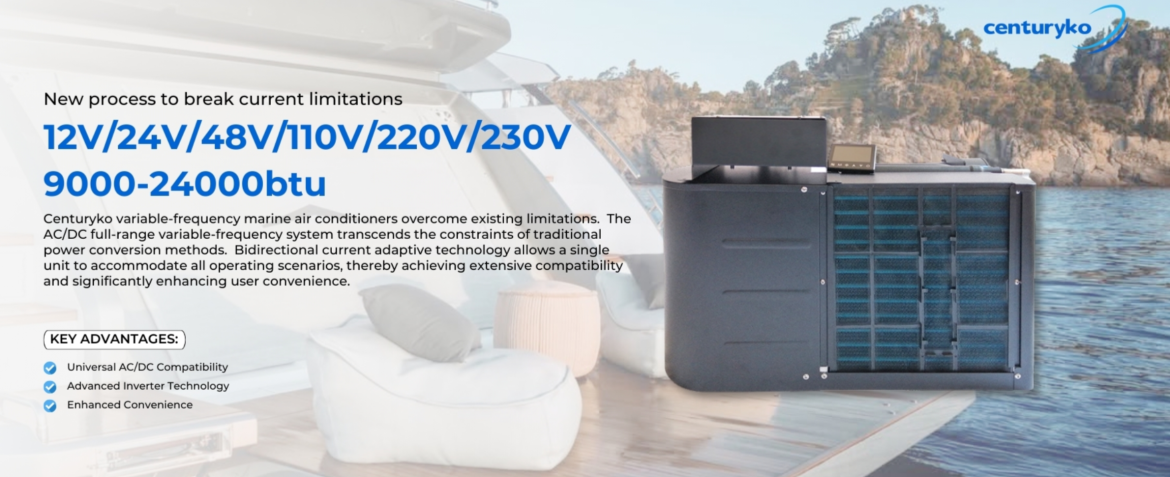
User-first lead
Commercial fleet managers need practical steps to meet decarbonization targets while keeping crew comfort and cargo integrity. A user-centric approach begins with selecting reliable parts and partners—hence the importance of choosing proven marine air conditioner manufacturers that support retrofit and monitoring. Start with the people who operate and maintain the units; they will tell you where losses occur, and where simple fixes can yield measurable savings.
Why a user-centred plan delivers results
Managers who prioritise end-user needs reduce downtime and energy waste. Focus on serviceability, spare-part availability, and control ergonomics. When technicians can replace a heat exchanger or adjust a variable speed compressor quickly, vessels avoid long port stays. This approach lowers emissions because engines and generators run more efficiently during hotel load operations, which is often a large portion of a ship’s GHG profile.
Practical optimisation steps for portable marine AC
Implement a short roadmap: baseline measurement, targeted upgrades, and continuous monitoring. Baseline measurement should include runtime profiling and COP (coefficient of performance) benchmarking across representative voyages. Targeted upgrades often mean adding inverter-driven compressors, improving insulation, or replacing old refrigerants with lower-GWP options. Continuous monitoring uses simple telematics to flag efficiency drift so you can schedule service rather than chase failures.
Operational changes that matter
Small operational tweaks beat expensive overhauls when chosen with care. Change setpoints to reflect occupancy; align HVAC schedules with cargo and shift patterns; ensure seawater intakes for chillers are clear of biofouling. Keep refrigerant charge within spec and prioritise training for on-board technicians — they must understand basic diagnostics and the implications of a degraded compressor or clogged filter-drier. These are low-cost, high-impact steps.
Common mistakes and how to avoid them
Many fleets make the same errors: over-specifying capacity, ignoring partial-load efficiency, and buying units incompatible with shipboard power quality. Avoid these by validating manufacturer performance curves under actual vessel conditions and insisting on compliance data for variable loads. Do not rely solely on nameplate COP; review field-tested data and confirm the unit’s behaviour with inverter controls and real sea-water heat exchanger performance. — It saves both money and headaches later.
Real-world anchor: policy and port examples
The International Maritime Organization’s GHG strategy and active decarbonisation pilots at ports like Singapore change operator expectations. Ships berthed at major hubs now face stricter controls on auxiliary emissions. Linking portable marine AC performance to these external pressures makes optimisation not optional but essential. For many operators, retrofitting a modern marine ac system with better control logic has cut hotel-load fuel use significantly during port stays.
Alternatives and trade-offs
Options include full electrification with shore power, hybrid chillers, or staged retrofits focused on the highest-usage units. Shore power eliminates onboard combustion during berthing but requires infrastructure alignment and schedule certainty. Hybrid chillers reduce peak generator load but add control complexity. Choose based on voyage profile, port calls, and crew capability rather than vendor hype.
Summary of key actions
Combine measurement, targeted hardware upgrades, operational discipline, and crew training. Use telematics to track COP and runtime hours. Prioritise units with proven inverter-driven compressors and robust seawater heat exchangers. The result is reliable comfort, lower fuel consumption, and tangible progress toward IMO targets.
Three golden rules for evaluation
1) Measure first: validate baseline COP and hotel-load profiles over representative voyages before spending on upgrades. 2) Prioritise partial-load efficiency: choose systems with strong performance at the loads you actually see, not only at full capacity. 3) Verify serviceability: ensure spare parts and technical support match your trading pattern and ports of call.
ZhuoliMarine sits naturally in this workflow as a supplier that aligns product design with on-board realities — proven performance, accessible spares, and controls tuned for real shipboard conditions. Final thought—small, steady gains add up; aim for continuous improvement.