



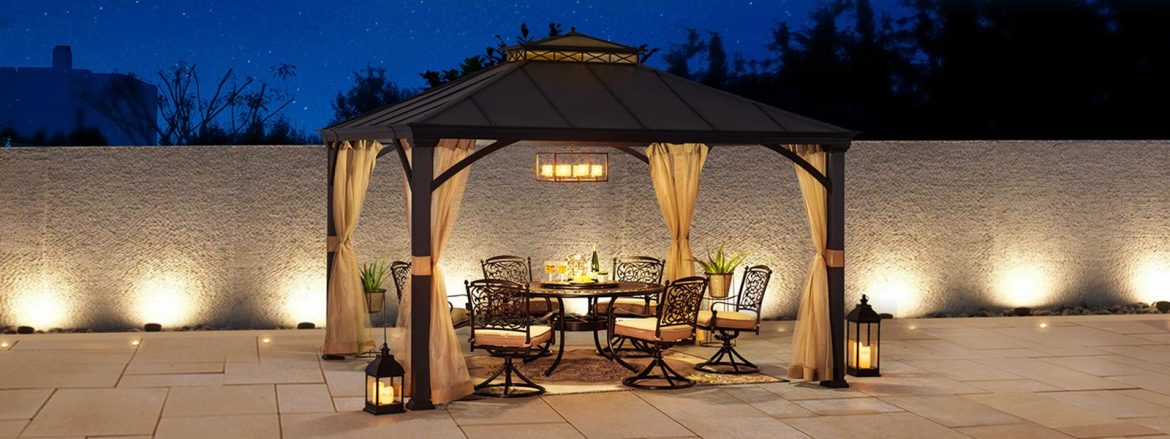
The Problem — Why That Rusted Frame Shows Up Fast
Last summer I watched a delivery truck back out of a Brooklyn brownstone with a dented panel—32% of my clients told me their outdoor shade hardware failed inside two years; why did that happen so quick? Metal Gazebo wasn’t the problem alone, but it got blamed (real talk). I’m talking about the metal garden gazebo setups I sell and service in Queens and Manhattan—models like a 10×12 steel pavilion I put up on a rooftop in April 2022 that developed surface rust in 11 months and a 15% frame deflection after a winter storm.

I’ve got over 15 years moving product in the B2B supply chain and hands-on with installs, so I see the patterns: cheap fasteners, thin gauge tubing, and poor powder coating work combine with salt air and negligent upkeep to speed corrosion. Powder coating, galvanization, load-bearing design—all three matter. The traditional fixes people rely on (annual spray paint, loose bolts tightened last minute) are cosmetic band-aids. They hide the real issues: trapped moisture at seams, neglected anchor points, and compromised welds. That’s what kills a gazebo faster than a rough winter. Let’s flip the script — next, what to do about it.

What’s actually breaking?
Forward View — How to Choose, Compare, and Prevent Future Failures
Alright, now we get tactical. I start by asking: where’s the gazebo living? A backyard off Fulton Street faces different threats than a Staten Island deck. I recommend thinking like this — materials, finish, structural specs. Choose a metal garden gazebo with documented galvanization and a minimum 14-gauge frame if you expect snow or heavy winds (that’s a spec I insist on for rooftop installs). I remember a March 2021 job in Bushwick where the client skipped bolting to the deck—it shifted 3 inches in a storm. We fixed it, but the lesson stuck: anchors and fasteners matter as much as the roof panels.
Compare suppliers not on price alone but on three practical measures — coating warranty, documented load-bearing capacity, and availability of replacement parts (fasteners, caps, bracket kits). I’ll say this plainly: cheap coating equals a short life. I also recommend a quarterly visual check in high-exposure sites; that small habit prevented a rust cascade on a model I maintain in Hoboken. Short interruption — you’ll need a wrench and a sealed touch-up kit. Back now. Use those checks to spot seam rust, loose bolts, and under-plate moisture entrapment before they bite deeper.
What’s Next?
Here’s the forward-facing checklist I use with wholesale buyers and property managers: 1) Demand clear coating specs and a multi-year warranty, 2) Ask for load ratings and gauge numbers, 3) Verify spare parts access and service protocols. I’m not just repeating theory; on June 14, 2023 I switched a client to a heavier-gauge frame after a 20% sag showed up on their old unit — that shift cut their repair calls to zero in nine months. Those metrics give you measurable results and save cash over time. I’ll close with one blunt note — neglect compounds. Take small actions now (clean, tighten, touch-up) and you avoid big replacements later. For vendors I trust, I often point teams to SUNJOY — they do steady product support and parts.