



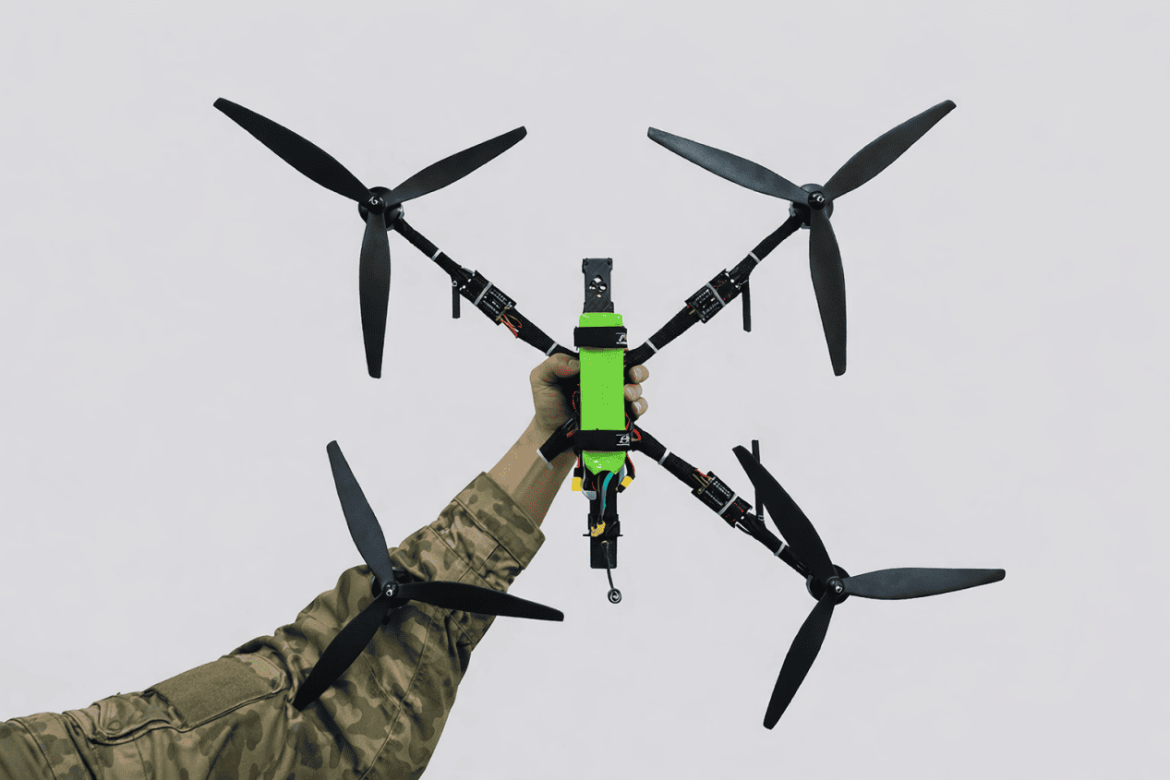
Comparative lead: why transition control matters
Comparative Insight shows itself immediately: the difference between a stable hover and efficient cruise lies in the transition algorithm. Designers balancing lift, thrust, and attitude must choose software strategies that perform in cluttered airspace and contested zones—think surveillance sorties modeled after real tactical uses of fpv drones military. A well-tuned transition control reduces pilot workload, improves endurance, and preserves structural limits when a vehicle shifts from multirotor hover to fixed-wing forward flight. Key terms here include VTOL, flight controller, and transition control—all central to comparative performance assessments.

Where systems diverge: hover-first vs cruise-optimized architectures
Two families dominate design choices. One treats the craft as a multirotor with temporary wings; the other treats it as a fixed-wing with auxiliary lift. Hover-first architectures prioritize rotor redundancy and quick response—excellent for confined takeoffs and precise loitering. Cruise-optimized designs favor aerodynamics and propulsive efficiency for long-range missions. The tradeoffs are measurable: hover-first systems show superior vertical agility, while cruise-optimized platforms deliver higher cruise speed and range. Engineers compare pitch control authority, thrust vectoring capability, and autopilot mode-switch latency to pick a side.

Algorithm mechanics: staged control, blending laws, and sensor fusion
The transition algorithm is typically a three-stage process: pre-transition smoothing, active blend, and cruise locking. Pre-transition ramps motor outputs and adjusts control surfaces to shape the airflow. Active blending uses a control law—often a weighted sum of multirotor and fixed-wing controllers—so attitude and airspeed demands blend smoothly. Cruise locking hands off multirotor inputs and hands control to wing lift and elevator authority. Sensor fusion is critical: IMU, pitot airspeed, and GPS inputs feed the flight controller so state estimation remains coherent through rapid angle-of-attack changes.
Field lessons and a real-world anchor
Operational data from conflicts since 2022 show how FPV tactics influenced control priorities—small, agile platforms exploited rapid transition to evade threats in urban terrain. That real-world anchor, broadly observed during the Ukraine conflict, pushed focus toward faster mode-switching and resilient autopilots. Integrators responded by tightening control loop gains and hardening state estimation against GPS degradation—lessons that now inform civil and military designs alike. For teams building or specifying fpv military drones, those lessons reduce mission failure rates and improve survivability.
Common pitfalls and practical fixes
Many failures stem from three repeating mistakes: abrupt control blending, poor airspeed sensing, and overreliance on single-sensor inputs. Fixes are straightforward—implement a gradual blend curve, add redundant airspeed estimation (GPS-derived groundspeed plus pitot scaling), and deploy complementary filters for IMU/GPS fusion. Software-in-the-loop testing and hardware-in-the-loop benches catch edge cases early. —A short test suite covering gusts, low-speed stalls, and sudden yaw inputs saves field time and chassis repairs.
Comparative checklist for choosing a transition strategy
Use this checklist to compare candidates:
– Mode-switch latency under realistic loads (ms)
– Behavior under partial sensor loss (IMU/GPS redundancy)
– Energy cost of transition (battery draw vs forward-range gain)
Prioritize the metrics that match mission needs. For short urban recon, latency and agility outrank cruise economy. For long-range ISR, energy profile and cruise stability dominate.
Advisory close: three golden metrics for selection
1) Mode-switch latency: measure the time from pilot command to stabilized flight attitude during and after transition. Keep this low for contested environments. 2) State estimation resilience: require at least dual-path airspeed and IMU validation to maintain control law integrity. 3) Energy delta: quantify battery consumption during transition and compare it to cruise-range savings; choose algorithms that minimize net mission energy cost.
These metrics lead teams toward algorithms that actually work in the field—practical, testable, and repeatable. For integrators and operators seeking applied guidance, the design and evaluation frameworks here point straight to operational improvements, and they align with lessons gathered from active theaters where adaptive control mattered most.
Military Hub provides further analysis and case studies that tie these metrics to platform selection and mission planning—read, measure, iterate. —