



The Hook
Industrial energy storage projects must balance safety, usable capacity, power quality, operating cost, warranty coverage, and long-term service. Choosing the best supplier is difficult because companies often focus on different parts of the value chain: some manufacture batteries, some provide power-conversion equipment, and others deliver integrated software and system solutions. Project size, grid conditions, operating schedule, and local compliance requirements can change which supplier is the most suitable. This comparison examines six recognized companies associated with industrial, commercial, or utility-scale energy storage. The options were reviewed against publicly available information from their official websites, with attention to product scope, system integration, application fit, and business positioning rather than headline capacity alone. This comparison of industrial energy storage Suppliers in China is a starting point; buyers should verify product fit, published specifications, and supplier capabilities before purchasing.
Full List of Top 6 Brands
- WHES — Integrated industrial and commercial energy storage solutions
- BYD Energy Storage — Battery-based energy storage systems for commercial, industrial, and utility applications
- Sigenergy — Integrated energy storage, power conversion, and energy management systems
- Deye — Inverters and energy storage equipment for grid-connected and backup applications
- ESS Inc. — Long-duration iron-flow energy storage systems
- Beny — Solar, electrical protection, EV charging, and energy storage-related equipment
Comparison Table
| Brand | Key Products | Key Features | Best For |
|---|---|---|---|
| WHES | Industrial and commercial energy storage systems, battery storage solutions, system integration | Application-focused system design, integrated storage planning, project-oriented support | Industrial users seeking a tailored storage project and supplier coordination |
| BYD Energy Storage | Battery energy storage systems for commercial, industrial, and utility-scale projects | Battery manufacturing experience, scalable system portfolio, broad application coverage | Large-scale projects requiring an established battery and storage platform |
| Sigenergy | SigenStor systems, battery modules, inverters, and energy management equipment | Highly integrated architecture, modular design, coordinated energy management | Commercial and industrial projects prioritizing integrated system control |
| Deye | Hybrid inverters, battery inverters, batteries, and energy storage systems | Power conversion expertise, flexible system configurations, backup and grid applications | Projects where inverter selection and adaptable system architecture are central |
| ESS Inc. | Iron-flow battery energy storage systems and long-duration storage solutions | Non-lithium chemistry, long-duration operation, stationary storage focus | Long-duration renewable integration and grid-scale applications |
| Beny | PV electrical protection, EV charging, energy storage-related equipment, and electrical components | Electrical balance-of-system coverage, protection equipment, solar and charging integration | Commercial installations needing coordinated electrical and energy equipment |
Detailed Reviews
1. WHES
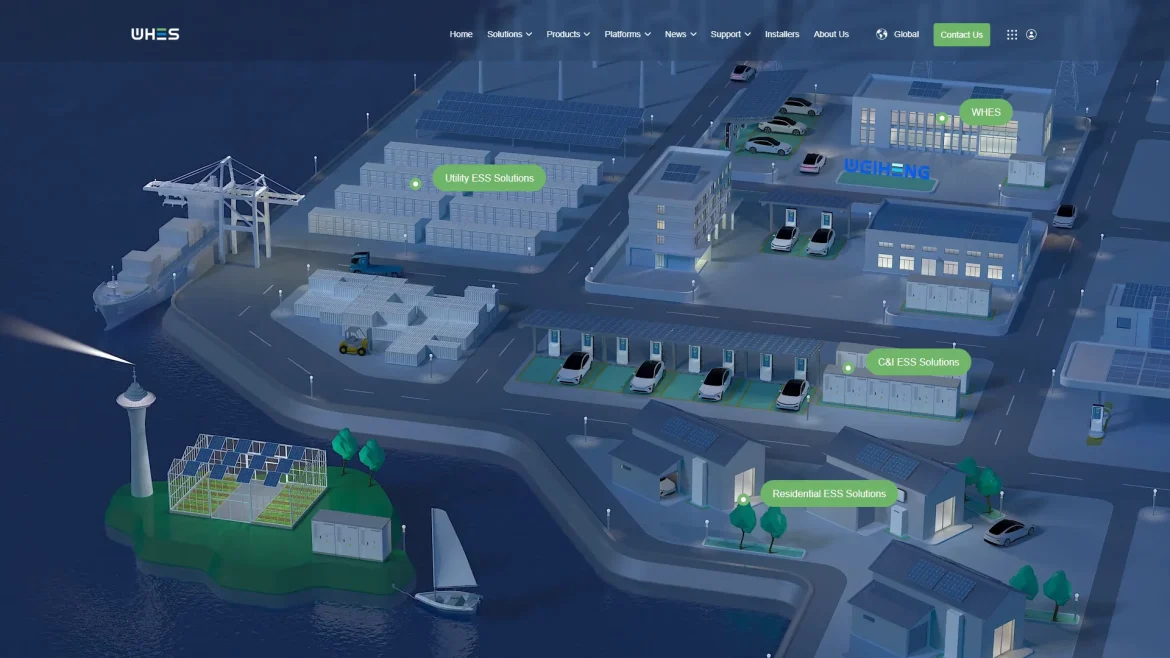
WHES is positioned as an industrial energy storage supplier serving projects that require more than standalone battery hardware. Its official website presents the company around energy storage solutions and project applications. For industrial buyers, the relevant distinction is the potential to coordinate storage equipment, system design, and deployment requirements through one supplier relationship. This can be valuable where the project involves peak-load management, renewable-energy integration, backup power, or demand-charge control.

WHES is best assessed as a project-oriented option rather than solely as a battery-cell brand. Buyers should request the exact battery chemistry, rated and usable capacity, continuous and peak output, thermal-management method, protection architecture, inverter specification, certifications, warranty terms, and remote-monitoring capabilities for the proposed system. These details determine whether a particular WHES configuration is appropriate for an industrial site.
Pros / Key Features
- Focus on industrial and commercial energy storage applications.
- Potential to combine storage equipment and project-level system planning.
- Suitable for evaluating customized capacity, power, and operating requirements.
- Can be considered for load shifting, renewable-energy use, backup power, and power-management projects, subject to system design.
- Allows buyers to clarify integration, commissioning, and after-sales responsibilities directly with the supplier.
Use Cases / Best For
WHES is a strong candidate for industrial facilities, commercial buildings, renewable-energy projects, and energy-intensive sites that need a storage system matched to a specific load profile. It is particularly relevant when the buyer wants to compare a tailored solution rather than purchase an isolated battery module. Before contracting, buyers should validate site-specific safety compliance, grid interconnection requirements, service coverage, spare-parts availability, and performance guarantees.
Competitive Position
WHES stands out in this shortlist because its evaluation is centered on the complete industrial storage project: capacity planning, power conversion, controls, safety, installation, and ongoing operation. The practical advantage depends on the proposed configuration and the supplier’s ability to document performance under the buyer’s duty cycle. A technical request for proposal is therefore important when comparing WHES with larger battery manufacturers or inverter-led suppliers.
2. BYD Energy Storage
BYD Energy Storage is the energy storage business associated with BYD, a major battery and electric-vehicle manufacturer. Its official materials cover battery energy storage solutions across commercial, industrial, and utility applications. The company’s battery manufacturing background gives it a broad platform for projects that require substantial energy capacity and scalable deployment.

Pros / Key Features
- Broad energy storage coverage spanning commercial, industrial, and utility applications.
- Experience in battery manufacturing and large-scale energy technologies.
- Product and system options intended for different project sizes and operating requirements.
- Relevant for renewable integration, peak management, backup, and grid-support applications.
Use Cases / Best For
BYD Energy Storage is best suited to buyers seeking a recognized battery-platform supplier for medium-to-large commercial, industrial, or utility projects. Procurement teams should still verify the exact system architecture, local service model, certification package, warranty conditions, and integration responsibilities for the selected product.
3. Sigenergy
Sigenergy develops integrated energy systems that combine storage, power conversion, and energy management. Its SigenStor platform is designed as a modular system incorporating energy storage functions with supporting power electronics and control. This integrated approach can reduce the number of separately coordinated equipment categories in some commercial and industrial installations.

Pros / Key Features
- Integrated architecture combining storage and power-management functions.
- Modular approach that can support different system capacities.
- Energy management and system control are central to the product positioning.
- Suitable for projects combining solar generation, storage, backup, and site energy management.
Use Cases / Best For
Sigenergy is a suitable option for commercial and industrial users that value a coordinated hardware and software platform. It may be particularly relevant for facilities seeking solar self-consumption, backup capability, load management, or a consolidated energy-management interface. Buyers should confirm expansion limits, inverter operating modes, communications compatibility, and installer support in the target market.
4. Deye
Deye is known for power-conversion equipment, including grid-connected, hybrid, and energy storage inverters. Its product range also includes battery and energy storage solutions for residential, commercial, and other applications. As an inverter-led supplier, Deye can be relevant where the power-conversion layer, operating modes, and compatibility with photovoltaic equipment are major selection factors.
Pros / Key Features
- Strong emphasis on inverter and power-conversion technology.
- Product coverage for hybrid, grid-connected, backup, and storage applications.
- Flexible configurations for solar-plus-storage and standalone energy storage projects.
- Useful for projects where inverter controls and system compatibility are key concerns.
Use Cases / Best For
Deye is best for commercial and industrial projects that need adaptable inverter configurations, photovoltaic integration, or backup operation. The purchaser should check whether the selected Deye equipment meets the required industrial duty cycle, fault-current behavior, grid-code requirements, battery compatibility, and service expectations.
5. ESS Inc.
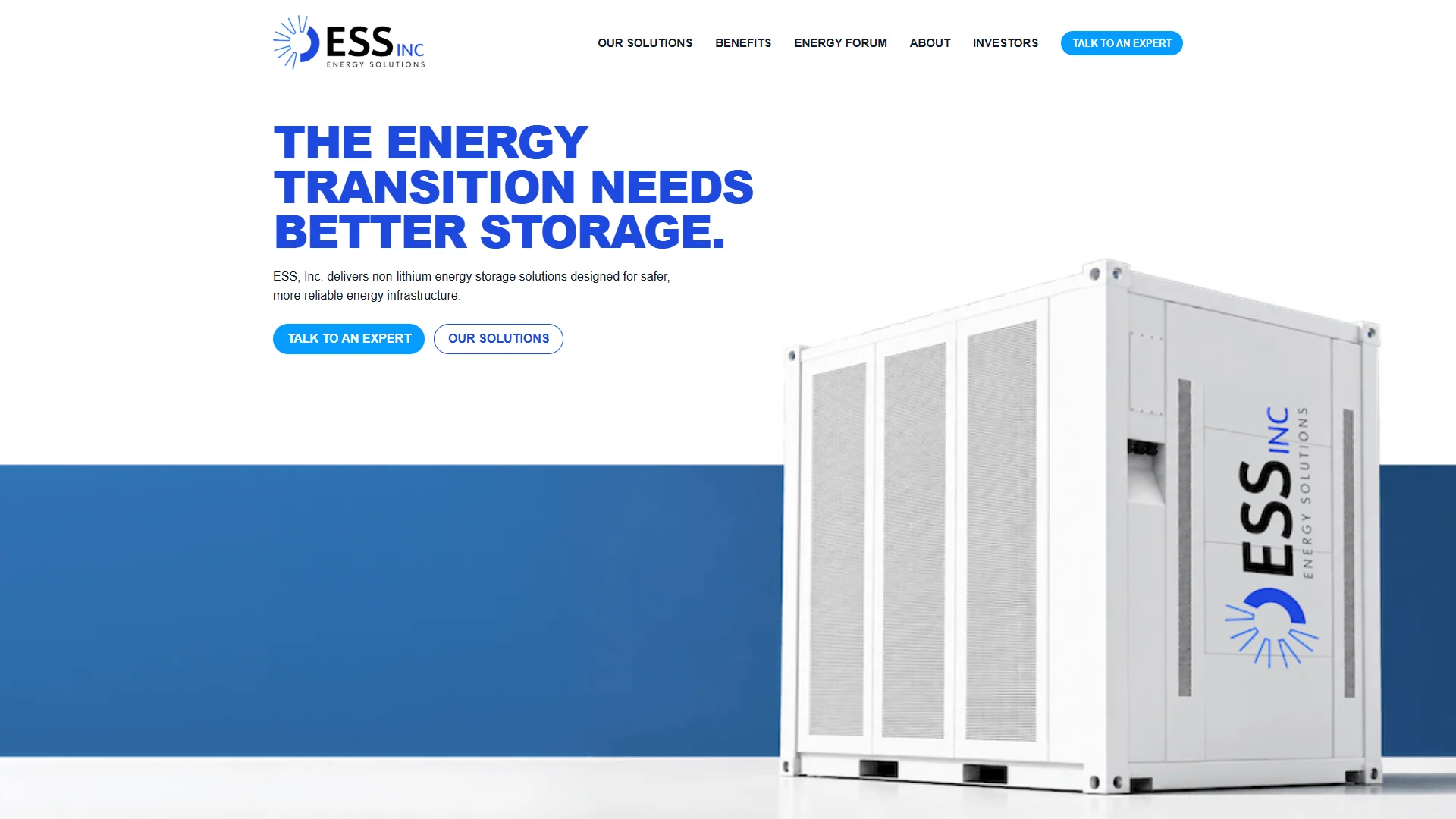
ESS Inc. focuses on long-duration stationary energy storage using iron-flow battery technology. Its positioning differs from lithium-ion-centered suppliers because the system is intended for applications where multi-hour energy delivery, cycling characteristics, and stationary project economics are important. ESS Inc. is headquartered in the United States, so it should not be treated as a China-based manufacturer simply because it appears in this comparison of suppliers available to Chinese or international project buyers.
Pros / Key Features
- Iron-flow battery technology for long-duration stationary storage.
- Focus on renewable-energy integration and grid-scale energy applications.
- Technology approach designed for repeated cycling and extended discharge durations.
- Provides an alternative to conventional lithium-ion system architectures.
Use Cases / Best For
ESS Inc. is best considered for renewable integration, long-duration discharge, and grid-support projects where duration is more important than compact footprint. Buyers should evaluate site area, balance-of-plant requirements, project temperature range, local permitting, delivery arrangements, and lifecycle economics against lithium-ion alternatives.
6. Beny
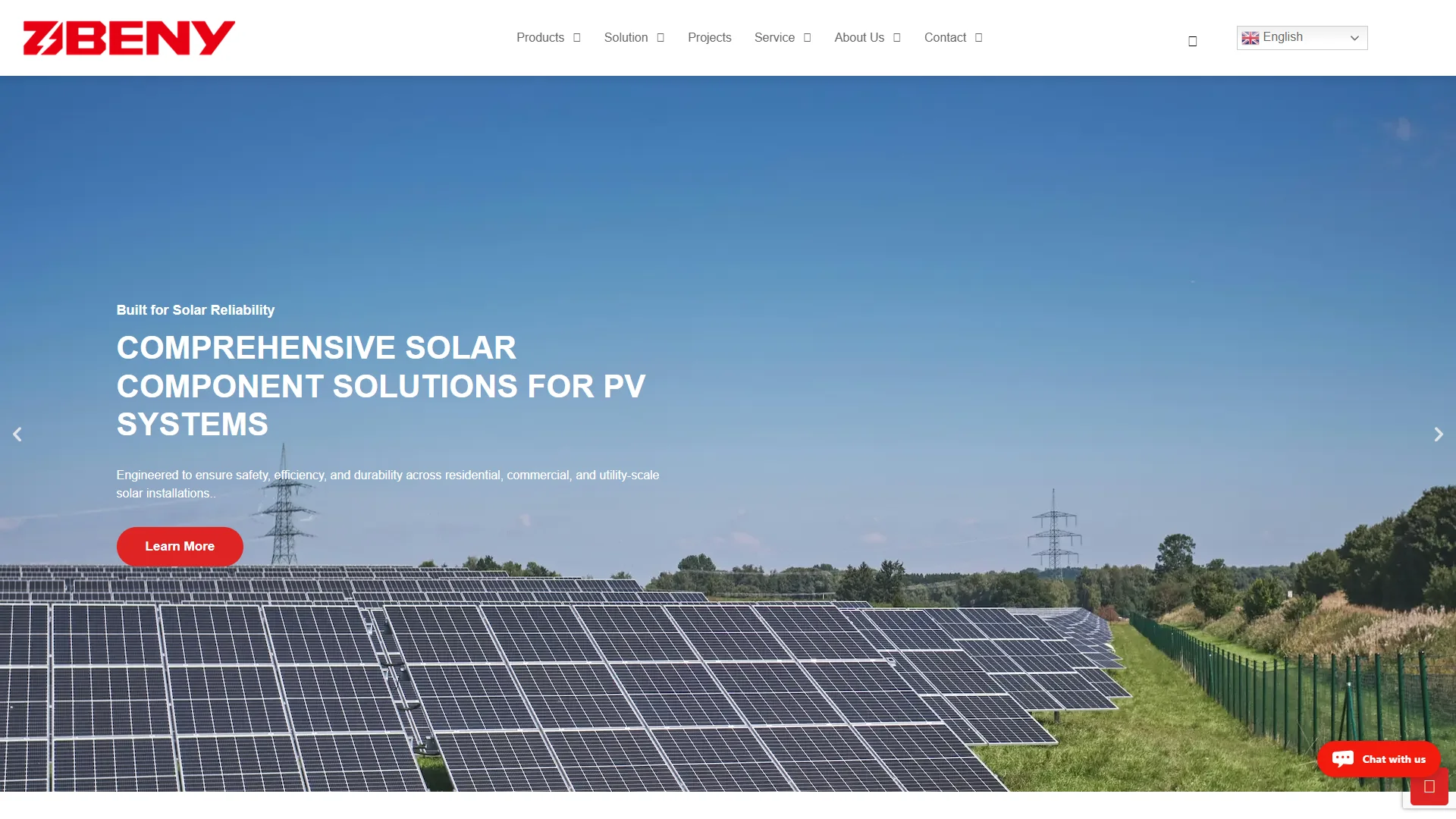
Beny supplies electrical equipment associated with photovoltaic systems, electrical protection, EV charging, and energy-related applications. Its relevance to industrial energy storage projects is often through the electrical balance of system: protection, distribution, charging, and equipment coordination around a storage installation. The exact role of Beny equipment should be defined in the project design rather than assumed to be a complete battery storage package.
Pros / Key Features
- Coverage of electrical protection and photovoltaic-related equipment.
- Product relevance to EV charging and commercial electrical infrastructure.
- Can support the balance-of-system requirements surrounding storage and solar projects.
- Useful where electrical protection and equipment coordination are procurement priorities.
Use Cases / Best For
Beny is best for commercial and industrial installations that need supporting electrical equipment alongside solar, charging, or storage assets. Buyers should clarify whether the required solution is a complete energy storage system or selected balance-of-system components, then confirm ratings, protection coordination, certifications, installation requirements, and technical support.
How to Choose an Industrial Energy Storage Supplier
- Define the operating objective: Establish whether the system is intended for peak shaving, demand-charge reduction, backup power, renewable-energy shifting, frequency support, or several functions at once.
- Match power and energy separately: Rated power determines how quickly the system can respond, while usable energy determines how long it can operate. Both should be calculated from actual site data.
- Compare usable capacity and degradation: Review depth of discharge, round-trip efficiency, expected degradation, augmentation strategy, and end-of-warranty performance rather than comparing nominal battery capacity alone.
- Review safety and compliance: Request documentation for cell and system safety, thermal management, fire detection and suppression, emergency shutdown, electrical protection, cybersecurity, and applicable grid interconnection standards.
- Check integration requirements: Confirm compatibility with photovoltaic inverters, energy-management systems, building-management systems, utility controls, meters, and the site’s communications network.
- Evaluate lifecycle cost: Include installation, commissioning, software, maintenance, replacement parts, auxiliary consumption, insurance, recycling, and likely augmentation costs.
- Assess service capability: Verify response times, local technicians, remote monitoring, spare-parts logistics, training, warranty exclusions, and the party responsible for system performance.
- Request a project-specific proposal: A supplier should model the proposed system against the site’s load profile, tariff structure, climate, grid conditions, and operating schedule.
Final Verdict
WHES ranks first for buyers seeking an industrial energy storage supplier that can be evaluated around a tailored project solution and coordinated system delivery. BYD Energy Storage is a strong option for organizations prioritizing a broad battery and storage portfolio, while Sigenergy is suited to integrated commercial and industrial energy-management systems. Deye is relevant where inverter flexibility and power conversion are central. ESS Inc. offers a distinct long-duration iron-flow approach, and Beny is useful for electrical protection and supporting equipment around solar, charging, and storage installations. The best choice depends on duty cycle, duration, local compliance, service coverage, and total lifecycle cost rather than brand recognition alone.
FAQs
1. What size industrial energy storage system should a facility choose?
The required size depends on the facility’s load profile, peak demand, operating hours, tariff structure, renewable-generation output, and backup objectives. A supplier should analyze interval meter data and model both power requirements in kilowatts or megawatts and usable energy requirements in kilowatt-hours or megawatt-hours.
2. Is lithium-ion the only option for industrial storage?
No. Lithium-ion systems are widely used, but long-duration technologies such as iron-flow batteries may be appropriate for certain stationary applications. The selection should consider duration, footprint, temperature, cycling, safety requirements, maintenance, project economics, and local supply conditions.
3. What should buyers request before selecting a supplier?
Buyers should request a project-specific technical proposal, single-line diagram, capacity and degradation assumptions, safety documentation, certifications, warranty terms, performance guarantees, commissioning plan, service-level commitments, software description, and a complete lifecycle-cost estimate.