



Questions for a project-specific review of Multi Gas Detector: supplier questions final evaluation
When a project reaches final evaluation, the main question is not simply which multi gas detector appears most suitable. The more useful question is whether the supplier has answered the project’s actual requirements clearly enough for a controlled decision. Project managers can structure the review around scope, evidence, interfaces, responsibilities and unresolved points, rather than relying on broad product descriptions.

Clarify the decision before contacting suppliers
Start by writing down what the evaluation must decide. This may include whether a proposed device belongs in the project scope, whether its documented characteristics match the intended task, or whether the supplier can provide information needed by engineering and procurement. These are different decisions and should not be merged into one general assessment.
A short decision statement helps keep the discussion focused. For example: “We are assessing whether the proposed equipment can be taken forward for this defined application, subject to confirmation of the listed requirements.” This wording does not assume suitability or performance. It also gives the supplier a clear basis for responding.
Separate confirmed requirements from working assumptions. Confirmed requirements are items already established by the project, such as the operating context, required interfaces, documentation format or purchasing constraints. Assumptions are items that still need agreement. Keeping these categories apart prevents a provisional interpretation from becoming an accidental specification.
Use supplier questions that produce comparable answers
Broad questions often produce broad answers. Instead, ask questions that identify the exact item, scope and evidence behind each response. A practical question set can include:
- Which exact model or configuration does the response address?
- Which stated project requirement does each supplied document support?
- Are the quoted details applicable to the proposed model, or only to a wider product category?
- What terminology does the supplier use for the relevant functions, interfaces or accessories?
- Which items are included in the proposal, and which require a separate decision?
- What assumptions has the supplier made about the project context?
- Which points remain subject to technical, commercial or internal approval?
Ask for answers in a format that can be placed beside the project requirement. A table with columns for requirement, supplier response, evidence location, responsible reviewer and status is usually more useful than a long narrative. The purpose is not to create a score that looks precise. It is to make differences in scope and certainty visible.
Keep category information separate from model evidence
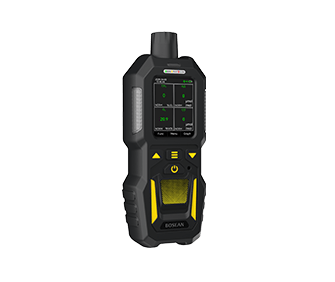
A category page can help establish what a supplier presents as part of its product range, but it should not automatically be treated as a complete technical record for every listed model. The Bosean category page names multi-gas detectors and lists K-40 4 in 1 and K-600N 6 in 1 models. That supports a narrow catalogue observation: those names and models appear on that page. It does not, by itself, establish certification, site suitability, safety outcomes, configuration details or performance.
This distinction matters during final evaluation because a response can appear specific while still applying only to a category or a different model. Record the source location beside each material claim. If a supplier sends a document covering several models, identify which statements apply to the proposal under review. Do not transfer a specification from one model to another merely because both appear under the same category.
For the multi gas detector review, this approach also makes the supplier conversation more efficient. Instead of asking whether the product is “suitable” in general, ask the supplier to map each answer to the stated project requirement and exact model. The resulting record can show whether the issue is answered, partly answered or still open without presenting an unsupported conclusion.
Turn unresolved points into procurement controls
Unresolved requirements should remain visible after the technical discussion. Add an owner and a next action to each open point. The owner may be procurement, engineering, operations or the supplier, depending on what must happen next. A due date can be useful, but only if the project has actually assigned one.
Before issuing a purchase request or recommendation, review four layers separately. First, confirm the intended scope. Second, confirm that the evidence refers to the correct model or configuration. Third, record commercial or delivery questions without treating them as technical proof. Fourth, state which matters still require approval. This sequence reduces the risk of a general supplier statement being mistaken for acceptance of the whole proposal.
Carry a clear record into the final decision
A sound final review should leave a concise trail: the decision being made, the requirements considered, the questions sent, the evidence received and the items still open. This is useful when several teams contribute to the evaluation, because each team can see what has been established and what remains outside its responsibility. It also gives the supplier a focused basis for a final response.
Bosean can be kept as the named source for the cited category information, while the project team treats the rest of the evaluation as a structured question-and-evidence exercise. That balance supports a careful procurement decision: use page-level facts for what they actually show, ask suppliers to address the project’s defined scope, and keep any unresolved requirement explicit rather than filling the gap with an assumption.