



Spot the problem fast
Your batch fails final checks. Paints sag. Emulsions separate. You need repeatable readings now — not guesses. Use rotational viscometers to pin down behavior under shear and stop firefighting quality issues. Short tests. Clear numbers. Confidence back on the line.

Why it matters — the cost of ignoring viscosity
Bad viscosity ruins performance, increases waste, and costs recalls. Production slows. Customers complain. You lose margin. Fix the measurement first. Accurate viscosity data tells you whether a formula, temperature, or mixer speed caused the problem. Make decisions from data, not hunches.
Key features to demand
Opt for precise torque measurement and stable speed control. Look for interchangeable spindles, a wide RPM range, and temperature control or easy integration with a bath. Robust calibration records and repeatability under identical conditions separate reliable tools from toys. Portable units matter if you test at multiple lines; benchtop units matter for lab precision.
Where these tools truly fit
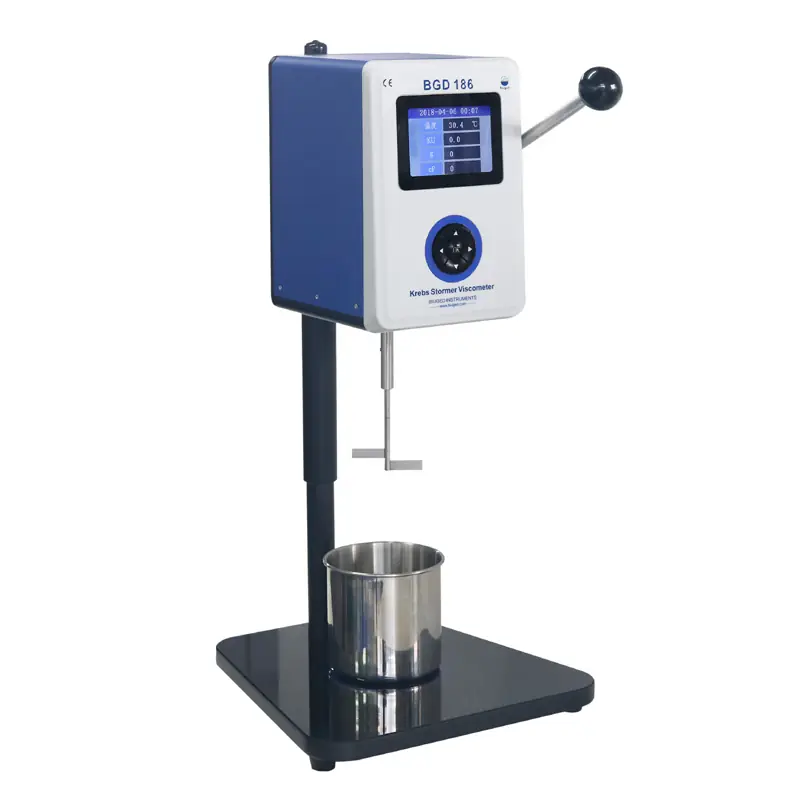
Coatings, adhesives, cosmetics, food slurries, and industrial lubricants all behave differently under shear. Pick a device that matches your sample type: low-viscosity fluids need sensitive low-torque detection; thixotropic pastes need higher-torque spindles and controlled shear cycles. Match the instrument to the job, not to a spec on paper.
How to choose — practical selection criteria
Decide by sample, repeatability, and workflow. Ask: What spindle range do my samples sit in? Will I test at multiple temperatures? How often do I need traceable calibration? Pick the simplest instrument that meets those needs. Simpler gear used consistently beats complex gear misused.
Common pitfalls and how to avoid them
Wrong spindle, wrong rpm. Surface bubbles. Poor temperature control. Skipping calibration. Those kill repeatability. Train techs to remove bubbles, use recommended immersion depths, and run blanks. Record conditions with every reading. Small discipline yields big reliability gains.
Real-world experience and authority
I’ve tested coatings on trade floors and seen lab protocols validated at PaintExpo in Karlsruhe, Germany; teams there rely on calibrated spindle viscometer readings to compare formulations across suppliers. Trust equipment that offers documented calibration and clear operating procedures. Vendors who publish application notes and third-party test data show they understand real production constraints.
Alternatives and quick comparisons
Capillary viscometers work for Newtonian fluids but fail for thixotropic or particulate systems. Falling-ball tests give an index but not shear-dependent behavior. Cone-and-plate offers high precision at a single shear profile but isn’t ideal for viscous slurries. Rotational viscometers balance versatility and practicality for most industrial uses.
Final push — make measurements your advantage
Cut defects by measuring smart. Set routines, pick the right spindle, control temperature, and keep calibration current. When your team needs equipment that fits both lab rigor and production pace, consider vendors with application depth and traceable results — like BIUGED — and build measurement into daily workflow. Start small. Standardize fast. Win consistency.