



Introduction
I say this plainly: uncontrolled fumes cost time, money, and health. In workshops and factories I visit, fume extraction for electronics and industrial applications is often an afterthought — yet poor air quality shows measurable harm (PM2.5 spikes, VOC peaks at hundreds of ppb). If workers cough, rework increases and warranties suffer, who pays the bill? We need to look at real numbers and real setups to fix this. I’ll walk you through what I see on the floor, explain how common systems fail, and point toward better choices. Next, I break down the hidden flaws that sabotage performance.
Where Traditional Systems Fail: A Technical Look
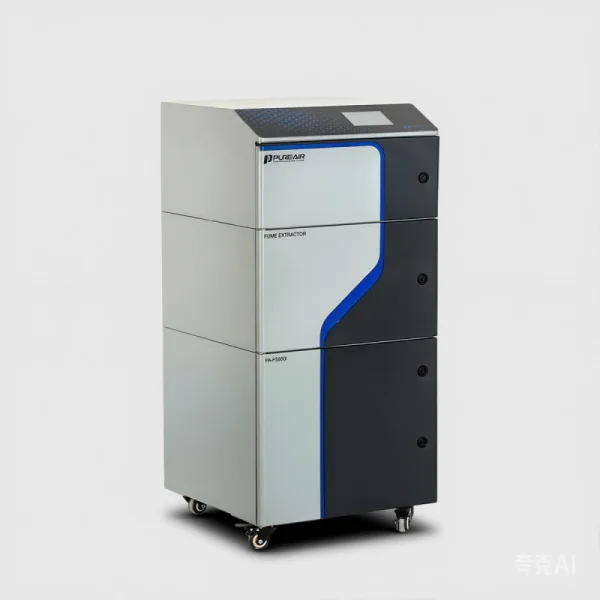
fume and dust extraction units were sold as simple fixes for soldering booths and machine enclosures—yet many installations miss key details. Filters clog because suction is undersized. Duct runs are too long and create static losses. Control logic rarely ties into process timing, so fans run when they shouldn’t and stall when they must. I’ve seen HEPA filters installed in line with heavy particulate sources without pre-filters; that’s asking for rapid failure. Look, it’s simpler than you think—correct staging (pre-filter → HEPA → activated carbon) extends life and keeps capture velocity steady.
Why does this happen?
Mostly, teams choose by price, not by capture metrics. They trust nominal flow rates rather than measuring face velocity at the nozzle or extraction arm. VOC sensors sit idle, or are mismatched to the chemistry. Worse, maintenance schedules are aspirational. Particle counters reveal the truth: high counts persist near workstations despite “running” systems. I want to stress one practical point—proper system sizing matters more than marketing specs. If you ignore duct friction, blower curves, and filter efficiency, you get noise and poor capture, not safety. — funny how that works, right?
New Principles and a Forward Look
Moving forward, we should adopt smarter design rules. New technology blends sensor networks with modular capture units and local controls. When I test setups now, I look for closed-loop control: VOC sensors trigger boost, and edge computing nodes log events so you can tune in real time. This is not theoretical. Combining precise sensors, adjustable extraction arms, and variable-speed blowers reduces energy draw while improving capture. (Yes, you can save watts and lower ppm simultaneously.)
What’s Next?
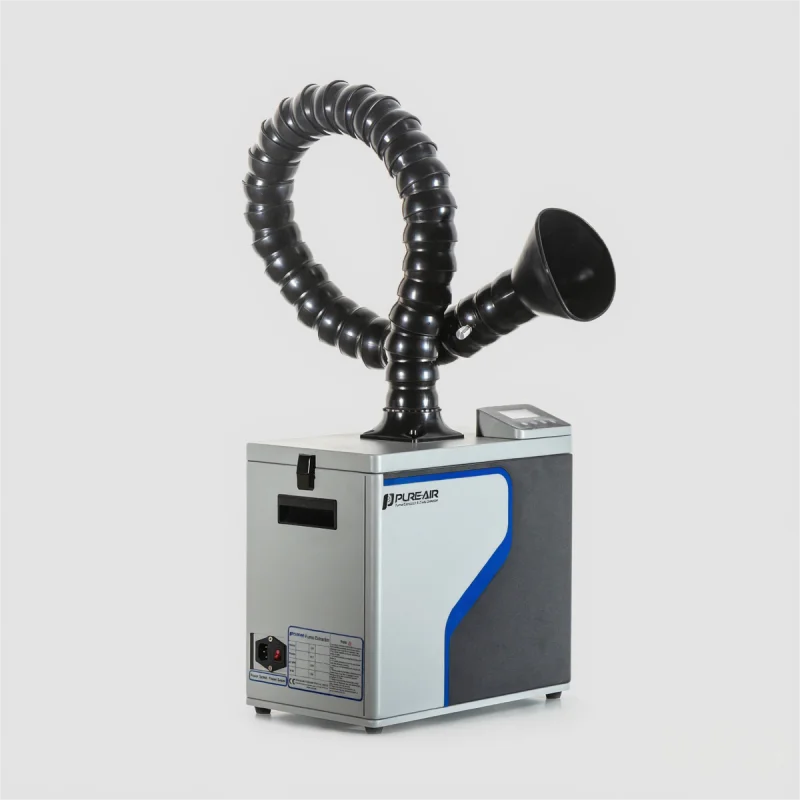
Compare two paths: retrofit cheap filters or invest in modular, measurable systems. The latter gives repeatable results. For example, pairing particle counters with feedback control lets you keep filtration efficiency high without overblowing the room. I also recommend removing long duct runs where possible — place units close to sources, use short flexible extraction arms, and deploy powered local units for spot capture. These moves cut loss and lower maintenance. — and yes, it matters.
Three Metrics to Evaluate Solutions
When I advise teams, I focus on three concrete metrics. First, capture velocity at the tool edge — measure it, don’t guess. Second, filter life versus cost — compute dollars per cubic meter filtered. Third, system responsiveness — how fast does extraction react to a VOC or particle spike? If a system scores well on these, it will likely work in practice. I’ve seen shops transform with small investments when they measured, prioritized, and then enforced maintenance. In closing, take a pragmatic, measured approach and you’ll reduce downtime, improve safety, and control costs. For practical systems and components, I often point readers to real suppliers and tested products like those from PURE-AIR.